The price is wrong

Why the cancellation of Haslab projects in 2026 may be pointing to a downward turn for Hasbro

Introduction

Two weeks ago an announcement was made by Hasbro representative Ben MacCrae that there would be no new Haslab projects for 2026.

I’m certain there were many collectors who were taken aback by the news, while others have posted their relief in the decision.

I am more reserved in my conclusions as to why Hasbro may have made this call, and I don’t think that it is an indicator of anything good for the company.

Before I share my thoughts, let’s look back specifically at Haslab itself, as well as some other business decisions made by Hasbro that fans should be paying attention to.

Scalping the fan base 101

Haslab was founded in 2018 as a direct to consumer crowdfunding platform for premium collectible toys.

It is Hasbro’s solution for making insane stuff that would be cost prohibitive, and high- risk as a mass- retail production item.

They kicked things off with the Star Wars Vintage Collection Jabba’s Sail Barge that same year. The project required eight thousand backers to go into production, with a price tag of five hundred dollars per unit.

Each backer could purchase up to five units each, and many did (Scalpers go a step further, and use the names and emails of other relatives to buy more, in order to flip them for a profit on eBay).

The project closed with exactly eight thousand, eight hundred and ten units ordered, giving Hasbro a total of four point four million dollars in revenue from their first Haslab project.

What they didn’t disclose to consumers Is that each of those units cost Hasbro seventy five dollars to produce, at a total of six hundred and sixty thousand, seven hundred and fifty dollars!

That means that they raked in nearly three point eight million dollars in profits, at a five hundred percent profit over cost margin.

This makes Hasbro the biggest scalpers of the toy industry.
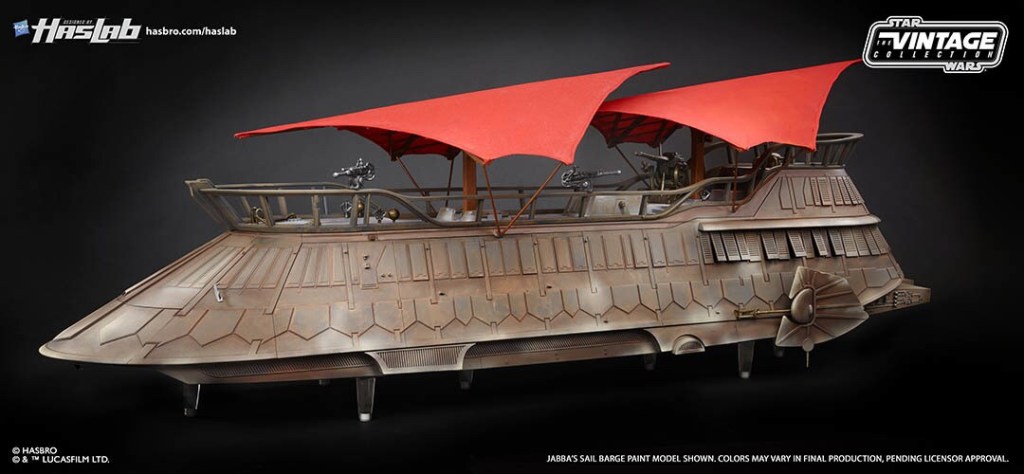
Jabba’s Sail Barge

Hasbro Pulse

So, now that we have had our math lesson for the day with the very first Haslab project, let’s talk about the other side of the coin, Hasbro Pulse.

Pulse is a direct to consumer hub, that is part of their e-commerce website. It is marketed exclusively to adult collectors, who comprise eighty percent of Hasbro’s revenue for their five largest brands.

Star Wars Black Series, Star Wars Vintage Collection, G.I. Joe Classified Series, Marvel Legends, and Transformers Studio Series all feature Pulse exclusives, that are not available through traditional mass retailers.

Both Haslab and Hasbro Pulse are similar in that they eliminate lost revenue, while maximizing profits on sales. They force consumers to buy from them directly, in order to get what they want.

Why it matters

Let’s pause for a moment and take a look at Star Wars as an example. In 2012 Disney acquires Lucasfilm in a four billion dollar deal, that gives the mouse total control over the greatest science fiction franchise of all time.

That control also trickles down to tie-in merchandising like toys. Disney, not George Lucas, now has the final say on what Hasbro gets to do with their new intellectual property.

From 2012 until 2015, Hasbro lost five hundred million dollars in lost revenue on its Star Wars brands alone, which was due primarily to poor sales from The Force Awakens toy line.

This prompted major changes from Hasbro, including the cancellation of the five POA basic assortment of figures in 2019, which were the back bone of the brand since 1977.

It also cancelled the 1/18 scale playsets and vehicles that had previously dominated every Star Wars toy line since the early days at Kenner, up until 2010.

All of these losses were instrumental factors that led to the creation of both Hasbro Pulse, and ultimately Haslab.

Cutting Corners

Now that we’ve taken a look back at some of the factors that led to the creation of Haslab, let’s talk about the here and now.

Hasbro’s current CEO Chris Cocks may become the fault in the company’s foundation. His new “playing to win” strategy is calling for a minimum of three to five percent revenue growth this year.

That strategy included cutting Hasbro’s global staff by twenty percent, or just over eleven hundred positions worldwide.

That may not seem like much for the world’s largest and most profitable toy company, but in reality it may be an indicator of things to come.

Another area that they are cutting costs isn’t just their staff, it’s also in production and assembly of existing toys.

Take for example, the Star Wars Black Series figures. Since 2023 Hasbro has removed points of articulation such as swivel hips, and replaced them with seamless leg joints.

They have transitioned to pinless, single elbow and knee joints, over double elbow and knees with greater range of motion.

By reducing the points of articulation in the line, Hasbro has cut the total cost of production and assembly.

They have also minimized the included accessories with each figure, while capitalizing on their perceived marketing strategy.

The savings to the company then are transferred to the consumer, by giving them a figure with less articulation, and a cost increase to twenty seven dollars and ninety nine cents for a basic figure!

So for the collector, we are paying more while receiving less. Hasbro’s marketing team have done their homework, and they know that collectors will continue to take the bait, as long as they give just enough to keep us hooked on the line.

The same holds true for Haslab. When you take projects like the Vintage Collection Cantina, it isn’t as great as it is made out to be.

Rather than being a Haslab project, they could easily have offered that same project as a mass retail or store exclusive.

It could have been marketed in multiple sections, drawing collectors to buy each one in order to build the full Cantina.

So, while some projects may necessitate being offered as a single, large unit, others may benefit from a different marketing strategy.
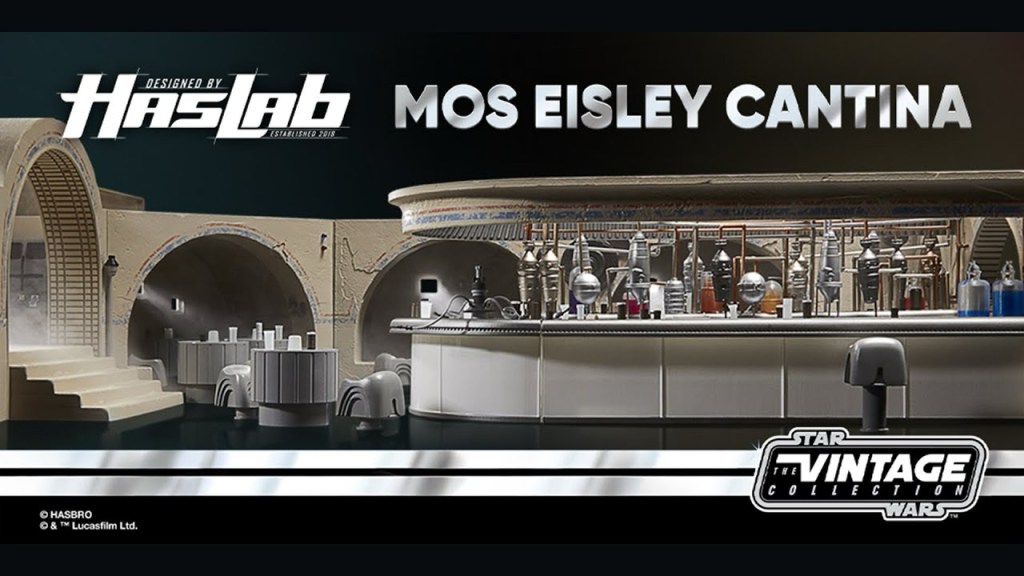
Haslab Cantina

Haslab’s future

To date, Haslab has funded and produced over a dozen projects, but they have also had at least six that did not receive enough backers to go into production.

Failed projects bring negative publicity, and that’s something that the leadership at Hasbro isn’t likely to allow to continue.

Furthermore, the overall success of Haslab is questionable at best. Support for the projects have declined, particularly in respect to the current economic climate and market.

Collectors are less likely to invest four or five hundred dollars in a project that they have to wait a year to receive, when they can invest that same amount in other toys that are readily available now.

Increased cost of existing lines also hasn’t escaped the attention of collectors, including social media influencers who have exposed it to the public.

When you take all of these factors into consideration, as well as the uncertainty and instability of global markets, it becomes clear that Haslab may be short lived.

Moving on up to the east side

The last thing that I will make note of is this: Hasbro is in the process of relocating its global headquarters from Pawtucket, Rhode Island, to Boston, Massachusetts.

The new facility is considerably smaller, at just two hundred and sixty five thousand square feet, and will house seven hundred employees. It is a very confined location, with an extremely different footprint than its current home.

By comparison, the legacy facility in Rhode Island is a whopping three hundred and forty three thousand square feet. That’s a considerable amount of floor space that the company is giving up.

That in itself is very perplexing from a business standpoint. The reason is this: why would an established company make a high risk move into a multi-million dollar leased facility in another state, when they have an adequate facility that they already own?

If the leadership at Hasbro is so concerned over cutting costs and playing it safe in the current market, then why make this decision?

So, if they are going to such extreme measures to cut costs, then projects like Haslab would certainly be at risk for cancellation.

Conclusion

Haslab was conceived as a means to bring the fans collectible toys that would be deemed cost prohibitive for retail, while eliminating lost revenue, and maximizing profits for the company.

That model is beginning to be seen as a risk in itself, due to decreased interest and negative publicity on failed projects. What is needed then, is a new marketing strategy.

In my opinion, if Haslab is going to continue as a platform, then the answer for its success is a simple one: reduce the cost per unit for the consumer.

Hasbro has made it a point to market the Haslab projects on average at five hundred percent profit over cost per unit.

That isn’t just ensuring zero lost revenue, it is an unethical business practice that has and will continue to have negative consequences.

The issue here isn’t a business model, a supply problem, or shortage of stickers; it’s greed. It is the craving and love of money which corrupts and motivates individuals and companies alike.

The simple fact is Hasbro like any other company is run by people, and not everyone lives a life above reproach. There is a way to make a profit, and do it in a fair and just manner.

That is not unfortunately, what we have seen to date with Haslab, and that may be the very reason why the platform itself fails.

The other possibility, and one that I think they should have implemented from day one, is to do the opposite of what they are doing.

Rather than play it safe by limiting these toys to Haslab, would be to market them through select retailers. If you think that wouldn’t work, think again.

The Vintage Collection Razorcrest was almost a Disney Store exclusive, rather than a Haslab project!

The fact is Hasbro has the ability and the means to market these toys however they wish; they simply choose to limit our options in order to maximize their profits.

So for now Haslab may continue to be an option to bring fans the toys they want, but in the end does the cost justify it, and will the platform be sustainable into the future?
Let’s make a deal

The pros and cons of buying collectible toys from online resellers versus brick and mortar retailers.

My precious…

Intro

I wanted to take a brief moment and share some insight into collecting toys for just a moment, and I want to talk specifically about buying from third party sellers online, versus buying from a brick and mortar store, such as a comic book store or privately owned toy reseller.

Toy collecting is an increasingly growing sector of the economy, accounting for nineteen percent of toy sales world wide in 2025, with a thirty two percent increase in sales that same yearhttps://toycycle.co/pages/toy-industry-statistics.

Here in the U.S. toy sales generated forty billion dollars in 2024 alone. Roughly thirty percent of that revenue is from adult collectors, who have become the largest consumer for the toy industry worldwide. https://sourcing.hktdc.com/newsbites/trend/adult-collectibles/.

So when we look at collectible toys, we are primarily talking about those that are out of production by the manufacturer. This includes both vintage as well as modern-era toys.

In either instance, collectors must search third party sellers on the secondary market to find what they want. This is primarily accomplished through online searches through sites like eBay, Mercari, and others.

It can also include searching for local resellers who operate brick and mortar businesses. Most common among these are comic book stores which offer a mixed inventory of collectible toys that tie-in with their comics.

There are advantages as well as disadvantages to both, and I want to point out some of these. First, I will begin with online resellers.

eBay

By far, eBay is the largest online shopping platform for toy collectors. The ease of creating a listing from home, minimizing interaction with buyers, and the overall features provided by eBay make both buying and selling a simplified process.

Collectors have the ability to review multiple listings for the same toy, look at images, and ask questions of the seller. You also have the ability to make offers on some listings, as well as choosing the shipping method that you want.

The drawbacks to eBay as well as other online resellers is simple: the collector does not have the ability to inspect the toy in person. This means that you have to rely solely on the images and information provided by the seller.

For serious collectors, it takes time to search through listings, narrowing down the best options, and then refining your selections based on the criteria that you use.

For myself, I almost never buy anything used; it must be sealed in the packaging. I also will not buy toys from anyone that smokes, or from the home of one. I do not want anything that someone else has touched.

Since I am a box collector, I will carefully inspect the images of the box for damage, wear and tear, or anything that would detract from its value.

The toys that I buy are in grade C7-C9 when I buy them, and they remain that way in my collection due to how I store them.

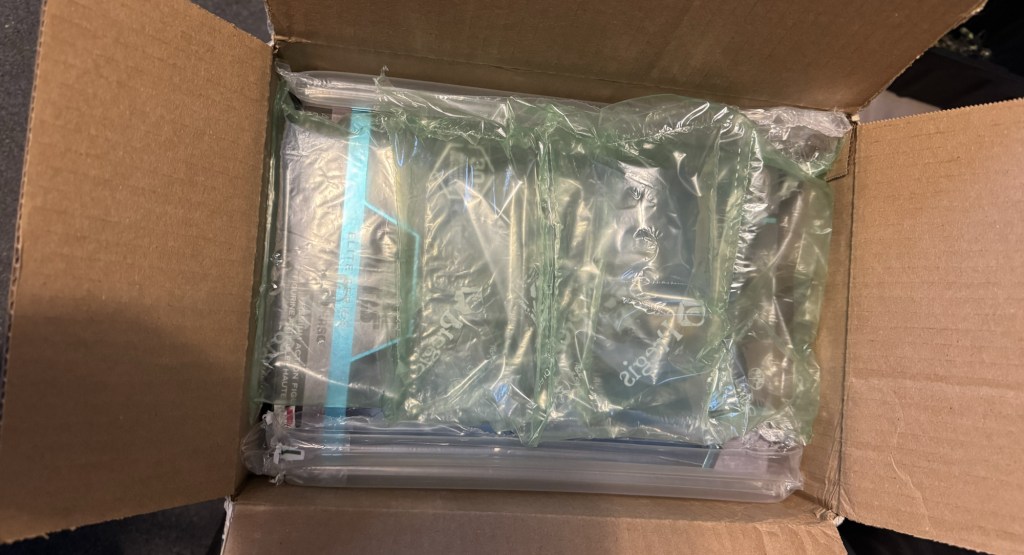
I am very picky about how a seller ships an item, and this is unfortunately, another aspect of buying online that you as the collector do not have any control over.

Most sellers on eBay that are selling collectible toys know what they are, and what collectors are looking for.

For the most part, they go above and beyond in the care they take to package and ship them. There are however, the few who are only interested in money, and they do not care about the toys themselves.

In cases like this there are ways to address this, but for the most part you are stuck with an item after you receive it, no matter what condition it is in.

A recent toy shipment from an eBay seller, and how it was packed.

Brick and mortar retailers

Now that we have discussed online purchases, it’s time to take a look at brick and mortar locations. These are typically comic book stores that have incorporated collectible toys.

Most adults who collect and read comics also collect toys as well, so it just makes sense to offer them in a comic book store. You’ll also find some locations that are strictly toy resellers, which are usually owned and operated by collector’s themselves.

Going into these stores provides collectors a rare opportunity to look at and inspect collectible toys in person. Often, you may find rare items that you are not aware of, or were not searching for.

It also gives a sense of connection and nostalgia that you don’t get to experience when shopping online, and I would encourage any collector to get out and find a store to visit.

That being said, there are some very important things that you need to be aware of. To begin, you need to understand where these toys originated from.

Not everyone who sells or trades items to these stores care about the toys, or the condition that they are in. More often than not, they are sold for money, and in that process things can be tricky.

Sometimes there are individuals who mislead the owners of these stores to make money. An example would be stating that a toy is sealed in the box, when in reality it was not.

I encountered a situation like this with several toys purchased from a well known comic book store. Items inside the box had been switched out in one instance, while pieces were missing in the other.

The most extreme example was a Star Wars Vintage Collection E-Wing in that collection that had dried blood on the side of it, even though it was supposed to be new in the box.

Though the owner made it right, it was the experience and the outcome that ruined it for me. In truth it was my error for not paying closer attention to the packaging.

I had become accustomed to trusting that particular business, that I had slacked off on how I inspected packaging. So, the lesson here is to first ask questions about where the toy came from, and then inspect the packaging!

Look at the corners of the box, look for signs of wear and tear, water damage, ext. You also need to inspect the tape sealing the package, and see if it has been tampered with, or has oil stains on it from someone’s fingerprints.

These are all tell-tell signs of it being opened or tampered with, which brings us to my next point about buying toys in a store: they get handled by everyone!

You do not know who touched it, if it was dropped, ext. and this is the most negative consequence of buying collectible toys from a brick and mortar retailer.

There are very few stores that sell collectible toys which keep them in some sort of display case where they cannot be handled. Most stores reserve those locations for their most expensive collectibles.

On the flip side of this coin, buying from an online reseller means getting a toy that typically has been owned by a single collector, in one location. That translates into less possibilities of damage.

So again, it is up to you as a collector to learn how to inspect toy packaging before you ever step foot in a store. It’s also up to you to be courteous to the owners, and wash your hands before going into their store and touching their product!

Last of all, I want to talk about cost. We have all encountered the evil scalpers who so wrongly buy bulk quantities in order take advantage of collectors, and truly there is a special place in hell reserved for them this very day.

No, what I wish to discuss is the cost of buying collectible toys in a brick and mortar store, versus buying them online. This is a touchy subject for some, but bear with me on this.

Gain versus loss

In reality, a toy is worth what you as the collector are willing to pay for it. By far, it is less expensive when buying them online from third party resellers, and the reason is simple.

Online resellers are typically selling their toys for a myriad of reasons, and will accept less, even if they know the current value of the toy they’re selling. Brick and mortar stores are the opposite.

If you sell a toy to them they typically offer forty percent of the average price the toy sold for on eBay, and I have a sneaking suspicion they always select the one that sold for the least amount.

They will then take said toy and flip it for a profit, marking it up as much as a hundred percent or more of the value! So you’re asking why?

It’s simple: these stores know they can get away with the price increase, because they have an established customer base. When they place a toy out for sale, they have customers in mind who they know will buy it if they can get them in the store to look at it.

It’s a scientific principal that all toy manufacturers marketing departments rely on. How they package and present a toy has as much to do with it being sold as the actual toy itself.

Brick and mortar stores who resell collectible toys rely on social media for fast advertising, and many also list items on eBay (shock, shock) to make money as well.

They are like sharks in the ocean looking for that autistic collector with ADHD and Schizophrenia who has to have their toys right now! That one child trapped in a man’s body who can’t stand to wait on the snails pace of the U.S. Postal Service is their best customer.

Poor bloke, he’s no idea it’s his money they’re after, and all he wants is his toy. That’s the reality you’ll find in a brick and mortar toy store.

They don’t care about you the collector; the reality is they’ll talk trash about you and laugh behind your back as soon as you walk out the door, and they start counting your cash towards that steak at Outback.

The other factor in cost is a more practical one. When you factor in how much it actually costs you to travel to said store and then buy a toy from them, compared to simply ordering it online, you can quickly see the difference in cost.

Where you choose to buy your toys and how can have a tremendous impact on your collection. The reality is it’s a lot of work! I typically spend hours going through listings, comparing them to stores that might have the item, to see which is the best offer.

In the end it’s up to you the collector how you go about searching for toys to add to your collection, and where you get them from.

Adults who collect toys

An inside look at a misunderstood world

Intro

By now it should be obvious that I am extremely cynical and sarcastic, and I try to make it a point to offend people who do not like me. So, since I’m bored and pissed off, I need a way to vent, and today it’s going to be writing this blog.

I’ve been stuck in writer’s block for months, until recently when I had an idea for a post that I considered worthy enough to delve into. Most people out there have some sort of hobby or interest that they engage in for any number of reasons in their spare time. To one degree or another, most people also collect stuff.

That being said, I don’t think there is an interest out there that causes so much consternation and second glances, as adults who collect toys. It would appear (and I can speak from my own personal experience) that there are people on this planet that have a problem with grown ups who have as their passion collecting toys.

After all, toys are designed and marketed for kids, right? Well If you believe that, then you might want to keep reading. Every one of us has grown up watching cartoons and our favorite television series as a child. Be it Tom Corbett Space Cadet, BraveStarr, or G.I. Joe A Real American Hero. Kids from the fifties through the nineties have grown up in the golden age of cartoons, comics, and yes, toys.

In fact, many of the cartoon series from the eighties and nineties were intentionally produced as a marketing scheme to sell the toy lines. G.I. Joe A Real American Hero, Transformers, He-Man and the Masters of the Universe were among those that were. Others included Thundercats, Bravestarr, M.A.S.K. and Silverhawks to name just a few.

Kids grew up wanting the toys, because they represented a physical connection to the on screen universe. The play features provided a sense of excitement and reward in having them, as kids would play out their favorite scenes. Toys, however were not just limited to cartoons. Live action movies and television series also offered their own entry into the childhood world of wonder.

The A-Team, Battlestar Galactica, Star Trek, and Star Wars were among the many movies and television series that capitalized on the profit of producing tie -in toy lines. Like any marketed merchandise, there were toy lines that were successful, and others that were short lived.

The desire for connection

As time passed, children moved on to the next great toy, the next stage in life, and soon what was once the center of their world, became a distant memory. Toys were replaced by appliances and tools, and life as it does steals our innocence.

As years slowly passed, and decades emerged, some adults found that in moments of change, challenge, crisis, or even loss that their childhood memories came to the surface. In those moments, the sudden emergence of memories becomes a bridge connecting us to a much better time in our lives.

Its a place of happiness and peace; a place of comfort and safety where the imagination knew no ends to the pleasures of collecting and playing with toys. It might happen while walking down the toy aisle of a brick and mortar store, or scrolling past an ebay auction online. Whatever the means, a door is presented that opens to the heart of who we really are.

Its that emotional connection that stirs us to seek out that first physical connection. Whether its in buying a new comic or toy, or vintages ones from our past. Some may be fortunate enough to have theirs boxed away in an attic, while others like myself who have suffered the loss of all things must start anew.

However it begins, that sense of awe and wonder returns, and just for a moment you can feel the exact same feeling that you experienced as a child; It is to say the least, an incredibly moving experience. Again, note that I said this was the case for some adult collectors, but perhaps not all.

So, we look back at a particular cartoon, television show, movie, or toy that connects us to our past. We come across it in our basement or attic, or buy one on eBay; then what? Well naturally, most of us are drawn to the thrill of collecting more toys. Be it others in a series, a separate theme, ext. There’s always a desire to collect more.

Personal experience

At least for me, there’s a sense of comfort and satisfaction that is derived from having them. I have very few childhood memories that I can recall, due to the trauma of abuse and bullying that I was subjected to on a daily basis. The only place that I felt safe was at home with my great-grandmother, and my toys. They were my world.

I was bullied everyday in school; beat up nearly every week. Jumped in the bathroom and shoved into puddles of pee. I was slapped in the back of the head sitting in my desk, as well as when I would stand in line. I was spat on, hit, and kicked for no reason, other than the fact that I was not liked. I was beat up constantly by black kids, and some whites.

I would be beat on in the cafeteria, then on the playground. When I would go back to my class, my book bag would be torn, and my books would be ripped in half, lying on the floor or in the trash can. It was a daily thing. I hated school, and everyone there. It didn’t stop in high school, as I got jumped often while walking to school and walking home, so I quit.

I grew up being afraid of older men because of being abused and molested, and I was very insecure. I had great difficulty in social interactions, and preferred to be alone and work alone; I still do. In 1997 I began collecting the Star Wars Power of the Force toy line by Kenner, it brought a sense of comfort to me in the midst of some very bad things that I was forced to live in.

I didn’t collect a lot or for very long, choosing to give my collection to a co-worker for her three children. It would be seven years before I would begin collecting again as an adult, and since then I have collected and sold my toy collection half a dozen times. I have gone through periods where I simply lost interest, and found that it was due to external circumstances that made me feel that way because of depression.

So, you can see from my own experience how collecting toys not only provided an emotional connection to my childhood memories, but also provided a practical mechanism for coping under extreme circumstances as an adult. This is certainly not everyone’s experience, but it is part of how and why I got into collecting.

Determining Valuation

So now that I have offered some insight into the why of collecting toys, let’s take a look at some numbers and stats. To begin, toy collecting as an intentional hobby has been around since at least the eighties. There’s evidence to support this by the number of sealed toys from that era that are auctioned on the secondary market, by third party sellers.

It is an intentional act of buying a toy (or multiples of one) and keeping it sealed in the box, and then placing it in long term, protective storage. A person may do this to give as a gift to future generations, to have themselves, or to sell. Whatever their motivation, it is intentional, and becomes an act of collecting.

This also would be highly unusual for a child to engage in, since their minds are not mature enough to look at a toy and consider the value of it, how to properly care for it long term, or how to preserve it for future value. All of these would be the actions of an adult, which infer that the adult is engaged in collecting on some level.

So, for what we classify as vintage toys to be available in a mint and sealed condition today, would imply that someone took the time to intentionally protect and store that toy for some reason.

Typically speaking, toy values are derived from a set of variables that I will attempt to explain here. For the purpose of this post, we are going to presume that the toy is mint and sealed new in the box, with no damage, discoloration, fading, or worn edges on the packaging. That then, means it is mint, as if it were just removed from the shipper.

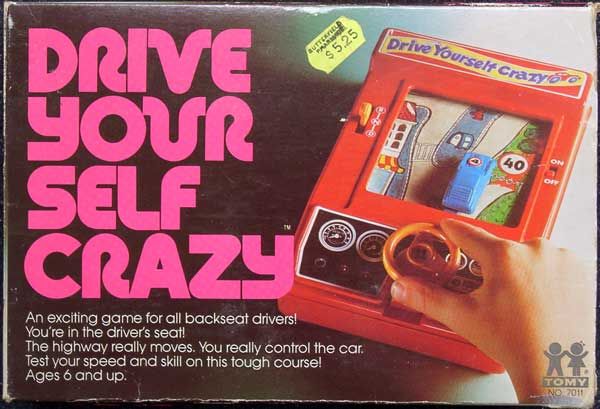
Take the 1976 Tomy Drive Yourself Crazy electronic handheld game, mint in the box, which sold for five dollars and twenty-five cents. This is roughly the MSRP of most brick-and-mortar stores at the time, and continued into the early eighties when I had one (the dollar in 1976 is equivalent to nearly six dollars in today’s market).

Rarity

Simply put, the rarer a toy is, particularly mint and sealed in the box (or packaging), the more it is worth.

Condition

Toys that are mint on card, or mint in a sealed package without damage always command higher values than those that have damaged packaging or which are loose.

Brand and/or Series

When you look at toys from a specific brand like McFarlane Toys, those figures are designed and produced intentionally for adult collectors and thus are worth more value than a similar figure by Hasbro or Mattel.

Toys that are part of limited or specific series, like chase or rare variants, also command more money than those that are mass release versions.

Historical Relevance

Toys produced for specific events in history, or that are part of something like an initial movie toy line, sometimes demand higher values than others, but this isn’t a steadfast rule for all toys. It is simply a consideration when trying to determine current valuation.

Current Market Demand

This is my single piece of advice to those who ask, and that is that toys are worth what you are willing to pay for them. You can use auction sites like eBay as a guide, but you have to be aware of the fact that professional resellers know what they are doing.

Most of them ask far more (2-5 times) the value of what the actual toy is worth. It takes patience, research, and some time to figure out what they are really worth paying for, and often if you wait, you can and will find someone offering what you want at a reasonable price.

By the numbers

The toy industry is one of the largest in the world, with sales in 2024 totaling 114 billion U.S. dollars https://www.gminsights.com/industry-analysis/toy-market, with forty billion attributed to sales in the U.S. alone. At the heart of those sales are adult consumers, who account for nine billion dollars in revenue on toyshttps://www.nbcnews.com/business/business-news/adults-are-buying-toys-s-biggest-source-growth-industry-rcna62354.

To further narrow our look at the adult collectors, I want to focus on one of the three largest toy companies in the world. Hasbro is the parent company for brands such as G.I. Joe Classified Series, Marvel Legends, Star Wars, and Transformers. All of these brands are carried not by parents shopping for their children, but by adult collectors.

Ninety percent of all sales for just the four brands that I listed above are from adult collectors. That’s why the design and marketing teams behind these brands focus on the adult collector community, by offering highly detailed replica toys, with distinct features and realism.

Both Jazwares and Mattel do the same, and there are dozens of third-party companies that market exclusively to adult collectors alone. In short, the toy industry is kept alive by the grown-ups that you make fun of, but more on that in a moment.

Discrimination and harassment

There are unfortunately, many who have taken the stance that adults who collect and play with toys must be mentally ill. You know we must be leaning in on the Autistic, Down Syndrome, we’re a threat to society tag because we collect and play with toys, right? I mean, shouldn’t we all just watch ESPN and go to the gym?

The fact is, there is nothing further from the truth. I am certain that there are disabled collectors out there, and I’m even more certain that many of them have been, and continue to be, the target of bullying to some degree.

The attempts by deranged individuals to destroy them for their interests is perverted in every sense of the word. The reality is everyone does not share the same hobbies or interests. Not everyone wants to go to the club, the gym, or be a part of whatever.

In doing research for this article, I spoke to two comic bookstore owners, and they both concurred that ninety percent or more of their customers were adults. Some of which were identified to me as lawyers, bankers, sitting judges, ext. In other words, people from all walks of life collect comics and toys. Sorry nerds, we aren’t alone it seems.

When I inquired from the store owners about the disposition of their customers, they both told me that their adult customers were normal people. Both store owners also shared with me how the above stereotypes couldn’t be further from the truth, and told me their thoughts on it. In conclusion, there’s no medical or scientific evidence to prove that adults who collect comics and toys are mentally ill. If you disagree, put it in writing and let’s take it to court.

Conclusion

I hope this post gives you the reader insight and understanding into the world of adults who collect toys. This is not meant to be an all-inclusive article on the subject, as there is far more detail than what I covered in a few paragraphs.

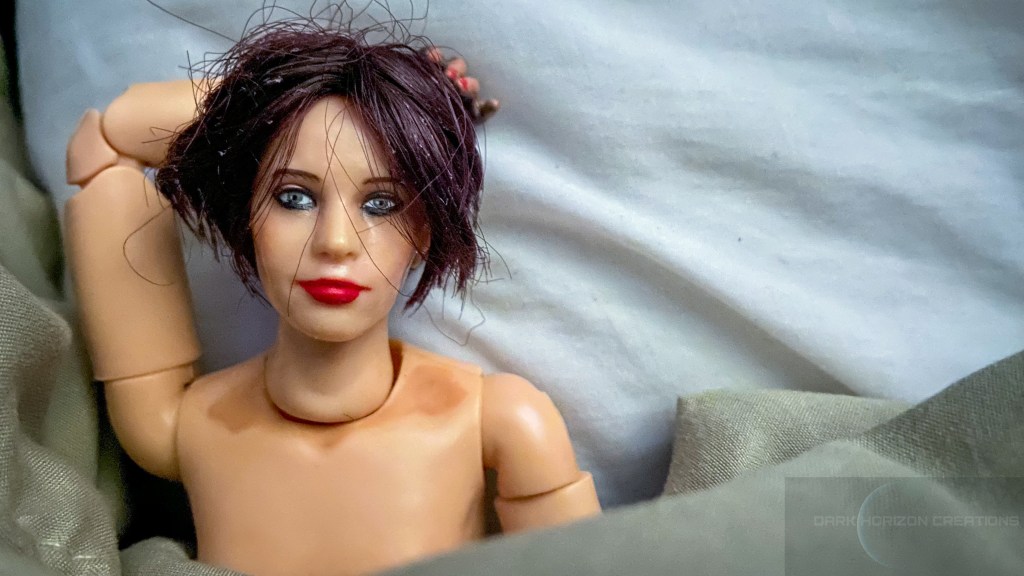
I am by no means an expert; I am a collector and fan, and my toys will continue to be at the center of my life until the day that I die. Heck, I’m in a common law marriage with my Jyn Erso action figure, so that should tell you how good it is!