

Introduction
Over the decades I have been privileged to look at, own, and play with hundreds of action figures, from all over the world.
From the time that I was little until now, one thing stands out about an action figure more than anything else, and that is the portrait.
The head sculpt or portrait is the first thing that you notice when you look at an action figure, and that is both intentional and by design.
The head sculpt is a major factor is marketing action figures, and it is also one of the elements that consumers use to determine if they pass or pick up an action figure.
In their infancy, action figure head sculpts were made using a different methods, depending on the material and the scale.
At their simplest, they can be molds which are formed from a cast, that are then painted by hand, to more elaborate and technical methods of creating the portrait.
What I want to discuss today is among the most complex methods to be created in recent years, and that is ink jet printing.
Hasbro seems to be on the cutting edge of this technology, and it’s redefining the standards for collectible action figures.
Photo what?
In 2017 Hasbro introduced a proprietary form of ink jet printing which they call Photo Real. It was developed by their East Asia Division for use on their action figures.
It was first used on the Marvel Legends line, however it was quickly introduced to both Star Wars, and their upcoming G.I. Joe Classified Series line as well.
The first Black Series figure released with this new design was DJ (Canto Bight, no. 57) from The Last Jedi assortment.
The technology has now been expanded to include the Vintage Collection 3.75 action figures, as well as the Black Series assortment.

How it all works
Though the details of Photo Real are corporate secrets, we do know the general processes used. First, the design team creates a digital render of the action figure based upon mock-ups, and screen used still images of the actors in costume.
The digital rendering is then sent to the model shop, where they create a rubber casting of the individual parts of the action figure, which is in turn used to make duplicates that form the prototype of the figure.
The sculptors on the design team use the digital renders of the actors to guide them as they fill in the details like color, shading, and other facial features.
Once that digital design is approved, the design team then uses a blank mold of the head sculpt that the digital face is printed on in layers using the Photo Real technology.
These layers take larger segments of the actor’s facial features, and divide them into smaller sections in order to maximize details.
The final printing process is the primary feature that Hasbro is silent about.
My thoughts on this so far
For the most part, the figures look realistic, though I have seen several Black Series figures where the eye placement was off.
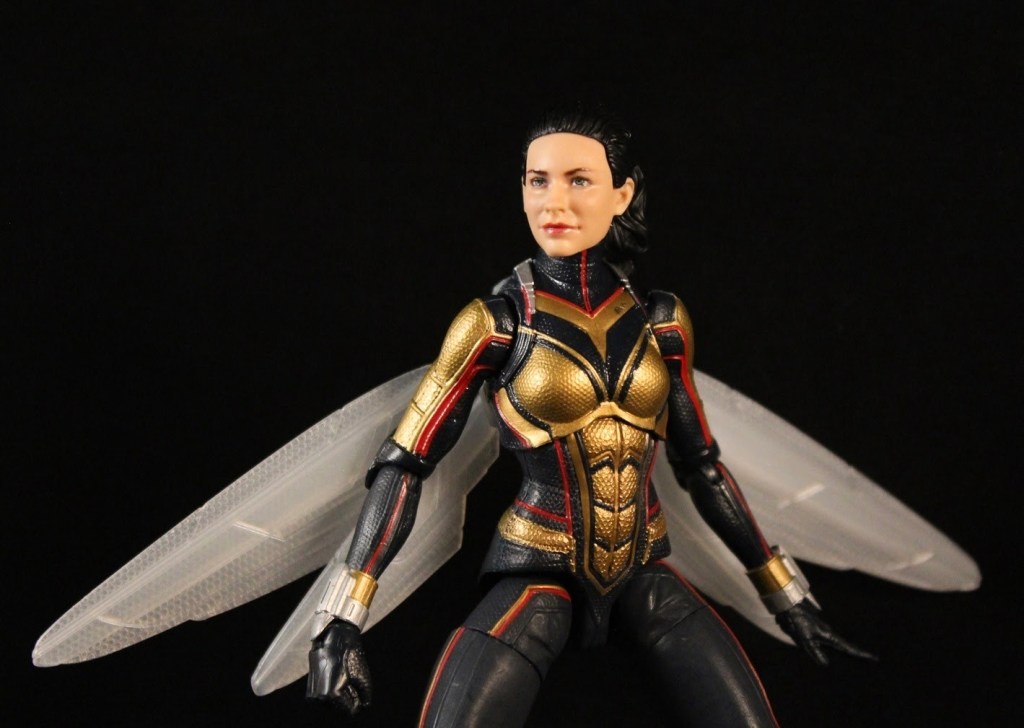
I will say that the Marvel Legends figures seem to be a better quality than the Black Series figures are. Case in point, look at the image of the Wasp from Ant Man. The head sculpt is identical to the actress, Evangeline Lilly.
The Star Wars figures do not have that same level of detail, and only Hasbro can answer why. The ability is certainly there, but the Marvel figures appear thus far to be the most life like in appearance to the actors they represent.
Before the Photo Real process was developed, the same character scans used by Hasbro were also used by every company creating figures, including Sideshow.
Known for their extreme articulation and lifelikeness, the Sideshow figures command a much higher price point, and the value is apparent right out of the box.
Hasbro’s newest series, HyperReal, is set to debut Quarter three of this year, and will also utilize the Photo Real technology.
I believe that this line will feature far greater detail than the Black Series figures, and this is due in part to the scale.
One sixth scale figures feature more surface area on their head sculpts, allowing for greater detail and lifelike features to be incorporated.
The goal of the Photo Real technology was to take that same level of detail, and scale it down for use on the one twelfth scale figures like the Black Series and Marvel Legends.
Action figures have undergone many changes over the past forty five years, and Star Wars is no exception.
Most of these changes have been for the better, however some have been made strictly to cut cost.
With the role of expanding technology and companies under pressure to save money, ideas like Photo Real will become increasingly vital to the survival of the collector’s market, and toy industry at large.

