
An examination of the fractured reality within the Action Force storyline
Introduction
If you read my previous blog entitled , Divide and Conquer, I discussed the practicality of the events as described within the Action Force mythos.
Tonight I want to continue that by delving into the upcoming Series that Valaverse plans to release called The Black.
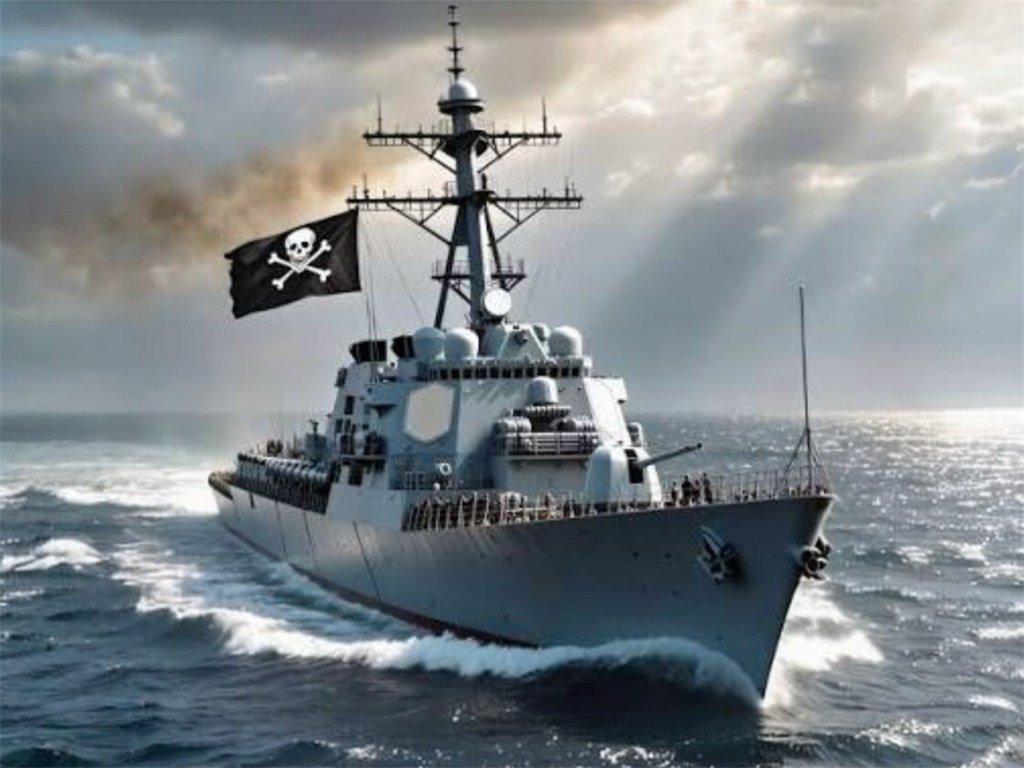
It’s a new series of figures from an all new faction that are comprised of former Naval Special Warfare operators. In short, they have taken over the U.S. Navy‘s fleet of warships, and now patrol our waters as modern day maritime mercenaries or pirates.
That’s all well and good for pretend, but it lacks the depth of what would really be occurring if the United States had dissolved to begin with.
Let’s be honest: this is a line of military action figures and comics marketed primarily for adult collectors, and within that fanbase are those who are and have served their country.
Anyone who has served looks at toys like Action Force, or G.I.Joe, and immediately begins critiquing the figures based on their appearance. They are looking for accuracy and realism, not what they played with in their childhood.
So it’s only fair to expect that same level of critique within a brand’s back story. What you’re looking for is consistency and continuity; a parallel to real world events with the appeal of action and adventure.
That’s why companies like Hasbro and Valaverse constantly release new comics and new figures; they are trying to sustain their brands through innovative and unique marketing strategies.
So what could that potentially look like with the new series from Valvaverse? Let’s find out.
The Black: What we know
Thus far, all we have been told is that The Black are a group of former Naval Special Operations operators who have somehow commandeered parts of or the entirety of the former United States Naval fleet of warships.
They use these ships to patrol the coastal waters of the former United States, offering safety and security, for a price. They also have their own agenda, that puts them at odds with both Action Force and New Colonia.
It sounds interesting, but from a writer’s perspective there are a lot of questions that immediately come to mind, with the first being the status of the U.S. Navy fleet itself.
Logic and logistics
To provide some context to this subject you have to understand that when you have an idea for a story, there is a tremendous amount of research that must be done.
For companies like Hasbro and Valaverse, they use technical consultants like myself who are experienced subject matter experts in a specific field like the military.
Talking to people like me gives the creative team a grounded reality check in how things work, which in turn allows them to flesh out their ideas, while making necessary adaptations or changes.
This is especially important in something like a military themed comic and toy line, particularly one being marketed primarily to adult collectors and fans.
Without that working knowledge of the real world model, the creative team will likely add elements that are inaccurate and unrealistic. G.I.Joe is one brand that has continued to do this time and time again in many areas.
Minute details may not stand out to younger fans, however adult collectors with experience and training will most likely notice these details, and be irked by them.
So when I think of a bunch of frogs commandeering the fleet, my mind immediately raises a flag of its own. This is particularly true when you consider how many personnel it takes to operate just one surface vessel.
Take for example, an Arleigh-Burke Class Destroyer. They are arguably the backbone of the United States Navy surface combatant fleet, with a total of seventy four ships in service as I write this.
Each of these guided missile destroyers has a crew complement of three hundred sailors! Compare that to roughly ten thousand sailors that comprise Naval Special Warfare Command.
Of that, roughly three thousand sailors make up the Seal teams. The remainder comprise SWCC (Special Warfare Combatant Crewmen), command, intelligence, and support personnel.
One carrier battle group comprises ten warships, manned by ten thousand sailors and marines, and there are eleven active carriers in the fleet. You do the math, and it becomes apparent that the frogs aren’t going to keep the entire fleet afloat.
Creating Compromise
Now that you know some facts and figures, it becomes apparent that The Black would be reliant upon former sailors to hop on board their recruitment program.
Greed speaks to the heart of many Americans, who have made material wealth and money their god. It would be reasonable to presume that The Black would seek to capitalize on the desire for money from those sailors still reeling from The Divide.
With no sense or purpose or direction, it would be natural for them to be attracted to the adventure of serving at sea as they once did for America, while being promised bounty beyond their imagination.
( A note here: Since we don’t know what type of currency is at play in the Action Force mythos, I would have to presume some form of cryptocurrency).
Just because the United States has dissolved, does not mean every country in the world has. On the contrary, there are nations who would be harmed financially, but who would recover in the long run.
Others however, would pounce on the opportunity to take advantage of the situation. With that, the seas are the primary trade lanes for commerce, which would make them a constant and lucrative source of income for would be pirates.
Companies looking to recover from financial loss would naturally seek out guaranteed security for their shipments going across insecure and uncertain waters.
Story-telling potential
It’s obvious that this new faction has the potential to expand the Action Force mythos by adding depth to an ever expanding story. What isn’t clear is how each of the existing factions will fit into this new narrative.
Obviously, all aspects of The Black cannot take place on the high seas. More than anything, I see their role being limited to coastal and littoral waters around the former United States.
From a writer’s perspective, you have to have an end planned from the beginning. In other words, there has to be an end goal established for each of these story lines to build up to.
That implies that with the creation of a new faction like The Black, that there exists an end goal for them, if in no other form than a sticky note on somebody’s desk.
For now, there are many more questions than answers, and I am anxious to see The Black make their first appearance in the pages of a comic.

 Dark Horizon Creations