An inside look at a misunderstood world
Intro
By now it should be obvious that I am extremely cynical and sarcastic, and I try to make it a point to offend people who do not like me. So, since I’m bored and pissed off, I need a way to vent, and today it’s going to be writing this blog.
I’ve been stuck in writer’s block for months, until recently when I had an idea for a post that I considered worthy enough to delve into. Most people out there have some sort of hobby or interest that they engage in for any number of reasons in their spare time. To one degree or another, most people also collect stuff.
That being said, I don’t think there is an interest out there that causes so much consternation and second glances, as adults who collect toys. It would appear (and I can speak from my own personal experience) that there are people on this planet that have a problem with grown ups who have as their passion collecting toys.
After all, toys are designed and marketed for kids, right? Well If you believe that, then you might want to keep reading. Every one of us has grown up watching cartoons and our favorite television series as a child. Be it Tom Corbett Space Cadet, BraveStarr, or G.I. Joe A Real American Hero. Kids from the fifties through the nineties have grown up in the golden age of cartoons, comics, and yes, toys.
In fact, many of the cartoon series from the eighties and nineties were intentionally produced as a marketing scheme to sell the toy lines. G.I. Joe A Real American Hero, Transformers, He-Man and the Masters of the Universe were among those that were. Others included Thundercats, Bravestarr, M.A.S.K. and Silverhawks to name just a few.
Kids grew up wanting the toys, because they represented a physical connection to the on screen universe. The play features provided a sense of excitement and reward in having them, as kids would play out their favorite scenes. Toys, however were not just limited to cartoons. Live action movies and television series also offered their own entry into the childhood world of wonder.
The A-Team, Battlestar Galactica, Star Trek, and Star Wars were among the many movies and television series that capitalized on the profit of producing tie -in toy lines. Like any marketed merchandise, there were toy lines that were successful, and others that were short lived.
The desire for connection
As time passed, children moved on to the next great toy, the next stage in life, and soon what was once the center of their world, became a distant memory. Toys were replaced by appliances and tools, and life as it does steals our innocence.
As years slowly passed, and decades emerged, some adults found that in moments of change, challenge, crisis, or even loss that their childhood memories came to the surface. In those moments, the sudden emergence of memories becomes a bridge connecting us to a much better time in our lives.
Its a place of happiness and peace; a place of comfort and safety where the imagination knew no ends to the pleasures of collecting and playing with toys. It might happen while walking down the toy aisle of a brick and mortar store, or scrolling past an ebay auction online. Whatever the means, a door is presented that opens to the heart of who we really are.
Its that emotional connection that stirs us to seek out that first physical connection. Whether its in buying a new comic or toy, or vintages ones from our past. Some may be fortunate enough to have theirs boxed away in an attic, while others like myself who have suffered the loss of all things must start anew.
However it begins, that sense of awe and wonder returns, and just for a moment you can feel the exact same feeling that you experienced as a child; It is to say the least, an incredibly moving experience. Again, note that I said this was the case for some adult collectors, but perhaps not all.
So, we look back at a particular cartoon, television show, movie, or toy that connects us to our past. We come across it in our basement or attic, or buy one on eBay; then what? Well naturally, most of us are drawn to the thrill of collecting more toys. Be it others in a series, a separate theme, ext. There’s always a desire to collect more.
Personal experience
At least for me, there’s a sense of comfort and satisfaction that is derived from having them. I have very few childhood memories that I can recall, due to the trauma of abuse and bullying that I was subjected to on a daily basis. The only place that I felt safe was at home with my great-grandmother, and my toys. They were my world.
I was bullied everyday in school; beat up nearly every week. Jumped in the bathroom and shoved into puddles of pee. I was slapped in the back of the head sitting in my desk, as well as when I would stand in line. I was spat on, hit, and kicked for no reason, other than the fact that I was not liked. I was beat up constantly by black kids, and some whites.
I would be beat on in the cafeteria, then on the playground. When I would go back to my class, my book bag would be torn, and my books would be ripped in half, lying on the floor or in the trash can. It was a daily thing. I hated school, and everyone there. It didn’t stop in high school, as I got jumped often while walking to school and walking home, so I quit.
I grew up being afraid of older men because of being abused and molested, and I was very insecure. I had great difficulty in social interactions, and preferred to be alone and work alone; I still do. In 1997 I began collecting the Star Wars Power of the Force toy line by Kenner, it brought a sense of comfort to me in the midst of some very bad things that I was forced to live in.
I didn’t collect a lot or for very long, choosing to give my collection to a co-worker for her three children. It would be seven years before I would begin collecting again as an adult, and since then I have collected and sold my toy collection half a dozen times. I have gone through periods where I simply lost interest, and found that it was due to external circumstances that made me feel that way because of depression.
So, you can see from my own experience how collecting toys not only provided an emotional connection to my childhood memories, but also provided a practical mechanism for coping under extreme circumstances as an adult. This is certainly not everyone’s experience, but it is part of how and why I got into collecting.
Determining Valuation
So now that I have offered some insight into the why of collecting toys, let’s take a look at some numbers and stats. To begin, toy collecting as an intentional hobby has been around since at least the eighties. There’s evidence to support this by the number of sealed toys from that era that are auctioned on the secondary market, by third party sellers.
It is an intentional act of buying a toy (or multiples of one) and keeping it sealed in the box, and then placing it in long term, protective storage. A person may do this to give as a gift to future generations, to have themselves, or to sell. Whatever their motivation, it is intentional, and becomes an act of collecting.
This also would be highly unusual for a child to engage in, since their minds are not mature enough to look at a toy and consider the value of it, how to properly care for it long term, or how to preserve it for future value. All of these would be the actions of an adult, which infer that the adult is engaged in collecting on some level.
So, for what we classify as vintage toys to be available in a mint and sealed condition today, would imply that someone took the time to intentionally protect and store that toy for some reason.
Typically speaking, toy values are derived from a set of variables that I will attempt to explain here. For the purpose of this post, we are going to presume that the toy is mint and sealed new in the box, with no damage, discoloration, fading, or worn edges on the packaging. That then, means it is mint, as if it were just removed from the shipper.
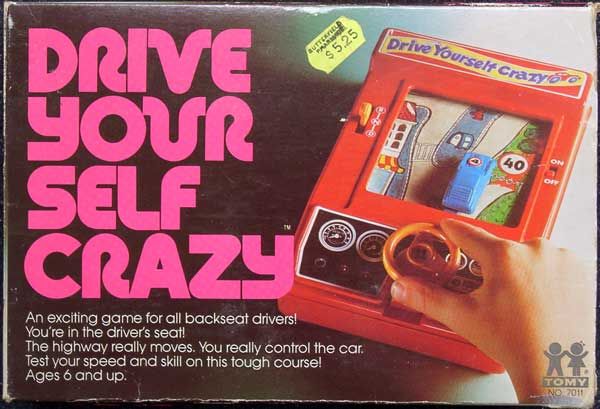
Take the 1976 Tomy Drive Yourself Crazy electronic handheld game, mint in the box, which sold for five dollars and twenty-five cents. This is roughly the MSRP of most brick-and-mortar stores at the time, and continued into the early eighties when I had one (the dollar in 1976 is equivalent to nearly six dollars in today’s market).
Rarity
Simply put, the rarer a toy is, particularly mint and sealed in the box (or packaging), the more it is worth.
Condition
Toys that are mint on card, or mint in a sealed package without damage always command higher values than those that have damaged packaging or which are loose.
Brand and/or Series
When you look at toys from a specific brand like McFarlane Toys, those figures are designed and produced intentionally for adult collectors and thus are worth more value than a similar figure by Hasbro or Mattel.
Toys that are part of limited or specific series, like chase or rare variants, also command more money than those that are mass release versions.
Historical Relevance
Toys produced for specific events in history, or that are part of something like an initial movie toy line, sometimes demand higher values than others, but this isn’t a steadfast rule for all toys. It is simply a consideration when trying to determine current valuation.
Current Market Demand
This is my single piece of advice to those who ask, and that is that toys are worth what you are willing to pay for them. You can use auction sites like eBay as a guide, but you have to be aware of the fact that professional resellers know what they are doing.
Most of them ask far more (2-5 times) the value of what the actual toy is worth. It takes patience, research, and some time to figure out what they are really worth paying for, and often if you wait, you can and will find someone offering what you want at a reasonable price.
By the numbers
The toy industry is one of the largest in the world, with sales in 2024 totaling 114 billion U.S. dollars https://www.gminsights.com/industry-analysis/toy-market, with forty billion attributed to sales in the U.S. alone. At the heart of those sales are adult consumers, who account for nine billion dollars in revenue on toyshttps://www.nbcnews.com/business/business-news/adults-are-buying-toys-s-biggest-source-growth-industry-rcna62354.
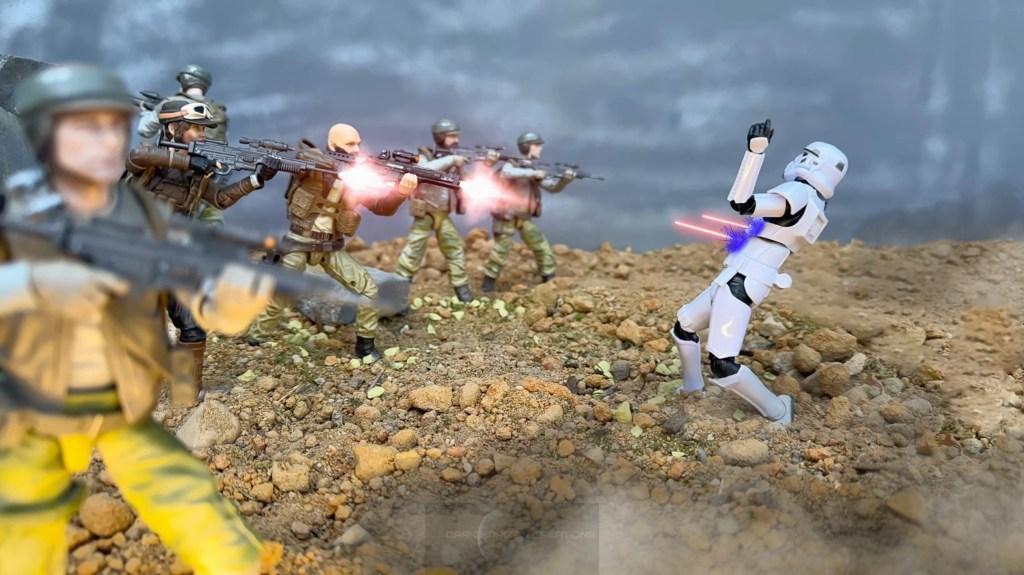
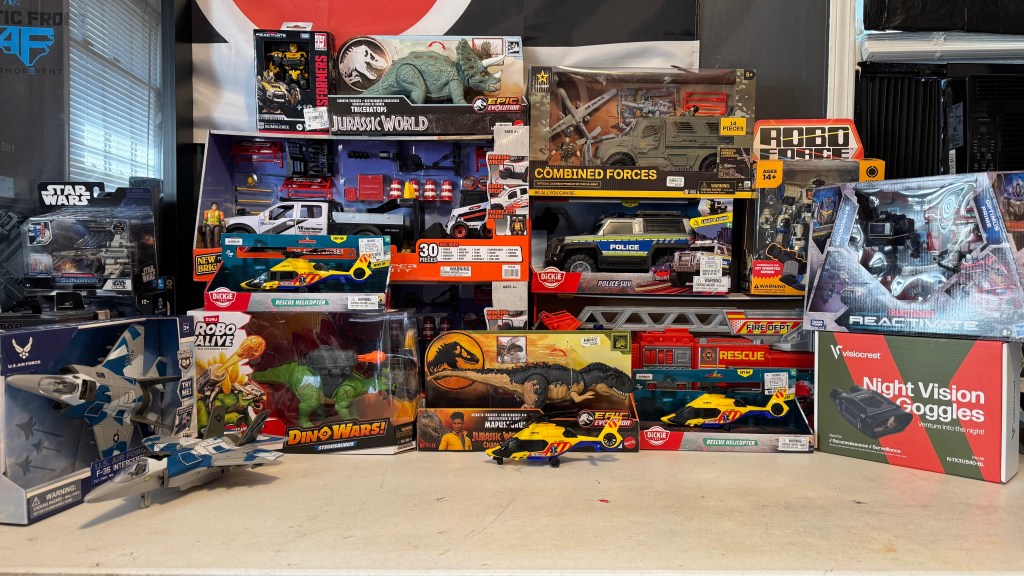
To further narrow our look at the adult collectors, I want to focus on one of the three largest toy companies in the world. Hasbro is the parent company for brands such as G.I. Joe Classified Series, Marvel Legends, Star Wars, and Transformers. All of these brands are carried not by parents shopping for their children, but by adult collectors.
Ninety percent of all sales for just the four brands that I listed above are from adult collectors. That’s why the design and marketing teams behind these brands focus on the adult collector community, by offering highly detailed replica toys, with distinct features and realism.
Both Jazwares and Mattel do the same, and there are dozens of third-party companies that market exclusively to adult collectors alone. In short, the toy industry is kept alive by the grown-ups that you make fun of, but more on that in a moment.
Discrimination and harassment
There are unfortunately, many who have taken the stance that adults who collect and play with toys must be mentally ill. You know we must be leaning in on the Autistic, Down Syndrome, we’re a threat to society tag because we collect and play with toys, right? I mean, shouldn’t we all just watch ESPN and go to the gym?
The fact is, there is nothing further from the truth. I am certain that there are disabled collectors out there, and I’m even more certain that many of them have been, and continue to be, the target of bullying to some degree.
The attempts by deranged individuals to destroy them for their interests is perverted in every sense of the word. The reality is everyone does not share the same hobbies or interests. Not everyone wants to go to the club, the gym, or be a part of whatever.
In doing research for this article, I spoke to two comic bookstore owners, and they both concurred that ninety percent or more of their customers were adults. Some of which were identified to me as lawyers, bankers, sitting judges, ext. In other words, people from all walks of life collect comics and toys. Sorry nerds, we aren’t alone it seems.
When I inquired from the store owners about the disposition of their customers, they both told me that their adult customers were normal people. Both store owners also shared with me how the above stereotypes couldn’t be further from the truth, and told me their thoughts on it. In conclusion, there’s no medical or scientific evidence to prove that adults who collect comics and toys are mentally ill. If you disagree, put it in writing and let’s take it to court.
Conclusion
I hope this post gives you the reader insight and understanding into the world of adults who collect toys. This is not meant to be an all-inclusive article on the subject, as there is far more detail than what I covered in a few paragraphs.
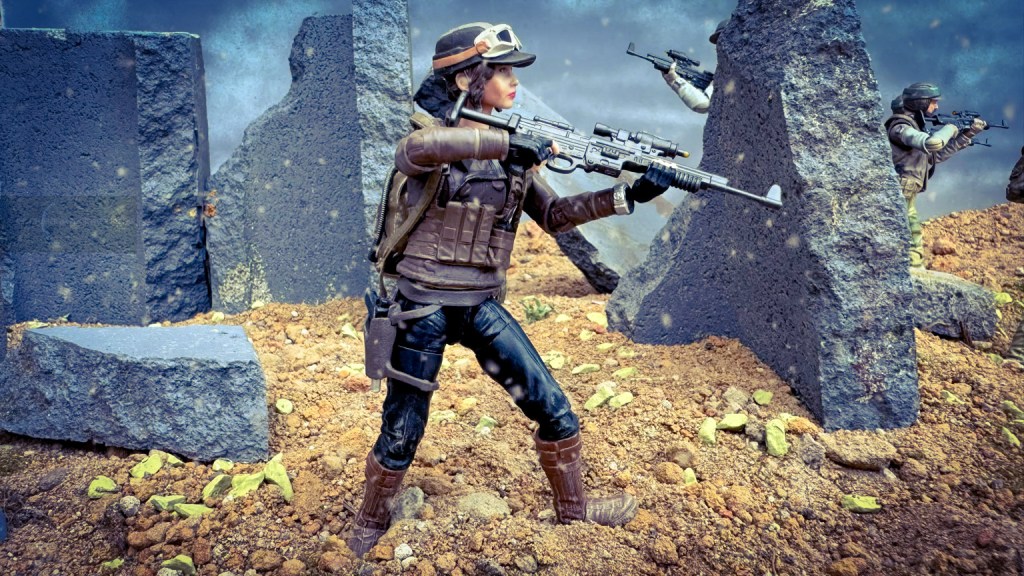
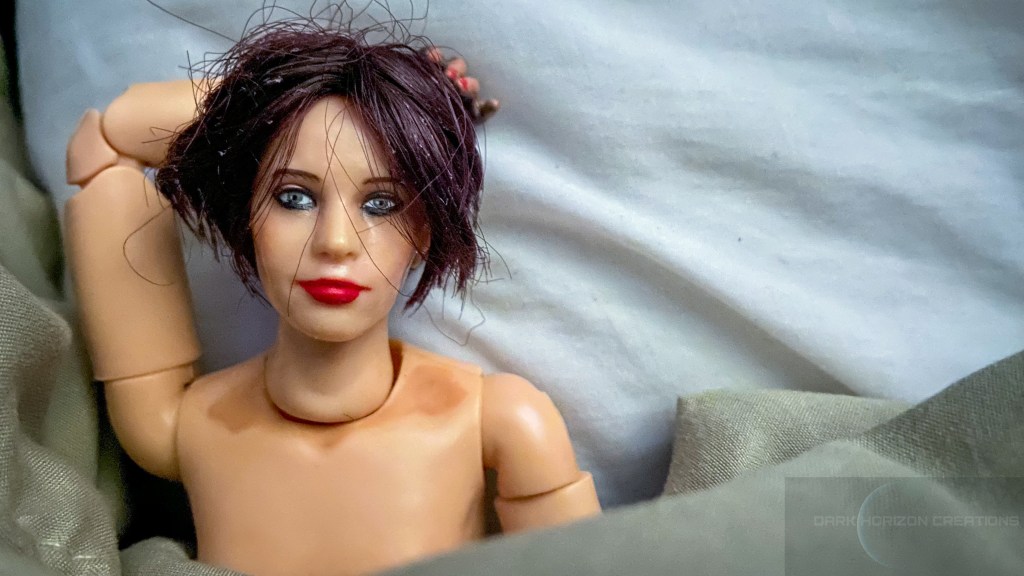
I am by no means an expert; I am a collector and fan, and my toys will continue to be at the center of my life until the day that I die. Heck, I’m in a common law marriage with my Jyn Erso action figure, so that should tell you how good it is!








 Dark Horizon Creations