THE AFTERMATH OF TARGET’S NOT SO EXCLUSIVE OVERSIGHT
INTRODUCTION
As an adult toy collector, my passion for all things plastic began at a very early age. In later years, I began to learn everything possible about my favorite cartoons and toys. Not because I desired to be some self-righteous know it all, but because I began writing articles for various websites, and working as a consultant to the toy industry.
That learning curve has included the business aspects of the toy industry as well. It’s a facet of buying and collecting that many may not be aware of, but it plays a critical role in one of the world’s largest industries.
BY THE NUMBERS
The toy industry is a global industry, with sales in 2025 reaching $123 billion U.S. Dollars. Over $46 billion of that is attributed to sales here in the U.S. alone, which accounts for three billion individual units sold online, as well as at retail. From 2024 through 2025 toys sales increased by seven percent, with a twenty-four percent increase in sales over the last five years.
Collectible toys like action figures made up nineteen percent of all global toy sales in 2025, and those sales alone have increased thirty two percent over the last year. The largest toy company in the world is Hasbro, and they account for just under $3 billion of U.S. toy sales in 2025, which is just over nine percent.
By contrast, Hasbro also stated in 2025 that their sales consisted of 23.9 percent of the action figure market. What they do not report is the fact that adult collectors account for eighty percent or greater of all sales of their five largest action figure lines. So, while other areas of the economy are struggling, the toy industry doesn’t seem to be one of them, or does it?
THE TARGET DEBACLE
I hate Target, and I refer to it as the rich people store, because it is the opposite of Walmart. From the moment that you walk in the door, you can sense the self-righteousness like the Dark side of the Force. I have never seen people engaging in a conversation or talking loudly in a Target; it’s as if there’s some unspoken rule that you have to be quiet.
Most of the customers are rude and will walk right over you like they know that I’m disabled and don’t belong there. God forbid if you try to pay with cash at the checkout, and don’t dare think of inconveniencing anyone by having to wait on you while you count change to pay for that toy that you couldn’t afford to begin with.
No, I don’t like Target, and the only reason that I occasionally force myself to enter their wretched building is because they like other retailers have exclusive toys to their stores, that cannot be found on their website. They also mark stuff down, which means that they often have deals on collectible toys that you won’t find online, either.
STARSCREAM NO MORE?
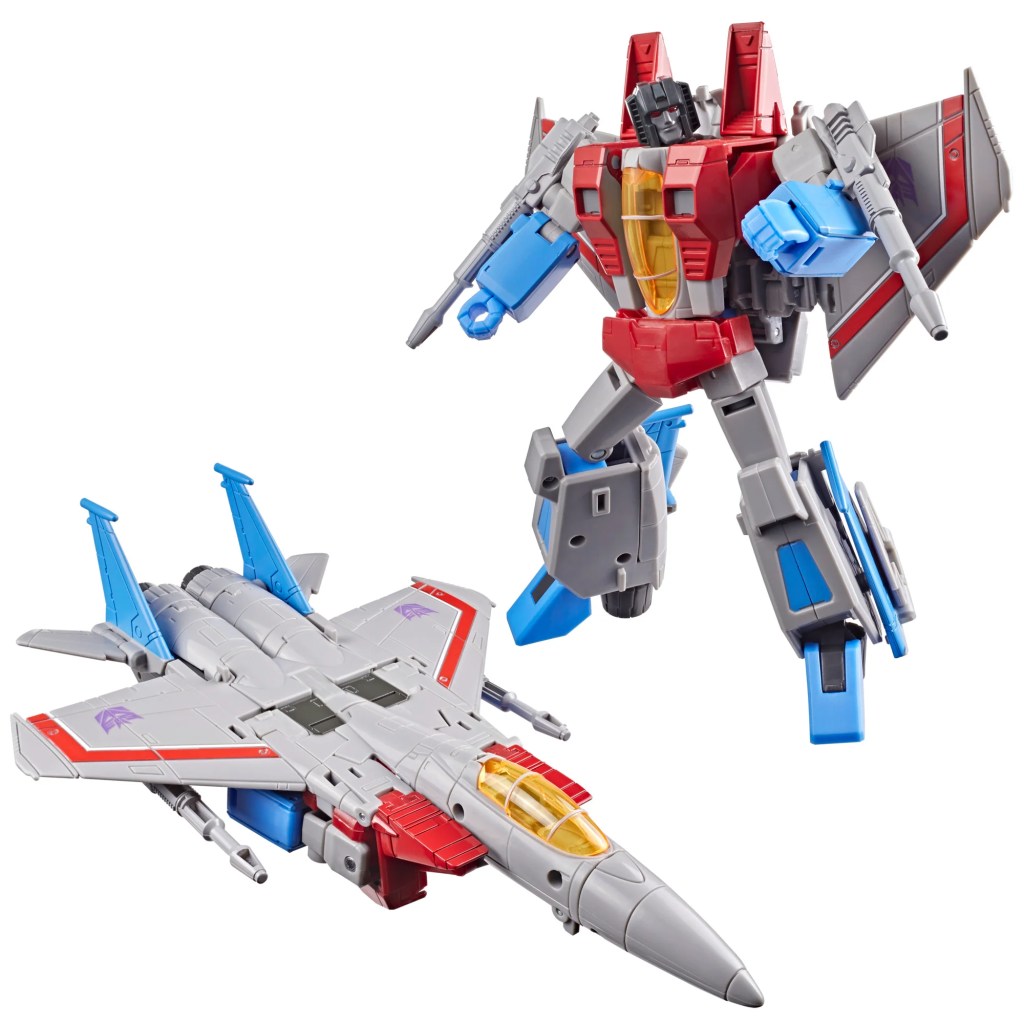
Now that you all know how I feel about Target, let’s look at a recent example of how Target dropped the ball. Back in June we got our first look at the Transformers Studio Series 86 Starscream via the boards over on TFW2005. It’s an all new mold, larger scale, with really nice paint apps, and an all-new head sculpt.
This figure was and is a Target exclusive, and pre-orders went live the very next day for Target’s Friday Geek Out sale. Unfortunately, Many of the pre-orders ended up being cancelled, as existing stock of the figure on both the Hasbro Pulse and Target websites sold out quickly.
That however, was not the end of the story, nor was it all of it. There was a major issue behind the scenes being concealed from collectors, and one that Target is unlikely to ever acknowledge publicly. For that reason, I share this without any direct links to the sources who chose to disclose this information.
HOW IT WORKS
When a toy company like Hasbro reveals a new product to their retail partners like Target, they already have a marketing strategy in place for that toy. The retail partners select what they will buy, in what quantity, and then determine what the shelf cost will be per unit. They then place the order for the toy.
It is the retail partner like Target and not Hasbro, who incurs the shipping cost for those orders. On this particular action figure Target most likely purchased eighty thousand units from Hasbro. Both Hasbro and Target’s marketing teams already know the profitability of the Transformers brand.
There are established metrics for each brand that they modify based on demand, popularity, and sales. Their marketing teams even use forums and websites where they enroll and have accounts where they interact with the collectors to assist in their design and marketing strategies.
Transfomers are one of Hasbro’s top five toy brands, incredibly popular with adult collectors, and that’s who these figures are specifically marketed to. So, let’s look at some conservative numbers here, and for the sake of this article I can only guess the exact quantities based on my knowledge of store shipments that I’ve seen in person.
Target has two thousand and eight retail locations nationwide, and each store most likely received an initial shipment of three cases of Starscream, totaling twelve action figures per store. That means that they would have ordered twenty-four thousand and ninety-six figures for the stores alone, with another five thousand or so for online sales.
So, for the sake of argument let’s round that number to thirty thousand total units. These figures would be shipped four to a case, inside of a forty-foot trailer via water shipment. Shipping by sea is slower but cost effective for bulk quantities. Each of those forty-foot trailers cost between four and six thousand dollars each to ship, and if Target ordered thirty thousand units, they would be packed 400 cases per container.
That means that it would take seventy-five containers to ship Starscream from his birthplace in China, to the loving store shelves of Target, where he would await his new home. The total cost for his trip would be $450,000, before fuel and other surcharges billed to Target by the shipper. So, you can see from shipping alone one very important aspect of how they calculate the cost of a toy at retail.
THERE’S BEEN A MODIFICATION TO YOUR ORDER….
My hypothetical numbers are probably close to accurate IF the actual shipment had been made, but that isn’t the case. Remember all of those cancelled pre-orders that I mentioned? Well, that main water shipment never left the docks in China. That’s right, Target cancelled the shipment of their store exclusive Starscream figures, but why?
Why would one of the largest retail chains in America pay hundreds of thousands of dollars for a toy order worth $1.6 million in sales, and accept those losses? The unfortunate answer goes back to shipping. There are existing import tariffs on Chinese goods, including toys, and some of these tariffs are as much as 145%.
We may never know the actual amount, but if it were only fifty percent being charged, then that means that Target most likely was faced with paying more than one million dollars for a single shipment of toys. Now, I was not privy to the details of this being a single shipment, or if these figures were part of a larger toy shipment, as they get placed on a boat with other merchandise.
The shipping cost simply reflects the charge per container for being on that boat, and nothing more. Whatever the details, Target determined that the cost did not justify the order, and they cut their losses. So, what happens to the toys? They get sold to a Chinese distributor, where they will be auctioned off to third party vendors.
I have read that some of them will almost certainly show up on third party toy retailer websites, and possibly in discount stores like Ollie’s and Ross in the future. Needless to say, there are a lot of unhappy fans out there, because this was a store exclusive.
As of my research for this article, there were exactly 203 units of the Transformers Studio Series 86 Starscream in Target’s system. That’s 203 units across all of their retail locations. Some may have been on store shelves, but at least one Target location I learned about had something more fun going on:
If you wanted Starscream, you had to pay a certain employee fifty dollars, and then he would go in the back and get you one, that you would then take to the check-out up front. That store is currently under investigation. I guess scalping doesn’t work while you’re on the clock, then?
FINAL THOUGHTS
It is entirely possible that Target will find a work around and rectify a costly decision that could have more severe consequences for them in the long term. I’ve seen some folks on one site even state that they have pre-orders in the system, and I hope that they do.
In the end, it’s a long-term issue that requires some creative marketing, and at least in this case, it was not something that Target planned for. How and why is beyond me, when you know that those tariffs are existing, and will affect anything that you ship across the pond.
Hasbro has already made several price increases on their collectible toys like action figures in the last two years, while reducing accessories and points of articulation. This is just one more gaffe to throw wood on the fire for toy collectors.