

Why the cancellation of Haslab projects in 2026 may be pointing to a downward turn for Hasbro
Introduction
Two weeks ago an announcement was made by Hasbro representative Ben MacCrae that there would be no new Haslab projects for 2026.
I’m certain there were many collectors who were taken aback by the news, while others have posted their relief in the decision.
I am more reserved in my conclusions as to why Hasbro may have made this call, and I don’t think that it is an indicator of anything good for the company.
Before I share my thoughts, let’s look back specifically at Haslab itself, as well as some other business decisions made by Hasbro that fans should be paying attention to.
Scalping the fan base 101
Haslab was founded in 2018 as a direct to consumer crowdfunding platform for premium collectible toys.
It is Hasbro’s solution for making insane stuff that would be cost prohibitive, and high- risk as a mass- retail production item.
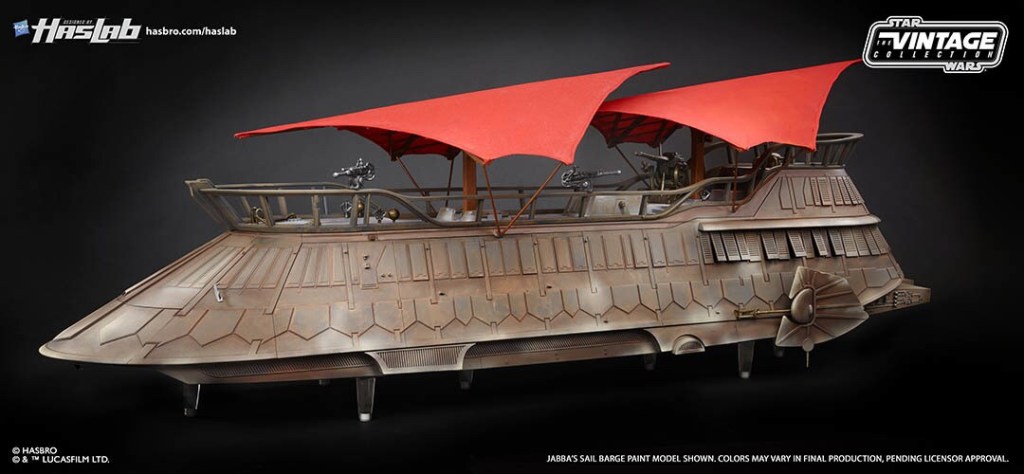
They kicked things off with the Star Wars Vintage Collection Jabba’s Sail Barge that same year. The project required eight thousand backers to go into production, with a price tag of five hundred dollars per unit.
Each backer could purchase up to five units each, and many did (Scalpers go a step further, and use the names and emails of other relatives to buy more, in order to flip them for a profit on eBay).
The project closed with exactly eight thousand, eight hundred and ten units ordered, giving Hasbro a total of four point four million dollars in revenue from their first Haslab project.
What they didn’t disclose to consumers Is that each of those units cost Hasbro seventy five dollars to produce, at a total of six hundred and sixty thousand, seven hundred and fifty dollars!
That means that they raked in nearly three point eight million dollars in profits, at a five hundred percent profit over cost margin.
This makes Hasbro the biggest scalpers of the toy industry.
Hasbro Pulse
So, now that we have had our math lesson for the day with the very first Haslab project, let’s talk about the other side of the coin, Hasbro Pulse.
Pulse is a direct to consumer hub, that is part of their e-commerce website. It is marketed exclusively to adult collectors, who comprise eighty percent of Hasbro’s revenue for their five largest brands.
Star Wars Black Series, Star Wars Vintage Collection, G.I. Joe Classified Series, Marvel Legends, and Transformers Studio Series all feature Pulse exclusives, that are not available through traditional mass retailers.
Both Haslab and Hasbro Pulse are similar in that they eliminate lost revenue, while maximizing profits on sales. They force consumers to buy from them directly, in order to get what they want.
Why it matters
Let’s pause for a moment and take a look at Star Wars as an example. In 2012 Disney acquires Lucasfilm in a four billion dollar deal, that gives the mouse total control over the greatest science fiction franchise of all time.
That control also trickles down to tie-in merchandising like toys. Disney, not George Lucas, now has the final say on what Hasbro gets to do with their new intellectual property.
From 2012 until 2015, Hasbro lost five hundred million dollars in lost revenue on its Star Wars brands alone, which was due primarily to poor sales from The Force Awakens toy line.
This prompted major changes from Hasbro, including the cancellation of the five POA basic assortment of figures in 2019, which were the back bone of the brand since 1977.
It also cancelled the 1/18 scale playsets and vehicles that had previously dominated every Star Wars toy line since the early days at Kenner, up until 2010.
All of these losses were instrumental factors that led to the creation of both Hasbro Pulse, and ultimately Haslab.
Cutting Corners
Now that we’ve taken a look back at some of the factors that led to the creation of Haslab, let’s talk about the here and now.
Hasbro’s current CEO Chris Cocks may become the fault in the company’s foundation. His new “playing to win” strategy is calling for a minimum of three to five percent revenue growth this year.
That strategy included cutting Hasbro’s global staff by twenty percent, or just over eleven hundred positions worldwide.
That may not seem like much for the world’s largest and most profitable toy company, but in reality it may be an indicator of things to come.
Another area that they are cutting costs isn’t just their staff, it’s also in production and assembly of existing toys.
Take for example, the Star Wars Black Series figures. Since 2023 Hasbro has removed points of articulation such as swivel hips, and replaced them with seamless leg joints.
They have transitioned to pinless, single elbow and knee joints, over double elbow and knees with greater range of motion.
By reducing the points of articulation in the line, Hasbro has cut the total cost of production and assembly.
They have also minimized the included accessories with each figure, while capitalizing on their perceived marketing strategy.
The savings to the company then are transferred to the consumer, by giving them a figure with less articulation, and a cost increase to twenty seven dollars and ninety nine cents for a basic figure!
So for the collector, we are paying more while receiving less. Hasbro’s marketing team have done their homework, and they know that collectors will continue to take the bait, as long as they give just enough to keep us hooked on the line.
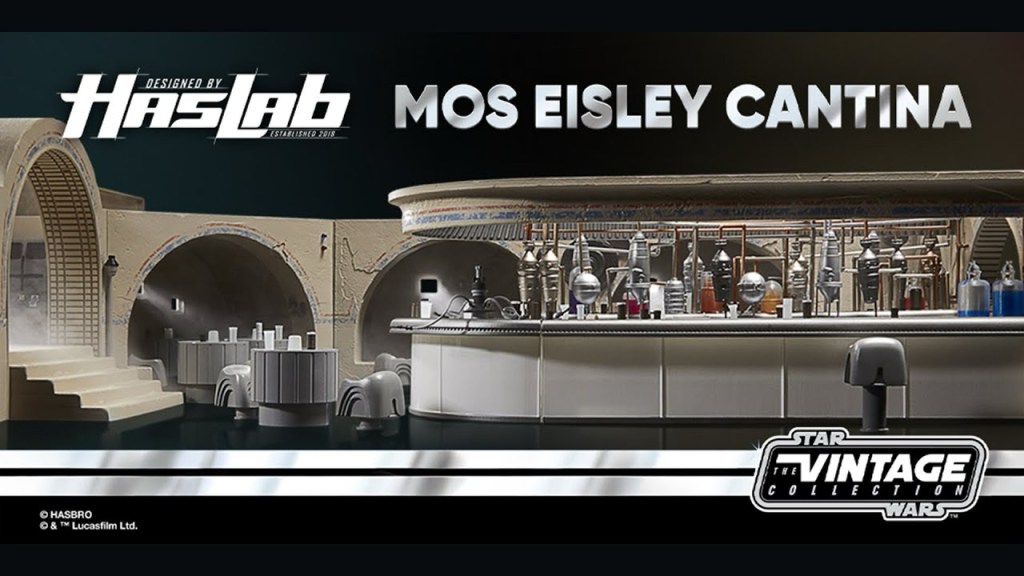
The same holds true for Haslab. When you take projects like the Vintage Collection Cantina, it isn’t as great as it is made out to be.
Rather than being a Haslab project, they could easily have offered that same project as a mass retail or store exclusive.
It could have been marketed in multiple sections, drawing collectors to buy each one in order to build the full Cantina.
So, while some projects may necessitate being offered as a single, large unit, others may benefit from a different marketing strategy.
Haslab’s future
To date, Haslab has funded and produced over a dozen projects, but they have also had at least six that did not receive enough backers to go into production.
Failed projects bring negative publicity, and that’s something that the leadership at Hasbro isn’t likely to allow to continue.
Furthermore, the overall success of Haslab is questionable at best. Support for the projects have declined, particularly in respect to the current economic climate and market.
Collectors are less likely to invest four or five hundred dollars in a project that they have to wait a year to receive, when they can invest that same amount in other toys that are readily available now.
Increased cost of existing lines also hasn’t escaped the attention of collectors, including social media influencers who have exposed it to the public.
When you take all of these factors into consideration, as well as the uncertainty and instability of global markets, it becomes clear that Haslab may be short lived.
Moving on up to the east side
The last thing that I will make note of is this: Hasbro is in the process of relocating its global headquarters from Pawtucket, Rhode Island, to Boston, Massachusetts.
The new facility is considerably smaller, at just two hundred and sixty five thousand square feet, and will house seven hundred employees. It is a very confined location, with an extremely different footprint than its current home.
By comparison, the legacy facility in Rhode Island is a whopping three hundred and forty three thousand square feet. That’s a considerable amount of floor space that the company is giving up.
That in itself is very perplexing from a business standpoint. The reason is this: why would an established company make a high risk move into a multi-million dollar leased facility in another state, when they have an adequate facility that they already own?
If the leadership at Hasbro is so concerned over cutting costs and playing it safe in the current market, then why make this decision?
So, if they are going to such extreme measures to cut costs, then projects like Haslab would certainly be at risk for cancellation.
Conclusion
Haslab was conceived as a means to bring the fans collectible toys that would be deemed cost prohibitive for retail, while eliminating lost revenue, and maximizing profits for the company.
That model is beginning to be seen as a risk in itself, due to decreased interest and negative publicity on failed projects. What is needed then, is a new marketing strategy.
In my opinion, if Haslab is going to continue as a platform, then the answer for its success is a simple one: reduce the cost per unit for the consumer.
Hasbro has made it a point to market the Haslab projects on average at five hundred percent profit over cost per unit.
That isn’t just ensuring zero lost revenue, it is an unethical business practice that has and will continue to have negative consequences.
The issue here isn’t a business model, a supply problem, or shortage of stickers; it’s greed. It is the craving and love of money which corrupts and motivates individuals and companies alike.
The simple fact is Hasbro like any other company is run by people, and not everyone lives a life above reproach. There is a way to make a profit, and do it in a fair and just manner.
That is not unfortunately, what we have seen to date with Haslab, and that may be the very reason why the platform itself fails.
The other possibility, and one that I think they should have implemented from day one, is to do the opposite of what they are doing.
Rather than play it safe by limiting these toys to Haslab, would be to market them through select retailers. If you think that wouldn’t work, think again.
The Vintage Collection Razorcrest was almost a Disney Store exclusive, rather than a Haslab project!
The fact is Hasbro has the ability and the means to market these toys however they wish; they simply choose to limit our options in order to maximize their profits.
So for now Haslab may continue to be an option to bring fans the toys they want, but in the end does the cost justify it, and will the platform be sustainable into the future?

