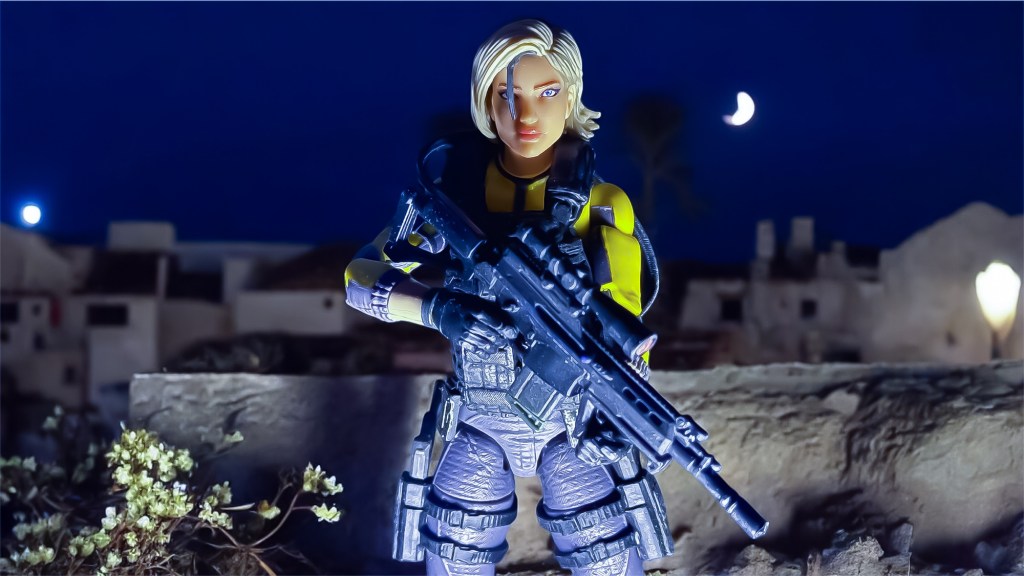
Action Figure Fumble

How the G.I. Joe design team has lost the Classified Series

Introduction

When the G.I. Joe Classified Series was first announced back in 2019, one Hasbro executive stated that they expected the line to last around five years, or from 2020-2025.

I think it’s safe to say that the line’s popularity with adult collectors (who comprise eighty percent or greater of the line’s sales) have helped sustain it beyond that original projection.

That does not mean however, that the line has not seen its share of failures. In this blog post, I want to take a look at a few of the specific figures revealed going into SDCC this year, and then look at some of the sub lines in the series.

We’ll wrap things up by examining how some of these entries have affected the line in the larger context, as well as examining strategies that Hasbro could pursue in the future.

Facial recognition

One of the things that Hasbro has excelled at have been the portraits on the Classified Series. The continued evolution of their Photo-Real ink jet printing technology have given their action figures the most realistic life-like resemblance of any one twelfth scale line to date.

That is not to say however, that there haven’t been quality control issues along the way, and nowhere is that more evident than with Lt. Falcon.

Originally released in 2023, Lieutenant Falcon was voted the worst figure in the line by collectors due to the horrid head sculpt.

Hasbro wasn’t oblivious to the fan backlash, and they released an updated Falcon under the Night Force subline in 2024, as part of a deluxe two-pack with Quarrel.

Unfortunately, the latter figure’s success has been overshadowed by the recently revealed Retro Cardback version.
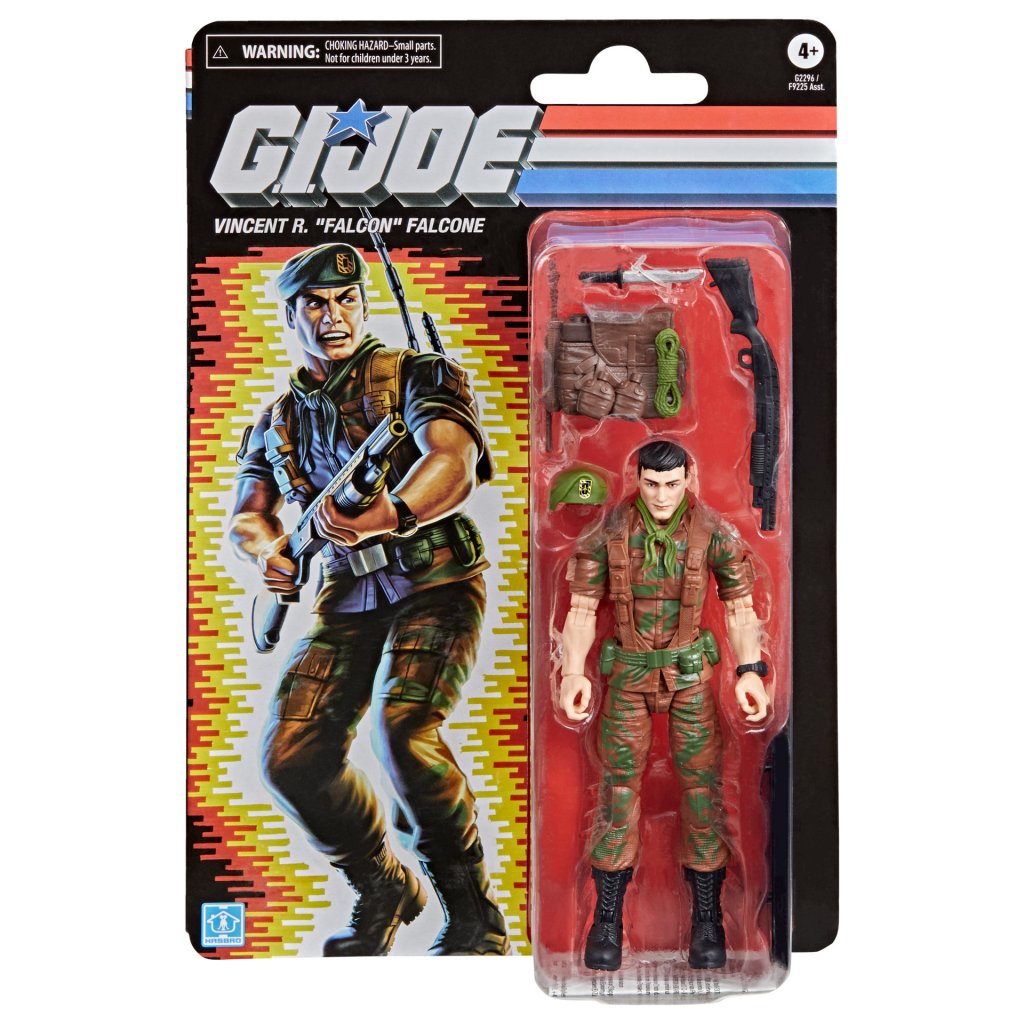
Let’s put a smile on that face!

The Retro Cardback figures are a sub-line within the Classified Series, first released back in 2022. They are variants that are identical to the original three and three quarter scale action figures from the eighties.

The Retro line are marketed towards adult collectors who grew up with the original G.I.Joe cartoon and toy lines, in an effort to capitalize on nostalgia.

They typically include very minimalist accessories that differ from their main line release, and have for the most part been received with mixed reviews.

The real issue here is over saturation of the market with variants. The initial release of Falcon was a flop, while the Night Force variant was a success. The Retro variant aims to release an improved version, to correct the problems with the first.

Personally, I don’t see it being a success for the line. Simply put, it’s nothing more than a repaint/retool of the original mold.

It doesn’t look good, and it retains that awkward appearance that the original is known for, in spite of the new head sculpt.

She’s got the looks

In 2023 Hasbro released a deluxe boxed set of two female Cobra troopers called Valkyries. They were a hot item among collectors, and have retained their value on the secondary market thus far.

During SDCC, it was revealed that these figures will also be receiving the Retro treatment, with the female Cobra Trooper.

This figure is intended to be an army builder, and though there are slight differences from the original, it’s one figure that I’m not opposed to.

This will no doubt be one of the more sought after figures in the Retro line by adult collectors, much like the mainline counterpart.

I will say that I’m not a fan of their choices for kit on these figures, and the remedy is simple: Replacing the cheap harness with a plate carrier from Valaverse.

Making this minor change, along with some minor paint apps will drastically improve the appearance and realism of this figure.
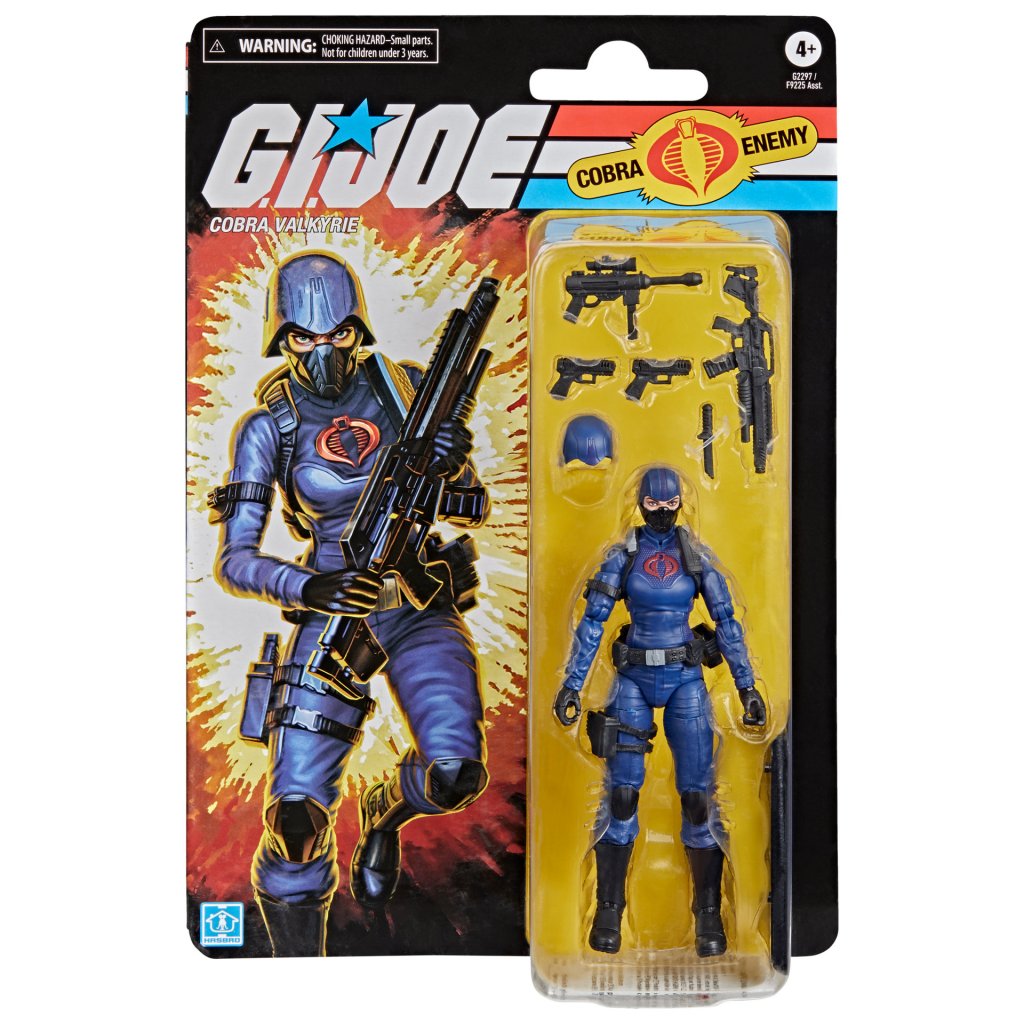
Retro Cardback Female Cobra Trooper.

Flash, Gambello!

New, from Worlds of Wonder! Okay, so it’s not a Lazer Tag commercial, but it is a laser trooper. Enter Anthony Gambello, call sign Flash.

If you’re looking for nostalgia, this figure is oozing with it, as he is a modern upscaled copy of the original figure.

The problem that I have with this reveal is complex. To begin, this is another example of over saturation of the line by releasing another laser gun figure.
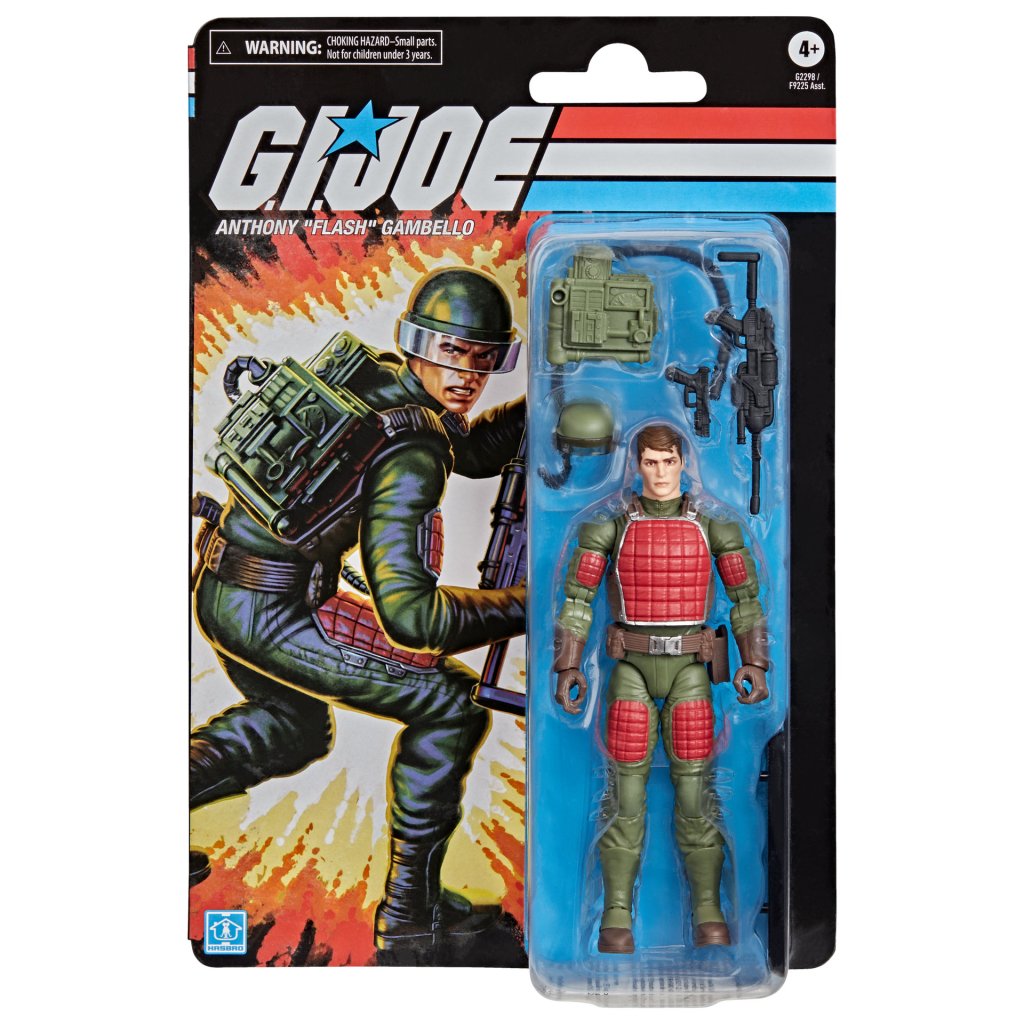
Lazer Tag Champion

Sci-Fi was released in 2025, and is a much nicer figure than Flash. You also have to consider the cost of these figures, which was increased to $27.99 here in the U.S.

Adult collectors are going to look at this on the pegs, and these two things are going to immediately dictate their decision to pick or pass on this figure.

This isn’t going to be a major financial win for Hasbro in any sense of the word. They have already lost revenue on the Retro sub line, and it’s not a lesson that they seem to be learning from.

Less than honorable mention

Sergeant Slaughter has been a household hero since the early eighties, and his involvement with and contributions to G.I. Joe are nothing less than heroic.

The same can’t be said however, for the recently announced Triple T Tank. It is for the most part an exact replica of the early eighties toy, with the exception of the mini guns and canopy.

And herein lies the problem with this toy. The design team at Hasbro has ignored the call from fans to bring realism to this line.

They have consistently missed opportunities to balance nostalgia with real world military models, and that has translated into failed marketing strategies.

As previously stated, Adult collectors are the primary consumers of this line, and these “kidults” as we’re called, have grown up with the original G.I. Joe toys in the eighties and nineties.

We were inundated with playsets and vehicles that kitbashed real world technology, with fantasy and science fiction elements.

As adults we have become accustomed to seeing real world military technology, and that clicks with the child in us. The “wouldn’t it be cool if they made this as a toy?” mindset.

So naturally, there may be stuff from the original toys that we want to see made that we could play with, there’s also that nagging feeling of viewing G.I. Joe from a more gritty, grounded perspective.

The Triple T in my opinion looks like a tracked snow plow. The cockpit is cramped, and there’s nothing practical about it.

It’s the sort of thing you envision a disabled person driving out the back of their minivan at Walmart to buy groceries. Not exactly G.I. Joe material.

Since we’re already in the hundred dollar price range for every toy we buy, why not take the opportunity to improve upon the original design?

Increase the scale, lengthen the chassis. Give it a small troop carrier capacity in the rear, with a remote weapons station on top! Make it look like it came to destroy Cobra, instead of pulling your car out of the snow pile at work.
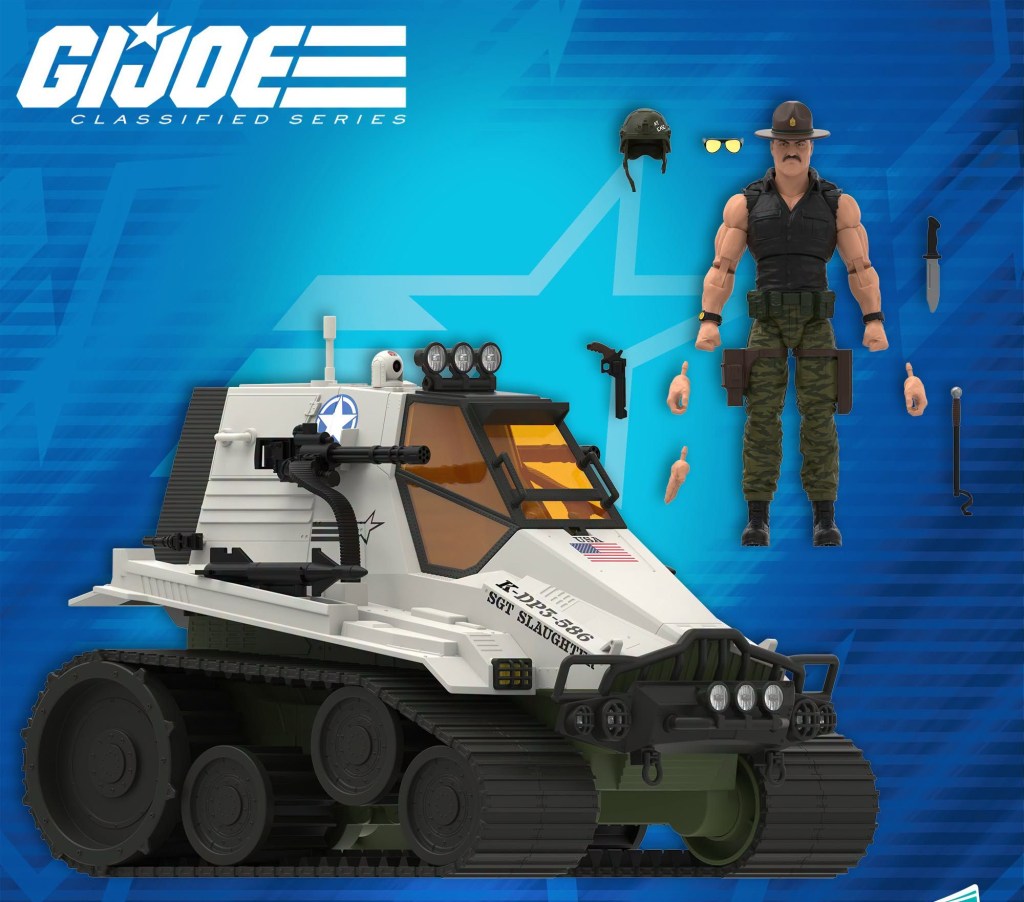
The one man short bus has arrived!

Mental health awareness

Finally, I have to go here because nobody else will. The Mad Marauders sub line sucks. Who wants G.I. Joe figures in bright Blue, Brown, and lime Green?

If there was ever a way to demoralize adult collectors and hurt sales, this was it. To date, Hasbro has released half a dozen figures in the Mad Marauders line, which is a reimagining of the original Slaughters Marauders.

They should probably check the sales of this crap, and find a better use for these molds, much like Valaverse does with their figures.

You don’t have to be a calculus major to figure out this is the least popular sub-line of the series, and it’s destined to become a favorite at Ollies and Ross.
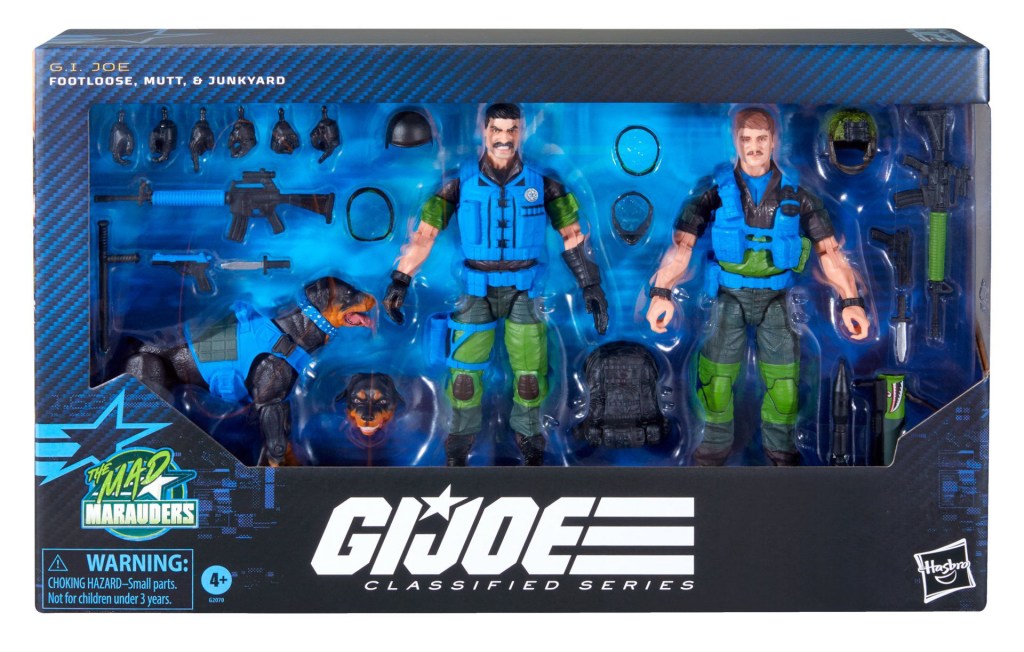
The new approach to tactical fashion on the battlefield.

Conclusion

Like any toy line, the sales and success of the Classified Series are determined by a number of factors that marketing teams are constantly evaluating.

Somewhere along the line though, the design and marketing teams for the Classified Series have missed some major indicators as well as opportunities.

Ultimately, the longevity and success of this line will be determined by the direction that they continue to take it. At some point, someone needs to call for a tactical pause and reevaluate the line.

They need to take a very careful look at each figure and toy individually, and note what worked, and what didn’t.

They also need to drop the nostalgia, and listen to collectors. At least fifty percent of their consumers also buy the Action Force line of figures from Valaverse, and Hasbro needs to pay attention.

They have a more modern and realistic line of military figures, which is one of their major selling points.

Action Force figures are also highly customizable, due to most of the figures either using or reusing existing tooling.

This is a major attraction for collectors who liked to customize their figures. They also use a better grade of plastics for their molds, and all of their accessories are made from ABS with zero warping.

Their lone vehicle the Vanguard, is just as popular as the G.I.Joe VAMP. It’s larger, and far less expensive. Judging from it’s popularity, the Vanguard has probably surpassed the VAMP in sales.

Like the old saying goes, you can’t compare apples to oranges, but in this case there are takeaways that anyone in the toy industry should be paying attention to.

If I had to guess, I would argue that the Classified Series is on a downward trend, with 2027-2028 being critical, and I don’t make that analysis lightly.

The only way it could feasibly continue is if Hasbro were to make some very real changes to the line, including in how it’s marketed.

Then again, what do I know? I’m just a child trapped in a man’s body, who’s willing to work for more toys.

The price is wrong

Why the cancellation of Haslab projects in 2026 may be pointing to a downward turn for Hasbro

Introduction

Two weeks ago an announcement was made by Hasbro representative Ben MacCrae that there would be no new Haslab projects for 2026.

I’m certain there were many collectors who were taken aback by the news, while others have posted their relief in the decision.

I am more reserved in my conclusions as to why Hasbro may have made this call, and I don’t think that it is an indicator of anything good for the company.

Before I share my thoughts, let’s look back specifically at Haslab itself, as well as some other business decisions made by Hasbro that fans should be paying attention to.

Scalping the fan base 101

Haslab was founded in 2018 as a direct to consumer crowdfunding platform for premium collectible toys.

It is Hasbro’s solution for making insane stuff that would be cost prohibitive, and high- risk as a mass- retail production item.

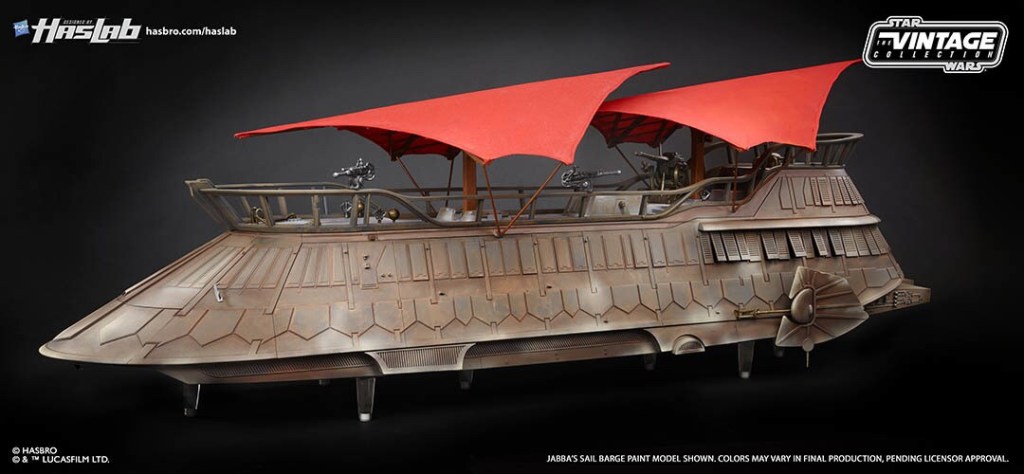
They kicked things off with the Star Wars Vintage Collection Jabba’s Sail Barge that same year. The project required eight thousand backers to go into production, with a price tag of five hundred dollars per unit.

Each backer could purchase up to five units each, and many did (Scalpers go a step further, and use the names and emails of other relatives to buy more, in order to flip them for a profit on eBay).

The project closed with exactly eight thousand, eight hundred and ten units ordered, giving Hasbro a total of four point four million dollars in revenue from their first Haslab project.

What they didn’t disclose to consumers Is that each of those units cost Hasbro seventy five dollars to produce, at a total of six hundred and sixty thousand, seven hundred and fifty dollars!

That means that they raked in nearly three point eight million dollars in profits, at a five hundred percent profit over cost margin.

This makes Hasbro the biggest scalpers of the toy industry.

Jabba’s Sail Barge

Hasbro Pulse

So, now that we have had our math lesson for the day with the very first Haslab project, let’s talk about the other side of the coin, Hasbro Pulse.

Pulse is a direct to consumer hub, that is part of their e-commerce website. It is marketed exclusively to adult collectors, who comprise eighty percent of Hasbro’s revenue for their five largest brands.

Star Wars Black Series, Star Wars Vintage Collection, G.I. Joe Classified Series, Marvel Legends, and Transformers Studio Series all feature Pulse exclusives, that are not available through traditional mass retailers.

Both Haslab and Hasbro Pulse are similar in that they eliminate lost revenue, while maximizing profits on sales. They force consumers to buy from them directly, in order to get what they want.

Why it matters

Let’s pause for a moment and take a look at Star Wars as an example. In 2012 Disney acquires Lucasfilm in a four billion dollar deal, that gives the mouse total control over the greatest science fiction franchise of all time.

That control also trickles down to tie-in merchandising like toys. Disney, not George Lucas, now has the final say on what Hasbro gets to do with their new intellectual property.

From 2012 until 2015, Hasbro lost five hundred million dollars in lost revenue on its Star Wars brands alone, which was due primarily to poor sales from The Force Awakens toy line.

This prompted major changes from Hasbro, including the cancellation of the five POA basic assortment of figures in 2019, which were the back bone of the brand since 1977.

It also cancelled the 1/18 scale playsets and vehicles that had previously dominated every Star Wars toy line since the early days at Kenner, up until 2010.

All of these losses were instrumental factors that led to the creation of both Hasbro Pulse, and ultimately Haslab.

Cutting Corners

Now that we’ve taken a look back at some of the factors that led to the creation of Haslab, let’s talk about the here and now.

Hasbro’s current CEO Chris Cocks may become the fault in the company’s foundation. His new “playing to win” strategy is calling for a minimum of three to five percent revenue growth this year.

That strategy included cutting Hasbro’s global staff by twenty percent, or just over eleven hundred positions worldwide.

That may not seem like much for the world’s largest and most profitable toy company, but in reality it may be an indicator of things to come.

Another area that they are cutting costs isn’t just their staff, it’s also in production and assembly of existing toys.

Take for example, the Star Wars Black Series figures. Since 2023 Hasbro has removed points of articulation such as swivel hips, and replaced them with seamless leg joints.

They have transitioned to pinless, single elbow and knee joints, over double elbow and knees with greater range of motion.

By reducing the points of articulation in the line, Hasbro has cut the total cost of production and assembly.

They have also minimized the included accessories with each figure, while capitalizing on their perceived marketing strategy.

The savings to the company then are transferred to the consumer, by giving them a figure with less articulation, and a cost increase to twenty seven dollars and ninety nine cents for a basic figure!

So for the collector, we are paying more while receiving less. Hasbro’s marketing team have done their homework, and they know that collectors will continue to take the bait, as long as they give just enough to keep us hooked on the line.

The same holds true for Haslab. When you take projects like the Vintage Collection Cantina, it isn’t as great as it is made out to be.

Rather than being a Haslab project, they could easily have offered that same project as a mass retail or store exclusive.

It could have been marketed in multiple sections, drawing collectors to buy each one in order to build the full Cantina.

So, while some projects may necessitate being offered as a single, large unit, others may benefit from a different marketing strategy.

Haslab Cantina

Haslab’s future

To date, Haslab has funded and produced over a dozen projects, but they have also had at least six that did not receive enough backers to go into production.

Failed projects bring negative publicity, and that’s something that the leadership at Hasbro isn’t likely to allow to continue.

Furthermore, the overall success of Haslab is questionable at best. Support for the projects have declined, particularly in respect to the current economic climate and market.

Collectors are less likely to invest four or five hundred dollars in a project that they have to wait a year to receive, when they can invest that same amount in other toys that are readily available now.

Increased cost of existing lines also hasn’t escaped the attention of collectors, including social media influencers who have exposed it to the public.

When you take all of these factors into consideration, as well as the uncertainty and instability of global markets, it becomes clear that Haslab may be short lived.

Moving on up to the east side

The last thing that I will make note of is this: Hasbro is in the process of relocating its global headquarters from Pawtucket, Rhode Island, to Boston, Massachusetts.

The new facility is considerably smaller, at just two hundred and sixty five thousand square feet, and will house seven hundred employees. It is a very confined location, with an extremely different footprint than its current home.

By comparison, the legacy facility in Rhode Island is a whopping three hundred and forty three thousand square feet. That’s a considerable amount of floor space that the company is giving up.

That in itself is very perplexing from a business standpoint. The reason is this: why would an established company make a high risk move into a multi-million dollar leased facility in another state, when they have an adequate facility that they already own?

If the leadership at Hasbro is so concerned over cutting costs and playing it safe in the current market, then why make this decision?

So, if they are going to such extreme measures to cut costs, then projects like Haslab would certainly be at risk for cancellation.

Conclusion

Haslab was conceived as a means to bring the fans collectible toys that would be deemed cost prohibitive for retail, while eliminating lost revenue, and maximizing profits for the company.

That model is beginning to be seen as a risk in itself, due to decreased interest and negative publicity on failed projects. What is needed then, is a new marketing strategy.

In my opinion, if Haslab is going to continue as a platform, then the answer for its success is a simple one: reduce the cost per unit for the consumer.

Hasbro has made it a point to market the Haslab projects on average at five hundred percent profit over cost per unit.

That isn’t just ensuring zero lost revenue, it is an unethical business practice that has and will continue to have negative consequences.

The issue here isn’t a business model, a supply problem, or shortage of stickers; it’s greed. It is the craving and love of money which corrupts and motivates individuals and companies alike.

The simple fact is Hasbro like any other company is run by people, and not everyone lives a life above reproach. There is a way to make a profit, and do it in a fair and just manner.

That is not unfortunately, what we have seen to date with Haslab, and that may be the very reason why the platform itself fails.

The other possibility, and one that I think they should have implemented from day one, is to do the opposite of what they are doing.

Rather than play it safe by limiting these toys to Haslab, would be to market them through select retailers. If you think that wouldn’t work, think again.

The Vintage Collection Razorcrest was almost a Disney Store exclusive, rather than a Haslab project!

The fact is Hasbro has the ability and the means to market these toys however they wish; they simply choose to limit our options in order to maximize their profits.

So for now Haslab may continue to be an option to bring fans the toys they want, but in the end does the cost justify it, and will the platform be sustainable into the future?

Full Spectrum Warrior

Autism in the ranks of G.I. JOE

Introduction

In 2009 Hasbro released a brand new action figure as part of the G.I. Joe Rise of Cobra toy line. Agent Helix was a totally new character, and she would go on to appear in both the tie-in video game for the movie, as well as the comic series.

Everything about Helix is shrouded in secrecy, except for her skills. You always find her working alone, often on some covert mission for General Hawk.

It doesn’t matter what the mission profile, Helix is adept with both edged weapons, as well as firearms. She is an expert marksman, and martial artist. Though no one is invincible or unbeatable, Helix can take care of most problems on her own.

The other unique skill that makes her a savant is the fact that she can analyze an enemy, and instantly pick their strategy apart. It’s referred to as total organic battlefield awareness, and to date she’s the only known person with this ability.

All of these abilities and skills make Helix as deadly as she is beautiful, however she isn’t without her own Achilles heel. There’s a reason that she carries these gifts, and one for which she has endured ostracism and rejection.

Hidden wounds

Helix is neurodivergent, or in simplest medical terms, Autistic. It is the bane of her existence, and the weight that she struggles with when alone. She’s extremely capable on the battlefield, while remaining crippled by Autism in society.

Highly intelligent, socially awkward, with her own set of buttons you might unintentionally push. Before her time in G.I. Joe it crippled Helix in every area of her life. Now, she’s found a place that has allowed her to use Autism as an enabler.

Helix shows off her bandaid tattoo representing Autism

Defining Purpose

In my research for this little gem, I consulted with one of the leading experts on Autism in the Carolinas, who has extensive experience in both the U.S. and other nations. I have also consulted with prior service members who are on the spectrum. Due to their roles, I will not disclose their identity.

So what is Autism exactly? The Diagnostics and Studies Manual of Mental Disorders defines Autism as persistent deficits in social communication and interaction, with restricted, repetitive patterns of behavior, interests, or activities with symptoms present from early childhood causing significant impairment.

As it was explained to me by the above unnamed psychologist, Autism is not a mental illness, but rather a physical one. It isn’t treatable with medication, because at its core there’s nothing mentally wrong with the individual.

In simplest terms, Autism affects the way and speed at which your brain processes information. This may include an inability to perceive and interpret body language and cues, a lack of empathy, and most predominantly social awkwardness or anxiety to name a few things.

Autism affects a person’s senses, at different times and in different ways. Where one person may be sensitive to certain sounds, others may be sensitive to seeing certain things, or being touched in a certain way.

To what degree a person is affected varies from one individual to the next; there is no definable correlation between individuals. Only a pattern of certain sensory responses that are associated with being on the spectrum.

Nearly everyone on the spectrum is attracted to order, in almost every area of their life. Objects positioned in a certain direction, rooms and houses arranged a certain way, and even cleaned a certain way.

You may find neurodivergents who don’t like people touching them or their stuff, and collecting things that others would find odd. Construction paper, paper clips, and pens are a few things that come to mind.

The defining negative aspect of Autism are meltdowns. Often misinterpreted as angry outbursts or temper tantrums, meltdowns are anything but the previously named culprits of society.

A meltdown occurs when too much information overwhelms the senses, and subsequently the brain is incapable of processing that information. The meltdown is an uncontrollable natural response that is triggered by the brain’s inability to cope with the information flooding the neural pathways.

An example might be an autistic individual is afraid of someone confronting them, and they may throw their hands up and yell not because they are angry, but because they afraid, and want that individual to stop what they are doing.

They cannot legitimately process what is happening, and from their brain the conversation may be perceived as a verbal attack on their character or credibility. If so, the resulting meltdown would only serve to solidify misconceptions to the inexperienced and untrained.

To further expound on this, there are individuals like Helix who are high functioning, meaning they can communicate, and live a mostly normal existence. Put another way, there is nothing wrong with them.

On the opposite end of the spectrum are those who are crippled by their brain’s inability to process information, and who require constant attention and care. They cannot control things like speech, with many being nonverbal.

In between are many combinations and variations on these two extremes. You may have an individual who is high functioning, and yet who has severe sensory overload.

For the most part, high functioning individuals were formerly diagnosed with what is referred to as Asperger’s syndrome, while more severe cases were diagnosed as full on Autism.

In recent years however, both have been integrated into what is now called ASD, or Autism Spectrum Disorder. The reason for this change is a simple one; because every single person is different, and so is their specific diagnosis.

Most adults who are high functioning would tell you they are not anti-social; they just abhor drama and having to put up with other people’s crap. They despise things like gossip and slander.

They are not in some cute contest to win a person’s favor; they simply want to live their life and be left alone. Over time many are able to compensate by learning their triggers and focusing on their strengths.

Others struggle to some degree or another. Those who endure constant abuse, bullying, and harassment often find themselves living in constant fear, crippled by the negative opinions and words of others.

Being mistreated at any age is interpreted as a sign of isolation and rejection, which further compounds and affects their ability to be productive and successful in life.

Scratching that itch

One of the most interesting things about Autism is the fact that nearly all high functioning individuals on the spectrum are extremely intelligent, with some having genius level IQs.

Though many may be crippled by specific areas, they are gifted in others. For whatever reason, Autistic individuals are often extremely analytical. They pick up on details that neurotypical individuals would overlook.

Some like Helix find that they are natural leaders, with an ability to flourish in austere environments. They have the ability to take what once overwhelmed their senses, and turn it into a tool to excel in specific areas.

One such area is pertinent to this blog, and that is the military. Though no official reports were available, there are many who have obtained waivers to enlist, while others simply don’t disclose it during their application process.

The structured environment of military life may appeal to some on the spectrum, providing an unintentional method of assistance to success through daily repetition and set routines.

Others however who have enlisted find this aspect of the military the least desirable. They loathe the closeness with individuals they do not like, and remain individualistic in their approach and mindset.

Many of these folks have ended up in the special operations community. The desire and need for purpose drive them to choose the most difficult paths, forging their character and personality to a razors edge.

Some go further still, and become designated marksmen and snipers. I have been told that some of the best long gunners in the special operations community were people found to be Autistic.

Their innate ability to focus on minor details such as those in Kim’s games, along with increased awareness and maturity have led many down this unique path.

During selection, unit psychologists are present to assist cadre with assessing the candidates ability to operate alone as well as in a team environment. They are constantly being assessed on their character, personality, and individual traits.

Specifically, they are looking for highly intelligent and mature individuals with passive aggressive personalities. That immediately makes an autistic candidate potentially attractive, because if they can harness the meltdowns, they can turn it to their advantage.

Whereas being on the spectrum was an obstacle in civilian life, it becomes the doorway to destiny in the military. Helix learned this lesson after General Hawk recruited her to G.I.Joe

Within a year she went from the day to day personal struggles, to being the tip of the spear in a special missions unit. To date, she is the only known member of G.I. Joe with no prior service.

The road ahead

The story of Helix should offer hope and insight into what is possible. The struggle as they say is real. No one will ever know how crippling Autism can be without experiencing it for themselves.

In that lies the potential for success, given the right opportunity. A door cannot be walked through without it first being presented as an option. As for Helix, let’s see where G.I. Joe takes her next..