In 2022 fans were introduced to origins of the Rebel Alliance in Tony Gilroy’s live action Disney Plus series Andor.
Though the series follows the journey of the titular character, the series has much more depth than the shallow character found in Cassian Andor.
The curtains are drawn back, allowing us to see the dark and dangerous work involved in building the Rebel Alliance, and the worlds where it unfolds.
We quickly find that the people who have forsaken their families, their homes, and their lives, for the cause of the Alliance are not always as they seem.
Allegiances are temporary for many, with mixed motives and questionable ethics being the tools used to forge cohesion. Often we find the lines blurred between friend and foe.
It is a dark time across the galaxy, and cells of insurgents are formed at the threat of totalitarian domination by the Empire.
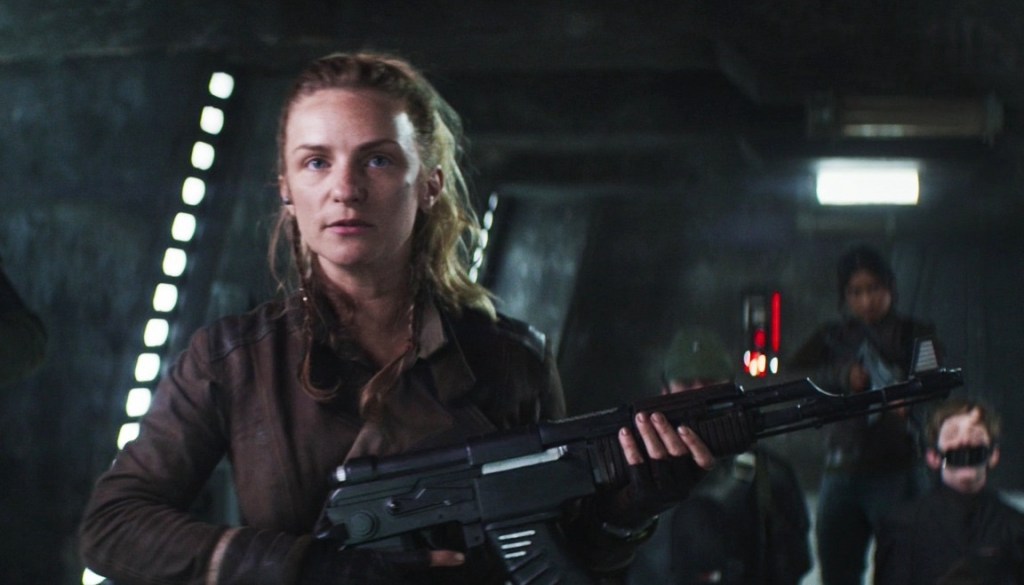
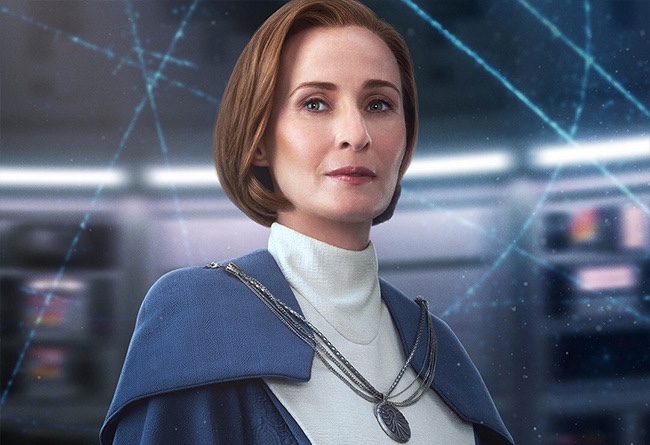
It is within this setting that we find a Rebel operative on the fringes of chaos. At first glimpse we are not certain what to think of Vel Sartha.
Her presence on Aldhani leaves us with more questions than answers. The tone of the scenes playing out are reminiscent of the IRA and its campaign of terror.
Indeed, an insurgency is an asymmetric conflict waged by a small group of irregular forces against a formal government with an organized military.
The traditional good versus evil perspective of the Rebel Alliance and the Galactic Empire are removed, as we are introduced to a darker, grittier, realm of existence.
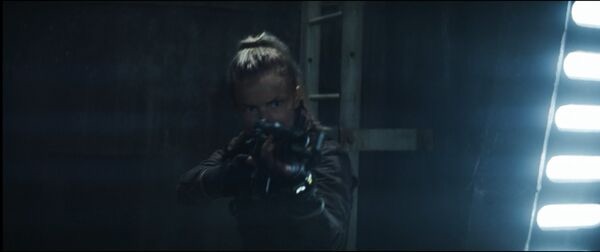
It’s in this setting that we see a glimpse of the resolve of this young woman, willing to go to any extreme to accomplish the mission with which she has been given.
Vel Sartha on Aldhani
In Vel Sartha we see a new leader of a small cell of fighters. She struggles with insubordination from her team, while she questions those in authority above her.
Her skills and leadership speak of professional military training from her past, while her determination drives her towards an uncertain future.
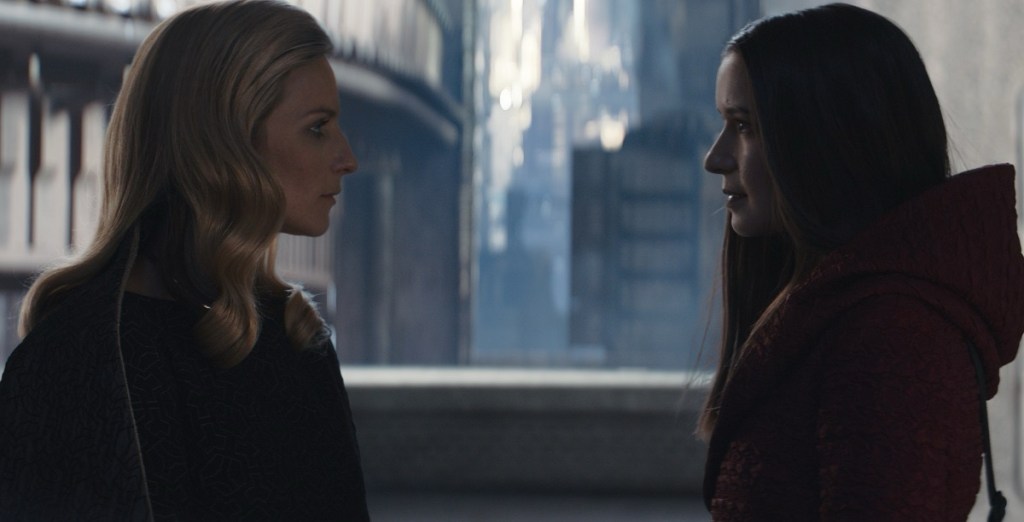
As the series progresses we learn that Vel is a cousin of Senator Mon Mothma, and that both women are heirs of profound wealth on their home world of Chandrila.
We discover that like Mon, Vel is a wealthy socialite, who has chosen to secretly join the fledgling Rebel Alliance.
Though her reasons for doing so are not spoken of, her allegiance to the cause is certain.
Mon Mothma and Vel on Coruscant
Unlike many, Vel seems to take no thought for the boundaries of ethics and morals which must be broken, in order to free the oppressed.
Her actions are tempered by quiet resolve, leaving us to ponder what might her motivations be? What horrors have driven her to abandon a life of luxury?
On Coruscant we see her frustration as she is kept in the dark by her handler, the mysterious Kleya Marki, whose own roll remains unknown.
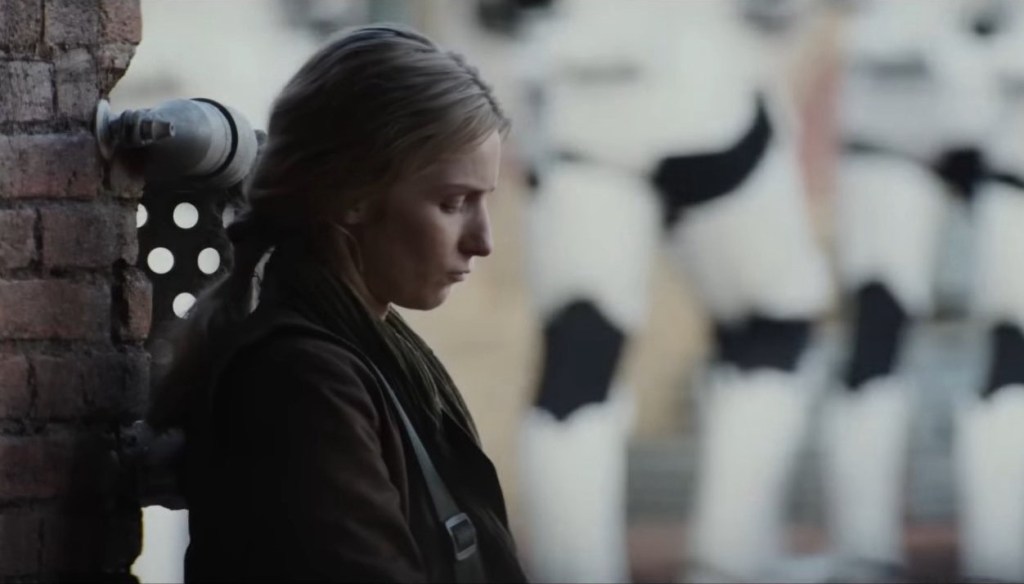
Vel and Kleya meet in the shadows
On Ferrix we find Vel apparently frustrated with Luthen’s decisions, as he keeps Vel at a distance, continuing to withhold the answers that she seeks.
Her actions make her a prominent contender as a future leader in a war without end. Time and chance will forge her character, as failure imparts wisdom if she survives the day.
Vel Sartha is every bit the preferred weapon for Luthen Rael; whether she continues to allow him to use her as such remains to be seen.
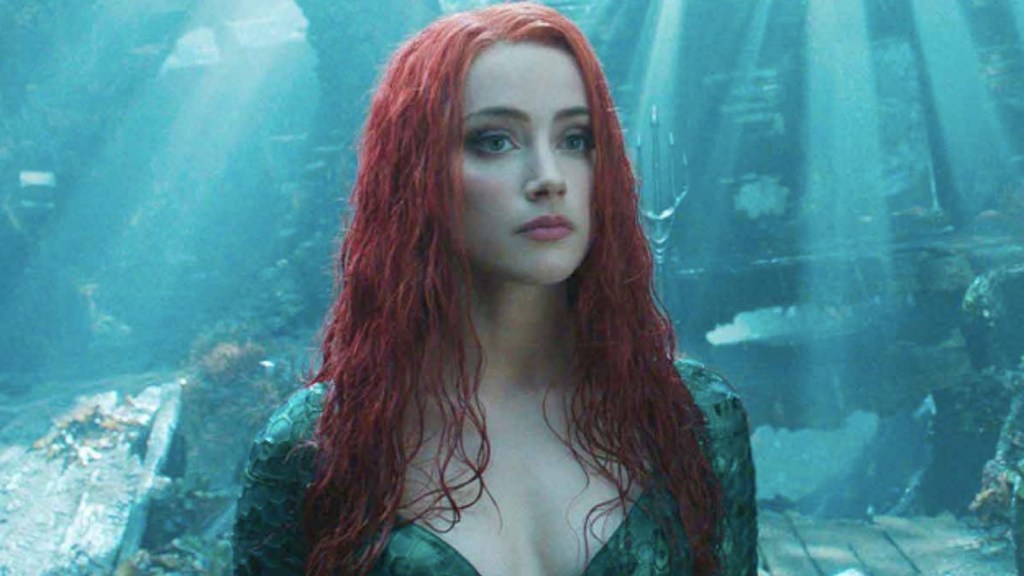
Fans of Aquaman have been more than critical of actress Amber Heard, going so far as to place blame on the actress for sinking Aquaman and the Lost Kingdom at the box office.
That however, isn’t just an exaggeration, it is an outright lie. According to the website Box Office Mojo, Aquaman and the Lost Kingdom has surpassed The Marvels.
Domestically, Aquaman and the Lost Kingdom earned $84.6 million dollars, while globally it raked in $258.2 million, compared to The Marvels global earnings at just $199 million.
Even though the movie barely broke even, those numbers speak volumes about the film’s popularity with fans. So if fans like the movie, what Is the real issue with Amber Heard, and her role as Mera?
To begin we need to go back to the primary reason for the negative comments by fans, which is the accusations and eventual defamation trial brought against Amber by her ex-husband Johnny Depp.
As a writer, I cannot offer an unbiased opinion or perspective on the trial, because the truth is the element which is absent from the entire narrative.
We only know what we have heard and seen, and unfortunately that has only served to fuel the fires of discrimination ignited by fans.
In truth, there’s always two sides to every story, and somewhere in the middle is the truth. Sometimes the truth isn’t popular or pretty, it just is what it is.
In this matter some within the fan base who are fans of Amber’s ex-husband have apparently decided that he’s completely honest, and right, and she’s to blame for all of the wrong doing.
Right or wrong, the private lives of two celebrities have become a public spectacle as they often do, which have had negative consequences for their careers.
Specifically, it had a perceived negative impact on Amber’s current role as Mera in Aquaman and the Lost Kingdom.
It’s a role that Amber had become famous for, as she starred alongside Jason Momoa in James Wan’s 2018 Aquaman.
The reality of Amber’s success as an actress cannot be argued, but the issues that she faced as a person, as well as her character, had the potential to destroy that.
So apparently the failure or success of a film was hinged upon the private life of an actress, which had become a public scandal.
Anyone who has a television or cell phone knows that there are very few actors and actresses whose personal lives have not become scandalous at some point in time.
It is something that may not begin intentionally, but which many have manipulated over time for their own self seeking aggrandizement.
Only Amber knows what her intentions were, but whatever that may be, it is apparent that the entire matter caused concern with the executives at Warner Brothers.
That concern certainly could have evolved into Amber’s role in Aquaman and the Lost Kingdom being marginalized, but there is no evidence for that of which I am aware.
As a creative consultant and writer, I can tell you that it would be unthinkable to alter a supporting character in a sequel, which directly contributed to the success of a prior installment.
To those arguing that the success of Aquaman is solely based on the performance of Jason Momoa, I would tell you that they are uneducated on the film industry itself.
An actors ability to realistically portray a character in a relatable way to the audience is certainly a key component of any film, but it is far from the only one.
Every film has a supporting cast, and like any other role in society, actors need help to achieve their common goals, and to be successful.
That is certainly true in the production of a major motion picture, particularly one of this genre and notoriety.
If Amber’s claims are in any way accurate, then the studio executives at Warner Brothers decided to minimize her role, out of concern that her personal drama would harm the success of the film.
If that is true, their actions had the opposite effect, as her absence caused more contention than if her role had been as prominent as the it was in the first film.
The correct way for them to address this would have been to ignore her personal life, and to feature her as a strong supporting role as was originally planned.
The logic is if you give the media and the public by extension nothing to talk about, then eventually their attention will turn away from the drama.
Unfortunately that did not occur, and the entire matter severely harmed the career of an actress who did not deserve for that to happen.
There are people within the fan base and the general public who are quick to condemn Amber, while excusing or ignoring their own faults.
The reality is that there are far worse things in Hollywood, than personal drama between a divorced couple.
Amber may have areas that she needs to improve in her character, and her integrity, but don’t we all?
She may even struggle with mental illness, and if true then that should be all the more reason to show her compassion and mercy.
In the end, what she needs is time alone to reflect on her life, and to address the issues that she has struggled with.
I’m sure that she has made decisions that she isn’t happy with or proud of; now she has an opportunity to address those.
As for her role as Mera, I feel the same way about her as I feel about Gal Gadot portraying Wonder Woman: there’s no one else out there suited for the role.
How the Imperial Navy should have changed the course of the franchise.
As a life long fan of Star Wars, I have always been an admirer of the Extended Universe novels. I thought that the story arc that they presented was a much more grounded continuation of the franchise.
On the flip side of that coin, I loathe the sequel films for their lack of any cohesive plot or story. They were made up as they went along, which resulted in a shameful end to the Skywalker Saga.
By the same token, the Disney Plus live action series have presented their own take on the state of affairs in the galaxy, however they too are lacking one key aspect as well.
By the Numbers
Recently I came across a piece of information that fundamentally changes how either the canon or Legends material should have been structured around the galactic civil war.
There is a discontinued mobile game published by Disney Interactive entitled Star Wars Uprising, which is a canon source.
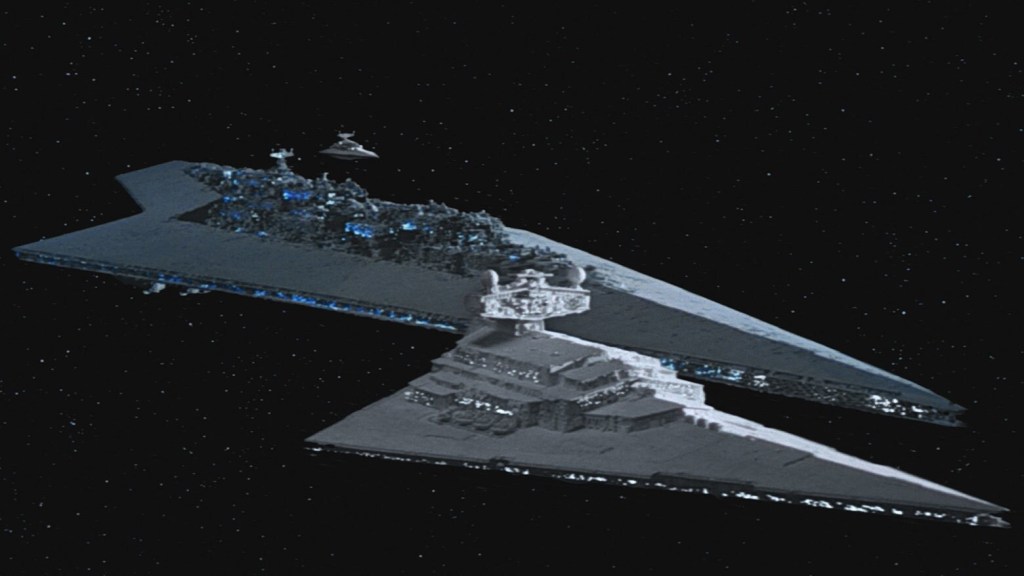
In the game it is stated that at the height of the Age of the Empire, there were approximately 25,000 Star Destroyers in the Imperial fleet.
To put that into perspective, consider this: each Imperial -class Star Destroyer was manned by 9,235 officers, 27,850 non-commissioned officers, and 275 gunners.
That is 37,360 crew members, just to operate the ship. That does not include the compliment of Imperial Army troops, Stormtroopers, or pilots onboard each vessel.
That would bring the total crew compliment for the Star Destroyer fleet to 934,000,000 personnel. This does not include any of the Empire’s other capital or support ships.
This information provides an overwhelming perspective of the disposition and force projection capabilities of the Imperial fleet across the known galaxy.
State of Affairsin the Galaxy
There are 3.2 billion habitable star systems in the Star Wars galaxy (referred to as Sky River), and of those only one billion have sentient life.
Of the one billion star systems, only 69 million meet the population requirements for Imperial representation.
(In the old senate, there were dozens of systems that were represented at the sector level by a single representative speaking on behalf of all of the systems within their sector).
This is integral to the Imperial fleet, because It means in unequivocal terms that both canon and Legends stories would be far from realistic, in regards to the state of affairs in the galaxy.
The war would not have ended at the battle of Endor, and it would not have been the end of the Empire.
Retribution
The Emperor then, would most certainly have created contingency plans for the Grand Moffs to activate in the event of his untimely death.
This idea is played upon in the campaign story of Battlefront II with Operation Cinder, but not to the extent of what it would have been in reality.
Each sector command within the Empire would have immediately marshaled their forces, and gone on high alert at the Emperor’s death.
They would have instituted sector wide lock downs, preventing all space travel into and out of their sectors.
The remaining Moffs would have immediately begun hunting down the Rebel fleet, while the Imperial Security Bureau or ISB, would have begun to assemble target packages for their special operations units.
The Empire would have gone into overdrive in order to quell any uprisings on Imperial controlled or occupied worlds, which were a result of the Alliance victory at Endor.
Civil Affairs and Psychological Operations
Mon Mothma would have capitalized on the moment, and used the Holonet to broadcast a galaxy wide message of the Emperor’s demise, and the establishment of a New Republic.
This form of psychological warfare would have reached far and wide across the galaxy, fueling the fire of rebellion among those oppressed by the Empire.
And now a message from the Chief of State…
It would have aided the Rebellion in gaining new allies, and in turn manpower and resources to fight the Empire.
The continued fight for freedom across the galaxy would have only furthered Alliance objectives in re-establishing democracy under the banner of a New Republic.
The long war
The reality is that Alliance and partisan forces could easily overwhelm and defeat Imperial forces on the ground, but not in space.
The Empire would not have conceded to the Rebellion, or collapsed. It would have used the full might of its fleet to engage the Rebel Alliance at every opportunity.
Rebel fleets would have been forced to continue conducting hit and run attacks against the larger more powerful Imperial capital ships, and the shipyards that supported them.
These sorts of skirmishes would have played out across the galaxy, until the Alliance could effectively eliminate the support structure for the Star Destroyers.
Without food, fuel, and weapons, the Empire’s Star Destroyers would be little more than an orbital barracks.
This would be a priority, since the main objective of the Alliance would be to retake Coruscant, the Galactic capital of the Old Republic.
Coruscant rather than Endor would be the defining battle in the war, and would be the symbolic victory needed to rally the galaxy behind the New Republic.
If Coruscant were to fall, then the remnants of the Empire would be forced to withdraw. They would either establish a new capital, or else concede to defeat and disarmament.
Those Moffs who refused would in all likelihood continue to operate as an independent military force, carrying out opportunistic operations in an effort to regroup and regain momentum.
So why is all of this important? Because both canon and Legends material neglect this very fact, so let’s see how they get it wrong:
Legends
This is the simplest of the two narratives to explore, which places the pivotal turning point at the battle of Endor.
Both the destruction of the second Death Star, as well as the death of Emperor Palpatine and Darth Vader leave the Empire without any clear chain of command.
In short order, the Empire falls and acquiesces to the New Republic. This of course is strategically impossible.
The Sequel era
Prior to the sequel films, there is a time period where the New Republic agrees to a military disarmament and draw down.
Their reasoning is to not follow in the footsteps of the Empire, and become a Galactic military force.
In reality, the New Republic would want to do the opposite. They would understand that their best defense against future tyranny, would be a strong offensive capability.
the New Republic would want a unified defense and security force, which it could easily task with deterrent patrols and sector security missions.
Also of note is the battle of Jakku, which in canon is considered the final victory of the Alliance against the Empire.
This too is in error, as Jakku is too remote to be of any strategic importance to the security of the Empire.
Coruscant would be the primary military target of the Rebel Alliance, and only if they succeeded in taking it would they have a chance to oust the Empire from its position of power in the galaxy.
The Realization of War
The Empire would still be a very real threat to the existence of the New Republic for years if not decades, and would serve as the backdrop for every story presented within the franchise.
It would also mean that what we have seen in the live action series and sequel films would not have happened the way that it was portrayed.
Conclusion
So you can see that there is a lot more to be explored in the Star Wars universe than what we have been presented with in either canon or Legends material.
Though some of the writers may have conveniently explained away the Empire in order to accommodate the stories they tell, the reality of war tells a different tale altogether…
Looking back on Rogue One: A Star Wars Story, I don’t know of too many fans that didn’t want Jyn Erso to survive. Time and time again I have heard how people loved her character, and thought that she was the new hero of the Rebellion.
In fact, you could argue that Rogue One is the most successful Star Wars project to date, since the mouse acquired Lucasfilm. Having said that, there is an entirely different version of the movie that we most likely will never see, and in those edits Jyn Erso does in fact, survive.
This question then, bears relevance for many reasons, and it is one that I began to consider several years ago. It started me on a journey, which resulted in two years of work on the manuscript for a new Star Wars Legends novel entitled Cold Apex.
That novel is now complete and waiting to be approved by Del Rey and Lucasfilm. Though I won’t offer any spoilers on the plot of the book, what I will do is share how Jyn made it off of Scarif. In the third act of Rogue One, we see the Rebel fleet jump in system directly over Scarif, where they begin moving into position to attack the planetary shield gate.
Admiral Raddus, leading the fleet from the Mon Calamari MC-75 frigate Profundity, Orders Blue Squadron to get to the planet. General Merrick then orders the squadron to follow him through the gate, and bringing up the rear are two Incom UT-60D U-Wing gunships.
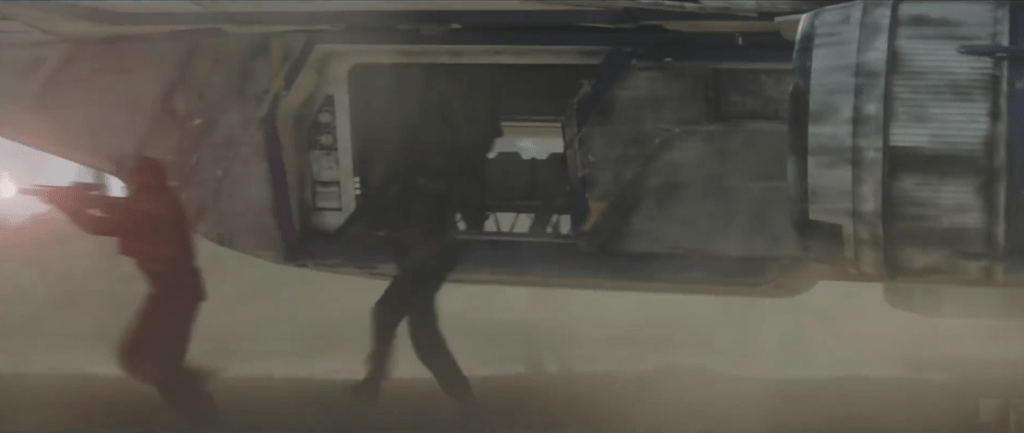
We clearly see one of them fly through the shield gate before it closes, but what about the other one? Once they fly through and hit the Blue, they begin to provide air cover for the Pathfinders on the beach below. General Merrick then orders the “U-Wings” plural, to reinforce the troops on the beach. He continues by ordering the fighters to follow him and provide air cover for “them,”plural again, referring to the U-Wings.
U-Wing dropping Rebel soldiers on the beaches of Scarif in search of Jyn Erso.
We know that one U-Wing was shot down and destroyed, but where is the other one? In Cold Apex we find the second U-Wing has landed in an outcropping of trees. A small squad of soldiers deploys from the ship, with orders to find Cassian Andor and Jyn Erso. The rebel troops fight their way through the Citadel base, only to find the missing rebels out on the beach.
They are attacked by Imperial troops as the Death Star fires on the planet, with the U-Wing dropping in and saving the squad from certain defeat. With the shield gate down, they make a blind jump into hyperspace while in the skies over Scarif. So, if Jyn survives, what happens to her next?
Well, you’ll have to wait and read the book to find out! I’ve been told that if approved for publishing, the tentative release date will be in late 2026. I’ll share more when I know more from the publisher.
On December 16, 2016 Star Wars fans around the world were introduced to the newest hero within the Star Wars universe, Jyn Erso. Jyn is a battle scarred and complex woman, with a very a traumatic past. She is spartan tough, and stubborn to the core.
Orphaned at age seven, she was forced to watch her mother be executed by Imperial special forces, while her father was taken captive by them as well. Her only hope lay in the man who rescued her, Saw Gerrera. A friend of the family, Saw was Jyn’s only hope of survival, though a hope that would not last.
Throughout her young life Jyn finds herself forced to make decision upon decision which is determined by her alliance with Saw. Though he saves her, he does not give her a normal childhood or freedom. His care for her is minimal, and when it becomes too much of a risk, he too abandons Jyn alone, on a worn torn planet to fend for herself.
At age sixteen, Jyn is once again forced to make decisions in order to survive from one day to the next. When we find her in Rogue One, Jyn is a young woman imprisoned by the Empire in one of their POW camps on the planet Wobani.
She is seemingly rescued by the Rebel Alliance, who have their own agenda for her as well. There is no care for her future or well being; Jyn is simply a means to an end for them. Though she reluctantly agrees to help them, she finds herself in a dream remembering her parents before she is abruptly awaken on a flight into the ancient moon of Jedha.
Jedha is a world of many stories, with some claiming that it was on Jedha that the Jedi first discovered the Force. Jyn ventures into the holy city, and encounters a cultural soup of denizens from across the galaxy, who are adherents of many religions. Though their beliefs and practices may differ, they are all drawn to Jedha for the same reason, and that is the church of the Force.
Its existence is ancient, and its followers are many, but its message is the same: there is only the Force, and it is the Force that draws them there. Jyn being the skeptic that she is, becomes intrigued when Chirrut Imwe is able to sense the Khyber crystal necklace hanging from her neck.
She wants to know more, but time does not allow it. We later see Jyn rubbing the Khyber crystal again on her way to Scarif. This brief insight into the Force is a much more grounded aspect of it’s cultural and religious significance to peoples across the galaxy. We know from Obi-Wan Kenobi that the Force is what gives the Jedi their abilities and powers.
It is an energy field created by all living things; It surrounds us and binds the galaxy together. For those born sensitive to it, it is there, just beyond their grasp. For those like Chirrut Imwe, it is the focus of their religious experience, but not a tangible presence that they harness as the Jedi and Sith do.
For people like Jyn, it is a mystery that fascinates and intrigues. It leads her to a place of inner searching. She finds herself questioning her mother’s bedtime stories about the Force and the Jedi, and she begins to ponder if they were actually true? Her memories are in many ways her only real connection to her mother, and for whatever reason, they seem to be guiding her on her mission for the Rebel Alliance.
What if?
For the past two years I have been working on the manuscript for a Star Wars Legends novel which continues the story of Jyn Erso. In it we find that Jyn who was presumed lost, is clinging to life, and at the center of her journey is the question of religion. Is the Force real? Is it guiding her to her destiny, or is it just her experience, training, and a little luck?
The story explores how Jyn’s personal beliefs reflect the echos of an ancient past, where it was at the heart of whole races and societies. The Force is more than Jedi and Sith, it is the defining religion of a by-gone era. People like Jyn’s mother Lyra who cling to it’s ideals and teachings, are viewed as heretics and traitors to modern governments and societies.
Its origins are erased, its texts are destroyed, and its existence is taught as a myth. Where other religions are accepted or tolerated, the Force becomes a forbidden word across the galaxy, and those who speak of it are hunted down and taken into custody.
What was once at the heart of every civilization in the galaxy, has now become culturally irrelevant and outdated. As the old generations pass on, younger generations grow up in the shadow of its knowledge and presence, knowing nothing of its power and purity. Its mysteries lay hidden in plain sight, waiting for those who are brave enough to seek out answers to life’s questions and troubles in its teachings.
Conclusion
Jyn’s journey becomes one of self discovery, as she is forced to confront her mother’s beliefs, and their impact upon the here and now. We see the reality of religion in the midst of contemporary culture, and the relevance that it offers to those brave enough to search for the truth.
Ultimately the Force and religion aren’t the focus of the story, but they become an aspect of it that Jyn cannot deny, and that she cannot ignore. It is a doorway to be opened, as she seeks for answers in the midst of the chaos of war.
For more than four decades, fans of Star Wars have rallied behind the Rebel Alliance and their cause. No one can deny the emotions evoked of their victories against the evil galactic Empire, but few have stopped to consider what exactly is being depicted on screen.
More than a story of good versus evil, and heroes and villains, Star Wars is at its core the account of a group of insurgents, dedicated to overthrowing an established government. Nowhere has this been more prominently detailed than in the recent live action series, Andor.
In Andor, we learn how this character’s circumstances lead him to the doorstep of the Rebellion, in its infancy. We are given a glimpse at the founders, their plans, and how they finance their war against the Empire.
More importantly I think, is the curtain being pulled back on just how dirty warfare can be. No longer can we see the Rebellion as a righteous movement for freedom, with unsung heroes at every turn.
Now we must come face to face with the often brutal and disfigured cost of warfare, and it’s mortal toll. For us to begin to come to terms with this harsh reality, we must first learn what an insurgency is, how it is carried out, and what its objectives are.
Merriam-Webster defines an insurgency as “a condition of revolt against a government that is less than an organized revolution and that is not recognized as belligerency.” An insurgency often begins with just a handful of individuals, who come together in agreement to the fact that the established government has violated their freedoms and way of life.
This is often the case when a dictatorship initiates a planned coup, and usurps the current government with a new form of rule. That is exactly what occurred during Order 66 on Coruscant. The Emperor spent years strategically planning his rise to power, and carefully positioning himself, as well as other assets, who would do his bidding.
On a larger scale, he manipulated the Jedi Order, the Senate, and the governments of entire star systems. He orchestrated a galactic wide war, to use as both a distraction, and political tool to become chancellor. Once in power, he sealed his position with the downfall of the Jedi Knights.
In the case of the Rebel Alliance, their objective was to restore the Old Republic, and its democratic rule over the galaxy. Doing so was the only way to ensure that freedom and security for all species was returned. How that would be accomplished was a decades long endeavor.
To begin, the Alliance to restore the Republic did not start as a well-organized, equipped, and trained force. It started with just one person refusing to accept the Empire’s rule on their world. It could be witnessing innocent civilians being beaten, interrogated, or even killed, as in Andor.
It would begin with people from different backgrounds, ethnicities, and even socio-economic status. They would share a common belief and objective, and over time they would discuss and eventually plan to rebel against the Empire’s presence. Just as in Andor, common people would reach their breaking point and take action.
That would become the catalyst to build upon, and over time the insurgency which begins on one world like Ferrix, would use propaganda to spread word of their actions, and recruit others to their cause. Soon an entire world would have cells of operatives joining the movement.
What began as an isolated act of defiance, would over time evolve into a complex and organized insurgency on a galactic scale. This is what is known as Asymmetric Warfare, when a smaller, less capable force of insurgents engage a larger, established military force.
In this type of combat, the insurgents will carefully examine and exploit their enemy’s weaknesses strategically, in an effort to demoralize them, and destabilize their operations. Such conflicts are highlighted by unconventional tactics and techniques, such as hit and run missions on critical infrastructure, command, control, and communications nodes, or supply routes.
In so doing the insurgent forces are often able to infiltrate enemy installations, gain valuable intelligence, and even steal supplies and weapons. In essence, they often turn their enemy’s own resources against them, which they use to their advantage. In the case of the Rebel Alliance, they did just this, first on isolated planets, and then across the galaxy.
As more people joined their cause, the Alliance was able to exploit the access and assets which they acquired through established connections. Equipment, food, fuel, weapons, and ships are just some of the necessities that they acquired through clandestine donations, forgeries, and thefts. Their established financial network paid for what they could not steal, because in every galaxy, money talks.
The Rebellion would have established a network of informants, as well as trained assets to tie up loose ends. War is a dirty business, but the end justifies the means. This the Rebel Alliance that Cassian Andor, Jyn Erso, Luke Skywalker, and many others find themselves joining.
Over the course of decades what began as a small group of home-grown insurgents, evolved into a very capable and organized military capable of taking the fight to the Empire. As they become the foundation of a New Republic, their tactics may change, but their history remains the same.
Having recently viewed Jurassic World Dominion at home, I thought that it would be a fitting opportunity to take a look back at the franchise, and briefly share my thoughts on each movie, as well as the overall narrative of the saga.
To begin, I was introduced to Jurassic Park at a very young age. My sixth-grade science teacher required our class to write a book report on a non-fiction scientific topic, and then give a presentation on that report to the class.
Our middle school had a book fair during this time, and I purchased a copy of Jurassic Park by Michael Crichton. I read the entire book, and then wrote the report, and gave my presentation to the class. At the end of that presentation, my science teacher, Mrs. Wafer, informed the class that Jurassic Park Wars not real, and that they had not cloned Dinosaurs! I was in disbelief.
At the time I mistakenly believed that fiction was fact, and that nonfiction was not. I recalled carefully selecting the book after seeing fiction on the spine of it, and presumed it was real. Mrs. Wafer was amused, but I was not.
I stop did not accept her assertion that Jurassic Park was not a real place, and that Dinosaurs had not been cloned. Two years later in the summer of 1993, I returned home from volunteering at a Baptist youth camp, and I learned that Mrs. Wafer had called, and asked if she could take me to see Jurassic Park in the theater!
I was shocked. She came to my home with her son and picked me up and drove me twenty miles to an area theater where she paid for my ticket and a drink, and let me to watch the movie.
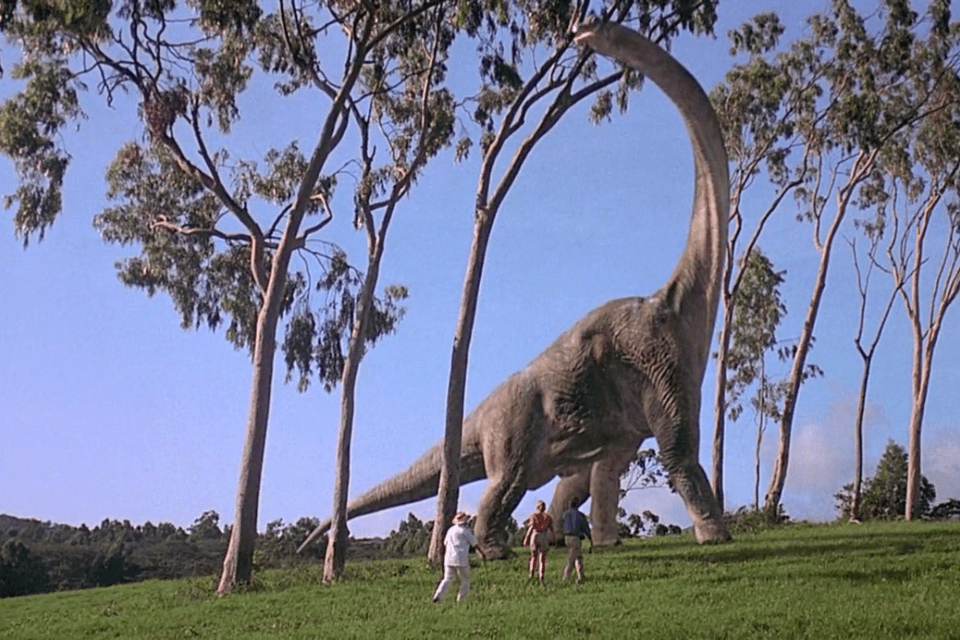
I was awestruck by the opening scenes, and most moving to me were the Brachiosaurus eating leaves from the tops of the trees. They looked so gentle and peaceful, as if they had existed all along. I felt a deep sense of joy at what I saw.
Needless to say, I was amazed at the movie and has a lot of fun. It was a bright spot for me during a very turbulent time in my life. I was being bullied every day at school, and I was assaulted in class, in the bathrooms, and on the playground.
A Brachiosaurus at Jurassic Park
I hated school, and I hated the other kids because of how they mistreated me and rejected me. I became introverted and stayed to myself. I was afraid to go to school, and during this time I developed irritable bowel syndrome.
That same summer, my seventh-grade grammar teacher Mrs. Scoles called my great- grandmother and asked for me to stop by the school at the end of the year. So, I did, and I was taken to the school library where all of the teachers were working.
Mrs. Scoles stood up and had me follow her to her classroom, where she gave me two of the toy figures from Jurassic Park. They were a Dimetrodon and Velociraptor. She smiled and laughed when she saw how amazed I was to receive those toys.
I think that Mrs. Scoles was aware of what was happening to me at school, and she also knew how much I loved science and toys. Those two small acts of kindness by two teachers have never been forgotten, and both had a tremendous impact upon my life.
I bought and read The Lost World years later and saw the movie on VHS. I was amazed at the story, and quite honestly, I was more enthralled with the novel than the movie.
I felt that it was underwhelming to a degree, and could have been better had it more closely followed the plot of the novel. Jurassic Park III was even more of a disappointment to me, as it also pulled from the plot of The Lost World.
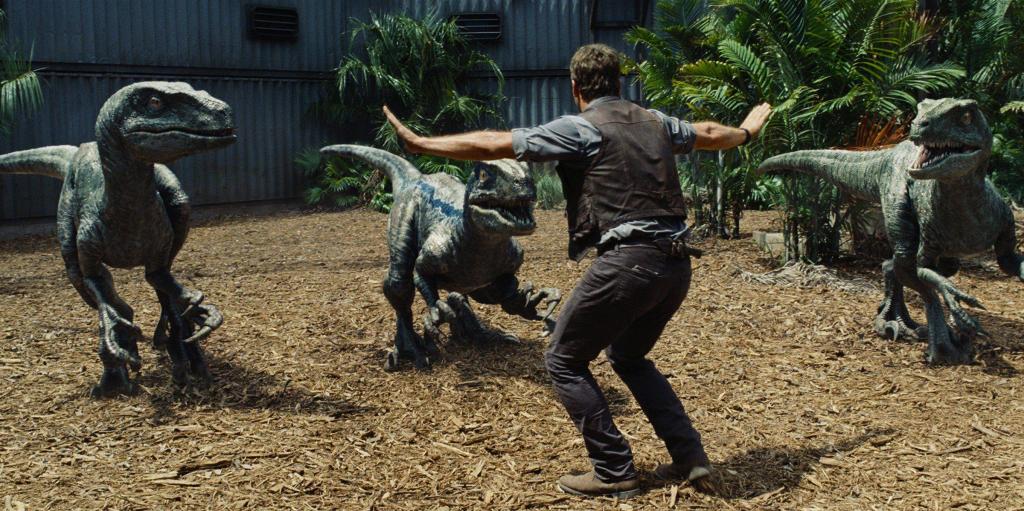
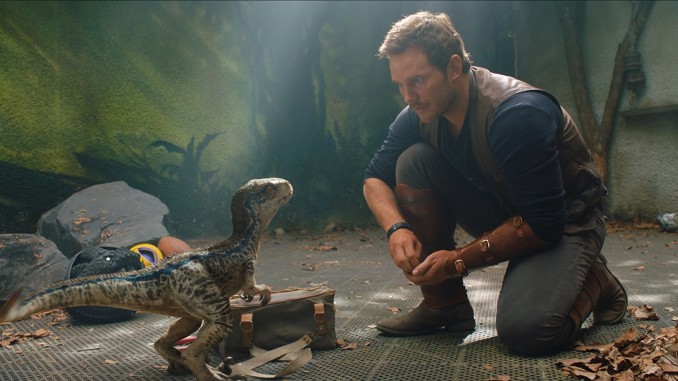
“Oh look everyone, the people have come back to visit us!”
When Jurassic World was released my interest in the franchise was renewed, and I felt that same sense of awe return as I saw the new park. It seemed as if John Hammond’s dream had become a reality, and that lessons had been learned. I enjoyed the movie but was saddened by the conclusion of the film. I felt that it was a mistake to use the ideas of the original film as a soft reboot to the franchise. It left me with mixed feelings as a fan.
“Wait, wait! No one needs to get upset, because we all have a three film contract.”
Fallen Kingdom was in my opinion, a critical misstep in creativity. I felt that it too, was underwhelming, much as The Lost World had been years prior. I knew that Jurassic World Dominion was going to be used to conclude the saga, and for the most part I enjoyed the movie.The conclusion was not what I was expecting and left much wanting in the way of knowing the end of the story.
“What do you mean I’m not supposed to eat the dog?“
I think that it was another misstep to bring the animals out into the modern world, which reduced their significance, and relegated them to more of a nuisance than the wonder of what they are. There are some good scenes, but there were also many avenues which could have better served the stories that were not taken. The most prominent being Isla Sorna.
I always felt that the sequels would have made better use of their time by moving the story there and allowing the sage to continue to evolve, while keeping the animals isolated from the world at large. In the novel The Lost World, its conclusion makes clear that the animals will eventually die out due to a disease infecting them which was caused by prions.
It was I think the author’s way of conveying how these wonderful animals weren’t meant to continue to exist alongside mankind. If anything, I think that the Jurassic World franchise should show us how fragile life on this planet is, and how utterly irresponsible we are in our care for it. We take little concern for our actions and decisions, not realizing that they are at the root of larger problems that they create.
That I think is the real lesson from chaos theory specifically, and these movies in general. We are not responsible enough with what we have been entrusted with by God, so how could we possibly undertake reviving an extinct species that we know very little about?
In the end I still enjoyed the movies, and I still collect the toys, which I think are one of the more lasting and positive aspects of the franchise. Jurassic World represents possibilities, but it also provides us with an opportunity to glimpse something much greater, that the world will never witness again.