Religion in Rogue One

Introduction

On December 16, 2016 Star Wars fans around the world were introduced to the newest hero within the Star Wars universe, Jyn Erso. Jyn is a battle scarred and complex woman, with a very a traumatic past. She is spartan tough, and stubborn to the core.

Orphaned at age seven, she was forced to watch her mother be executed by Imperial special forces, while her father was taken captive by them as well. Her only hope lay in the man who rescued her, Saw Gerrera. A friend of the family, Saw was Jyn’s only hope of survival, though a hope that would not last.

Throughout her young life Jyn finds herself forced to make decision upon decision which is determined by her alliance with Saw. Though he saves her, he does not give her a normal childhood or freedom. His care for her is minimal, and when it becomes too much of a risk, he too abandons Jyn alone, on a worn torn planet to fend for herself.

At age sixteen, Jyn is once again forced to make decisions in order to survive from one day to the next. When we find her in Rogue One, Jyn is a young woman imprisoned by the Empire in one of their POW camps on the planet Wobani.

She is seemingly rescued by the Rebel Alliance, who have their own agenda for her as well. There is no care for her future or well being; Jyn is simply a means to an end for them. Though she reluctantly agrees to help them, she finds herself in a dream remembering her parents before she is abruptly awaken on a flight into the ancient moon of Jedha.

Jedha is a world of many stories, with some claiming that it was on Jedha that the Jedi first discovered the Force. Jyn ventures into the holy city, and encounters a cultural soup of denizens from across the galaxy, who are adherents of many religions. Though their beliefs and practices may differ, they are all drawn to Jedha for the same reason, and that is the church of the Force.

Its existence is ancient, and its followers are many, but its message is the same: there is only the Force, and it is the Force that draws them there. Jyn being the skeptic that she is, becomes intrigued when Chirrut Imwe is able to sense the Khyber crystal necklace hanging from her neck.

She wants to know more, but time does not allow it. We later see Jyn rubbing the Khyber crystal again on her way to Scarif. This brief insight into the Force is a much more grounded aspect of it’s cultural and religious significance to peoples across the galaxy. We know from Obi-Wan Kenobi that the Force is what gives the Jedi their abilities and powers.

It is an energy field created by all living things; It surrounds us and binds the galaxy together. For those born sensitive to it, it is there, just beyond their grasp. For those like Chirrut Imwe, it is the focus of their religious experience, but not a tangible presence that they harness as the Jedi and Sith do.

For people like Jyn, it is a mystery that fascinates and intrigues. It leads her to a place of inner searching. She finds herself questioning her mother’s bedtime stories about the Force and the Jedi, and she begins to ponder if they were actually true? Her memories are in many ways her only real connection to her mother, and for whatever reason, they seem to be guiding her on her mission for the Rebel Alliance.

What if?

For the past two years I have been working on the manuscript for a Star Wars Legends novel which continues the story of Jyn Erso. In it we find that Jyn who was presumed lost, is clinging to life, and at the center of her journey is the question of religion. Is the Force real? Is it guiding her to her destiny, or is it just her experience, training, and a little luck?

The story explores how Jyn’s personal beliefs reflect the echos of an ancient past, where it was at the heart of whole races and societies. The Force is more than Jedi and Sith, it is the defining religion of a by-gone era. People like Jyn’s mother Lyra who cling to it’s ideals and teachings, are viewed as heretics and traitors to modern governments and societies.

Its origins are erased, its texts are destroyed, and its existence is taught as a myth. Where other religions are accepted or tolerated, the Force becomes a forbidden word across the galaxy, and those who speak of it are hunted down and taken into custody.

What was once at the heart of every civilization in the galaxy, has now become culturally irrelevant and outdated. As the old generations pass on, younger generations grow up in the shadow of its knowledge and presence, knowing nothing of its power and purity. Its mysteries lay hidden in plain sight, waiting for those who are brave enough to seek out answers to life’s questions and troubles in its teachings.

Conclusion

Jyn’s journey becomes one of self discovery, as she is forced to confront her mother’s beliefs, and their impact upon the here and now. We see the reality of religion in the midst of contemporary culture, and the relevance that it offers to those brave enough to search for the truth.

Ultimately the Force and religion aren’t the focus of the story, but they become an aspect of it that Jyn cannot deny, and that she cannot ignore. It is a doorway to be opened, as she seeks for answers in the midst of the chaos of war.

Andor and the use of Asymmetric Warfare in Star Wars

For more than four decades, fans of Star Wars have rallied behind the Rebel Alliance and their cause. No one can deny the emotions evoked of their victories against the evil galactic Empire, but few have stopped to consider what exactly is being depicted on screen.

More than a story of good versus evil, and heroes and villains, Star Wars is at its core the account of a group of insurgents, dedicated to overthrowing an established government. Nowhere has this been more prominently detailed than in the recent live action series, Andor.

In Andor, we learn how this character’s circumstances lead him to the doorstep of the Rebellion, in its infancy. We are given a glimpse at the founders, their plans, and how they finance their war against the Empire.

More importantly I think, is the curtain being pulled back on just how dirty warfare can be. No longer can we see the Rebellion as a righteous movement for freedom, with unsung heroes at every turn.

Now we must come face to face with the often brutal and disfigured cost of warfare, and it’s mortal toll. For us to begin to come to terms with this harsh reality, we must first learn what an insurgency is, how it is carried out, and what its objectives are.

Merriam-Webster defines an insurgency as “a condition of revolt against a government that is less than an organized revolution and that is not recognized as belligerency.” An insurgency often begins with just a handful of individuals, who come together in agreement to the fact that the established government has violated their freedoms and way of life.

This is often the case when a dictatorship initiates a planned coup, and usurps the current government with a new form of rule. That is exactly what occurred during Order 66 on Coruscant. The Emperor spent years strategically planning his rise to power, and carefully positioning himself, as well as other assets, who would do his bidding.

On a larger scale, he manipulated the Jedi Order, the Senate, and the governments of entire star systems. He orchestrated a galactic wide war, to use as both a distraction, and political tool to become chancellor. Once in power, he sealed his position with the downfall of the Jedi Knights.

In the case of the Rebel Alliance, their objective was to restore the Old Republic, and its democratic rule over the galaxy. Doing so was the only way to ensure that freedom and security for all species was returned. How that would be accomplished was a decades long endeavor.

To begin, the Alliance to restore the Republic did not start as a well-organized, equipped, and trained force. It started with just one person refusing to accept the Empire’s rule on their world. It could be witnessing innocent civilians being beaten, interrogated, or even killed, as in Andor.

It would begin with people from different backgrounds, ethnicities, and even socio-economic status. They would share a common belief and objective, and over time they would discuss and eventually plan to rebel against the Empire’s presence. Just as in Andor, common people would reach their breaking point and take action.

That would become the catalyst to build upon, and over time the insurgency which begins on one world like Ferrix, would use propaganda to spread word of their actions, and recruit others to their cause. Soon an entire world would have cells of operatives joining the movement.

What began as an isolated act of defiance, would over time evolve into a complex and organized insurgency on a galactic scale. This is what is known as Asymmetric Warfare, when a smaller, less capable force of insurgents engage a larger, established military force.

In this type of combat, the insurgents will carefully examine and exploit their enemy’s weaknesses strategically, in an effort to demoralize them, and destabilize their operations. Such conflicts are highlighted by unconventional tactics and techniques, such as hit and run missions on critical infrastructure, command, control, and communications nodes, or supply routes.

In so doing the insurgent forces are often able to infiltrate enemy installations, gain valuable intelligence, and even steal supplies and weapons. In essence, they often turn their enemy’s own resources against them, which they use to their advantage. In the case of the Rebel Alliance, they did just this, first on isolated planets, and then across the galaxy.

As more people joined their cause, the Alliance was able to exploit the access and assets which they acquired through established connections. Equipment, food, fuel, weapons, and ships are just some of the necessities that they acquired through clandestine donations, forgeries, and thefts. Their established financial network paid for what they could not steal, because in every galaxy, money talks.

The Rebellion would have established a network of informants, as well as trained assets to tie up loose ends. War is a dirty business, but the end justifies the means. This the Rebel Alliance that Cassian Andor, Jyn Erso, Luke Skywalker, and many others find themselves joining.

Over the course of decades what began as a small group of home-grown insurgents, evolved into a very capable and organized military capable of taking the fight to the Empire. As they become the foundation of a New Republic, their tactics may change, but their history remains the same.

My thoughts on the Jurassic World Franchise

Having recently viewed Jurassic World Dominion at home, I thought that it would be a fitting opportunity to take a look back at the franchise, and briefly share my thoughts on each movie, as well as the overall narrative of the saga.

To begin, I was introduced to Jurassic Park at a very young age. My sixth-grade science teacher required our class to write a book report on a non-fiction scientific topic, and then give a presentation on that report to the class.

Our middle school had a book fair during this time, and I purchased a copy of Jurassic Park by Michael Crichton. I read the entire book, and then wrote the report, and gave my presentation to the class. At the end of that presentation, my science teacher, Mrs. Wafer, informed the class that Jurassic Park Wars not real, and that they had not cloned Dinosaurs! I was in disbelief.

At the time I mistakenly believed that fiction was fact, and that nonfiction was not. I recalled carefully selecting the book after seeing fiction on the spine of it, and presumed it was real. Mrs. Wafer was amused, but I was not.

I stop did not accept her assertion that Jurassic Park was not a real place, and that Dinosaurs had not been cloned. Two years later in the summer of 1993, I returned home from volunteering at a Baptist youth camp, and I learned that Mrs. Wafer had called, and asked if she could take me to see Jurassic Park in the theater!

I was shocked. She came to my home with her son and picked me up and drove me twenty miles to an area theater where she paid for my ticket and a drink, and let me to watch the movie.

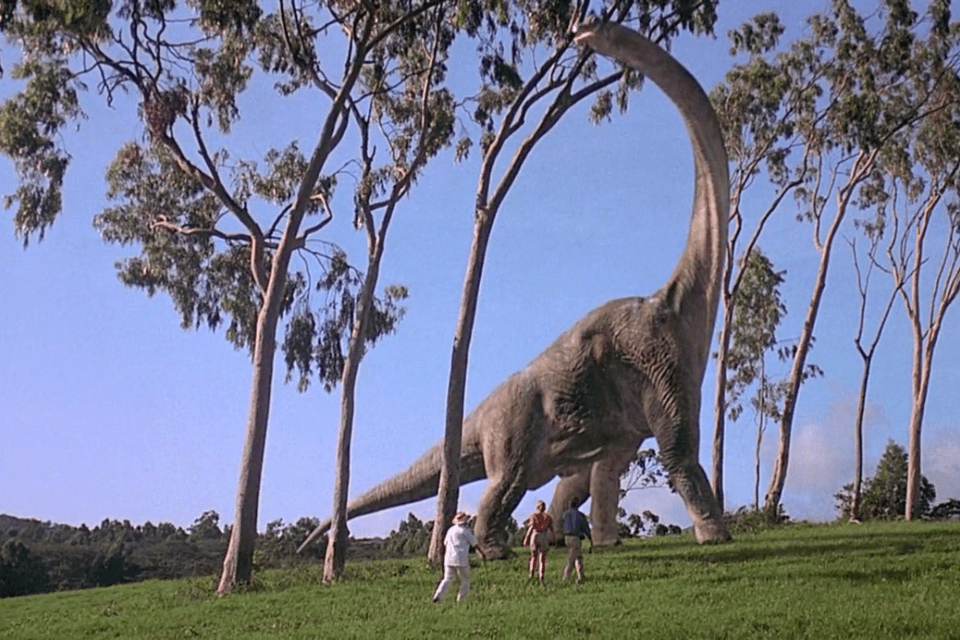
I was awestruck by the opening scenes, and most moving to me were the Brachiosaurus eating leaves from the tops of the trees. They looked so gentle and peaceful, as if they had existed all along. I felt a deep sense of joy at what I saw.

Needless to say, I was amazed at the movie and has a lot of fun. It was a bright spot for me during a very turbulent time in my life. I was being bullied every day at school, and I was assaulted in class, in the bathrooms, and on the playground.

A Brachiosaurus at Jurassic Park

I hated school, and I hated the other kids because of how they mistreated me and rejected me. I became introverted and stayed to myself. I was afraid to go to school, and during this time I developed irritable bowel syndrome.

That same summer, my seventh-grade grammar teacher Mrs. Scoles called my great- grandmother and asked for me to stop by the school at the end of the year. So, I did, and I was taken to the school library where all of the teachers were working.

Mrs. Scoles stood up and had me follow her to her classroom, where she gave me two of the toy figures from Jurassic Park. They were a Dimetrodon and Velociraptor. She smiled and laughed when she saw how amazed I was to receive those toys.

I think that Mrs. Scoles was aware of what was happening to me at school, and she also knew how much I loved science and toys. Those two small acts of kindness by two teachers have never been forgotten, and both had a tremendous impact upon my life.

I bought and read The Lost World years later and saw the movie on VHS. I was amazed at the story, and quite honestly, I was more enthralled with the novel than the movie.

I felt that it was underwhelming to a degree, and could have been better had it more closely followed the plot of the novel. Jurassic Park III was even more of a disappointment to me, as it also pulled from the plot of The Lost World.

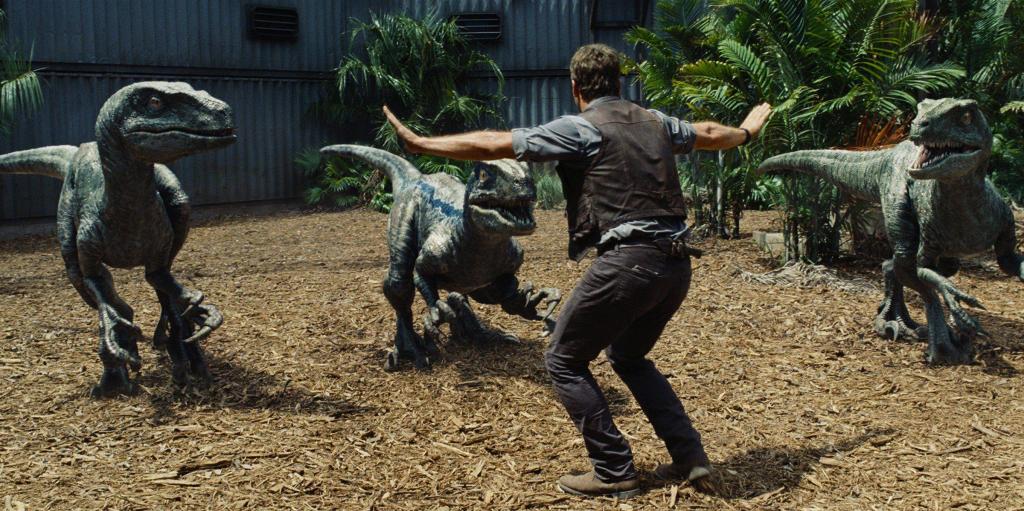
“Oh look everyone, the people have come back to visit us!”

When Jurassic World was released my interest in the franchise was renewed, and I felt that same sense of awe return as I saw the new park. It seemed as if John Hammond’s dream had become a reality, and that lessons had been learned. I enjoyed the movie but was saddened by the conclusion of the film. I felt that it was a mistake to use the ideas of the original film as a soft reboot to the franchise. It left me with mixed feelings as a fan.

“Wait, wait! No one needs to get upset, because we all have a three film contract.”

Fallen Kingdom was in my opinion, a critical misstep in creativity. I felt that it too, was underwhelming, much as The Lost World had been years prior. I knew that Jurassic World Dominion was going to be used to conclude the saga, and for the most part I enjoyed the movie.The conclusion was not what I was expecting and left much wanting in the way of knowing the end of the story.

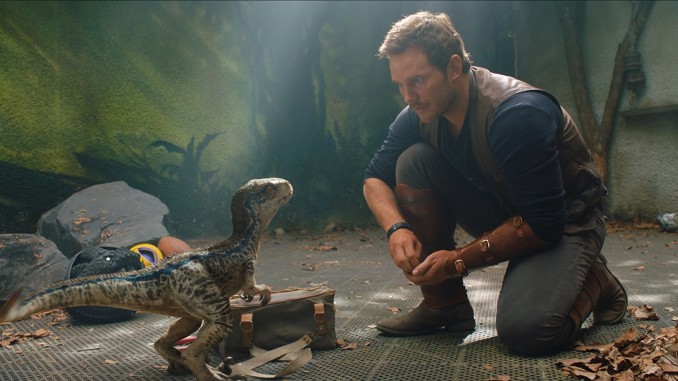
“What do you mean I’m not supposed to eat the dog?

I think that it was another misstep to bring the animals out into the modern world, which reduced their significance, and relegated them to more of a nuisance than the wonder of what they are. There are some good scenes, but there were also many avenues which could have better served the stories that were not taken. The most prominent being Isla Sorna.

I always felt that the sequels would have made better use of their time by moving the story there and allowing the sage to continue to evolve, while keeping the animals isolated from the world at large. In the novel The Lost World, its conclusion makes clear that the animals will eventually die out due to a disease infecting them which was caused by prions.

It was I think the author’s way of conveying how these wonderful animals weren’t meant to continue to exist alongside mankind. If anything, I think that the Jurassic World franchise should show us how fragile life on this planet is, and how utterly irresponsible we are in our care for it. We take little concern for our actions and decisions, not realizing that they are at the root of larger problems that they create.

That I think is the real lesson from chaos theory specifically, and these movies in general. We are not responsible enough with what we have been entrusted with by God, so how could we possibly undertake reviving an extinct species that we know very little about?

In the end I still enjoyed the movies, and I still collect the toys, which I think are one of the more lasting and positive aspects of the franchise. Jurassic World represents possibilities, but it also provides us with an opportunity to glimpse something much greater, that the world will never witness again.