A glimpse at our modern world through the eyes of Rebellion
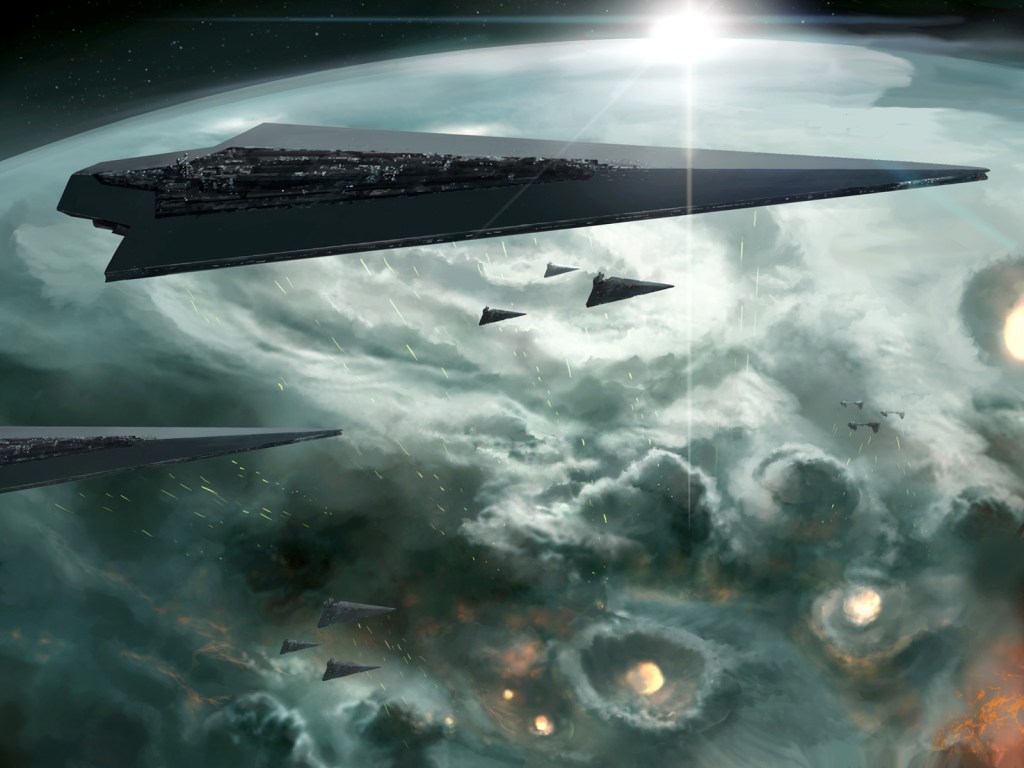
There are no Star Destroyers hanging in low orbit over our world, but there are worse threats to our existence that we see every day. You would think in modern times that humanity would have learned its lesson from devastation and war, but sadly it has not. We don’t even need to consider an outside threat, when we are destroying our planet ourselves.
But war is not our only enemy; corruption, greed, the lust for power, and wealth have all driven many to the precipice of dark deeds, with unthinkable consequences to the innocent. It parallels everything that we know and have seen the Empire to be.
When we look at the war in Ukraine with Russia, we see many similarities between Vladimir Putin and the Emperor, as well as between the Russian Government and the Empire. As frightening as that may seem, I would argue that Russia is not the only nation that parallels the doctrines of the dark side of the Force.
China, Iran, North Korea, and Turkey are all aligned with the former Soviet Union and have built a modern axis of evil in an attempt to control the balance of power on the planet. Their doctrine is simple: none of them alone can stand against the Democracies of the West, but together they can undermine the foundations of their enemies and strike them when they are not expecting it.
It is eerily reminiscent of the Clone Wars era, in which the star systems of the Separatist Alliance committed treason against the Republic and declared war on its government. Behind it all, the darkest of figures with his own personal agenda for galactic conquest and control.
Caught in the heart of these conflicts are the masses, many of whom are innocent. They are forced into subjection to wicked dictators and their rules, while clawing to survive. Others use the existence of circumstances for their own evil desires, manipulating the systems at play for their personal benefit. They are the scum and villainy of the earth.
We live in as Obi-Wan stated, dark times, and it is in these times in which heroes are born. People who come from ordinary lives, and out of obscurity. Some by birth into chance positions of privilege, and others thrust into the fray by no doing of their own. All the while fate has conspired to bring them to the edge of existence, where they can dare to act, and change the world, or falter in fear, and fail.
The Empire was self-assured of its control and station, with no thought to hubris being it’s Achilles heel. It was the door through which Rebellion succeeded, and only so. Like the Empire, the same holds true for our world. Powers beyond our scope where influence and money control the lives of billions, where our futures are exchanged for the privileged few.
The only option then must be survival. We must survive the next five minutes, so that we can begin the next five minutes thereafter. We must use that time to become smarter, stronger, and wiser than our enemies. We must study them, as they study us, and learn their weaknesses. We must learn to operate outside of the envelope of their control and domination.
At the foundation of our actions we must have hope, for without hope we have nothing, and we must have a plan. That plan must lay the foundation for our survival, and at its core it must have the hope that a future may exist free of tyranny. Someday, somehow, we must reclaim what is rightfully ours, freedom!
In 2022 fans were introduced to origins of the Rebel Alliance in Tony Gilroy’s live action Disney Plus series Andor.
Though the series follows the journey of the titular character, the series has much more depth than the shallow character found in Cassian Andor.
The curtains are drawn back, allowing us to see the dark and dangerous work involved in building the Rebel Alliance, and the worlds where it unfolds.
We quickly find that the people who have forsaken their families, their homes, and their lives, for the cause of the Alliance are not always as they seem.
Allegiances are temporary for many, with mixed motives and questionable ethics being the tools used to forge cohesion. Often we find the lines blurred between friend and foe.
It is a dark time across the galaxy, and cells of insurgents are formed at the threat of totalitarian domination by the Empire.
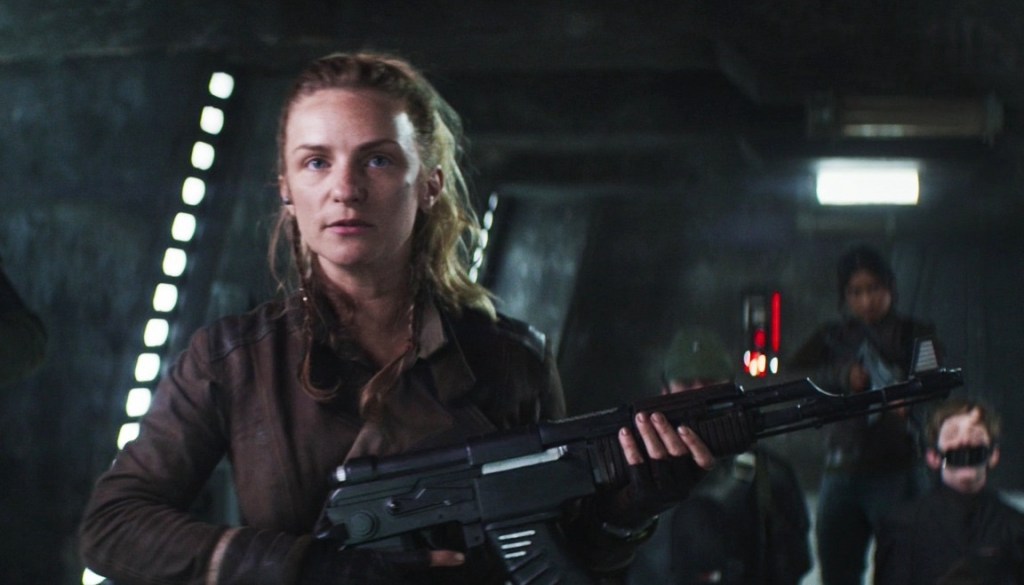
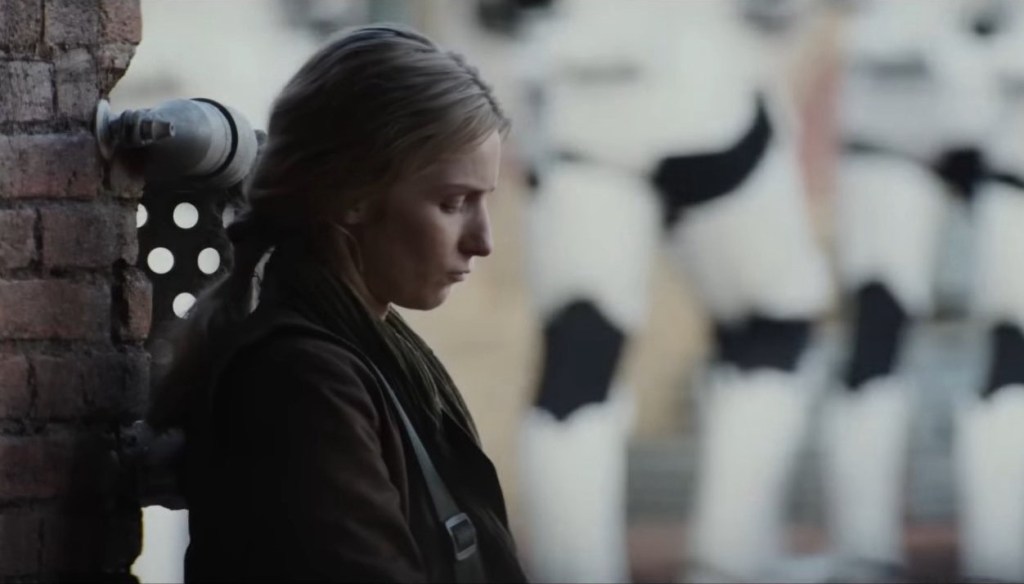
It is within this setting that we find a Rebel operative on the fringes of chaos. At first glimpse we are not certain what to think of Vel Sartha.
Her presence on Aldhani leaves us with more questions than answers. The tone of the scenes playing out are reminiscent of the IRA and its campaign of terror.
Indeed, an insurgency is an asymmetric conflict waged by a small group of irregular forces against a formal government with an organized military.
The traditional good versus evil perspective of the Rebel Alliance and the Galactic Empire are removed, as we are introduced to a darker, grittier, realm of existence.
It’s in this setting that we see a glimpse of the resolve of this young woman, willing to go to any extreme to accomplish the mission with which she has been given.
Vel Sartha on Aldhani
In Vel Sartha we see a new leader of a small cell of fighters. She struggles with insubordination from her team, while she questions those in authority above her.
Her skills and leadership speak of professional military training from her past, while her determination drives her towards an uncertain future.
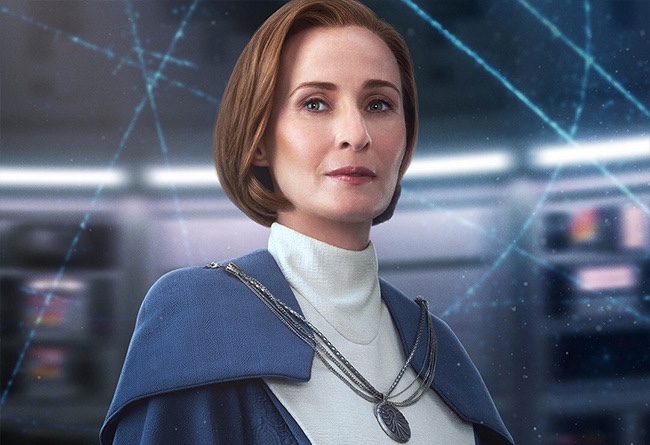
As the series progresses we learn that Vel is a cousin of Senator Mon Mothma, and that both women are heirs of profound wealth on their home world of Chandrila.
We discover that like Mon, Vel is a wealthy socialite, who has chosen to secretly join the fledgling Rebel Alliance.
Though her reasons for doing so are not spoken of, her allegiance to the cause is certain.
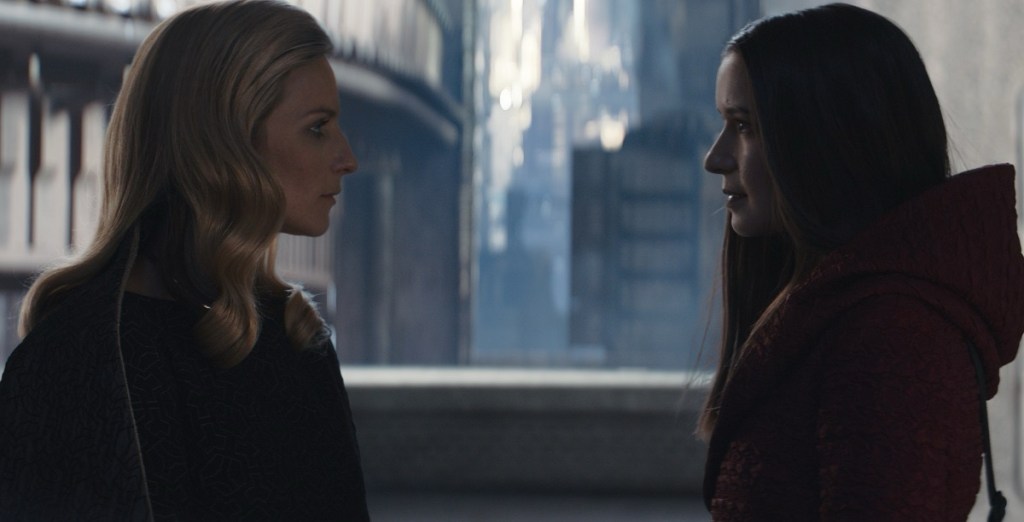
Mon Mothma and Vel on Coruscant
Unlike many, Vel seems to take no thought for the boundaries of ethics and morals which must be broken, in order to free the oppressed.
Her actions are tempered by quiet resolve, leaving us to ponder what might her motivations be? What horrors have driven her to abandon a life of luxury?
On Coruscant we see her frustration as she is kept in the dark by her handler, the mysterious Kleya Marki, whose own roll remains unknown.
Vel and Kleya meet in the shadows
On Ferrix we find Vel apparently frustrated with Luthen’s decisions, as he keeps Vel at a distance, continuing to withhold the answers that she seeks.
Her actions make her a prominent contender as a future leader in a war without end. Time and chance will forge her character, as failure imparts wisdom if she survives the day.
Vel Sartha is every bit the preferred weapon for Luthen Rael; whether she continues to allow him to use her as such remains to be seen.
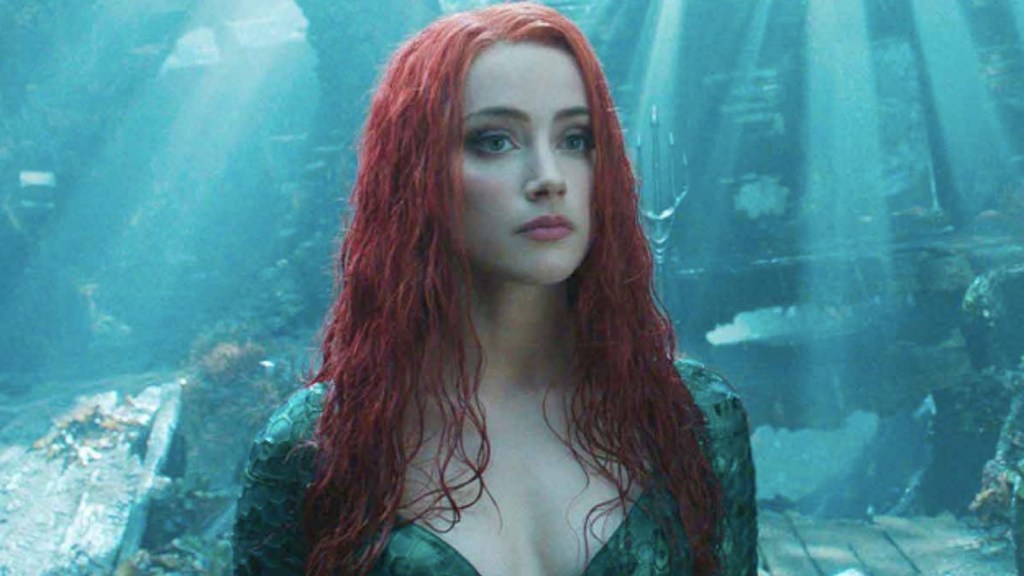
Fans of Aquaman have been more than critical of actress Amber Heard, going so far as to place blame on the actress for sinking Aquaman and the Lost Kingdom at the box office.
That however, isn’t just an exaggeration, it is an outright lie. According to the website Box Office Mojo, Aquaman and the Lost Kingdom has surpassed The Marvels.
Domestically, Aquaman and the Lost Kingdom earned $84.6 million dollars, while globally it raked in $258.2 million, compared to The Marvels global earnings at just $199 million.
Even though the movie barely broke even, those numbers speak volumes about the film’s popularity with fans. So if fans like the movie, what Is the real issue with Amber Heard, and her role as Mera?
To begin we need to go back to the primary reason for the negative comments by fans, which is the accusations and eventual defamation trial brought against Amber by her ex-husband Johnny Depp.
As a writer, I cannot offer an unbiased opinion or perspective on the trial, because the truth is the element which is absent from the entire narrative.
We only know what we have heard and seen, and unfortunately that has only served to fuel the fires of discrimination ignited by fans.
In truth, there’s always two sides to every story, and somewhere in the middle is the truth. Sometimes the truth isn’t popular or pretty, it just is what it is.
In this matter some within the fan base who are fans of Amber’s ex-husband have apparently decided that he’s completely honest, and right, and she’s to blame for all of the wrong doing.
Right or wrong, the private lives of two celebrities have become a public spectacle as they often do, which have had negative consequences for their careers.
Specifically, it had a perceived negative impact on Amber’s current role as Mera in Aquaman and the Lost Kingdom.
It’s a role that Amber had become famous for, as she starred alongside Jason Momoa in James Wan’s 2018 Aquaman.
The reality of Amber’s success as an actress cannot be argued, but the issues that she faced as a person, as well as her character, had the potential to destroy that.
So apparently the failure or success of a film was hinged upon the private life of an actress, which had become a public scandal.
Anyone who has a television or cell phone knows that there are very few actors and actresses whose personal lives have not become scandalous at some point in time.
It is something that may not begin intentionally, but which many have manipulated over time for their own self seeking aggrandizement.
Only Amber knows what her intentions were, but whatever that may be, it is apparent that the entire matter caused concern with the executives at Warner Brothers.
That concern certainly could have evolved into Amber’s role in Aquaman and the Lost Kingdom being marginalized, but there is no evidence for that of which I am aware.
As a creative consultant and writer, I can tell you that it would be unthinkable to alter a supporting character in a sequel, which directly contributed to the success of a prior installment.
To those arguing that the success of Aquaman is solely based on the performance of Jason Momoa, I would tell you that they are uneducated on the film industry itself.
An actors ability to realistically portray a character in a relatable way to the audience is certainly a key component of any film, but it is far from the only one.
Every film has a supporting cast, and like any other role in society, actors need help to achieve their common goals, and to be successful.
That is certainly true in the production of a major motion picture, particularly one of this genre and notoriety.
If Amber’s claims are in any way accurate, then the studio executives at Warner Brothers decided to minimize her role, out of concern that her personal drama would harm the success of the film.
If that is true, their actions had the opposite effect, as her absence caused more contention than if her role had been as prominent as the it was in the first film.
The correct way for them to address this would have been to ignore her personal life, and to feature her as a strong supporting role as was originally planned.
The logic is if you give the media and the public by extension nothing to talk about, then eventually their attention will turn away from the drama.
Unfortunately that did not occur, and the entire matter severely harmed the career of an actress who did not deserve for that to happen.
There are people within the fan base and the general public who are quick to condemn Amber, while excusing or ignoring their own faults.
The reality is that there are far worse things in Hollywood, than personal drama between a divorced couple.
Amber may have areas that she needs to improve in her character, and her integrity, but don’t we all?
She may even struggle with mental illness, and if true then that should be all the more reason to show her compassion and mercy.
In the end, what she needs is time alone to reflect on her life, and to address the issues that she has struggled with.
I’m sure that she has made decisions that she isn’t happy with or proud of; now she has an opportunity to address those.
As for her role as Mera, I feel the same way about her as I feel about Gal Gadot portraying Wonder Woman: there’s no one else out there suited for the role.
How the Imperial Navy should have changed the course of the franchise.
As a life long fan of Star Wars, I have always been an admirer of the Extended Universe novels. I thought that the story arc that they presented was a much more grounded continuation of the franchise.
On the flip side of that coin, I loathe the sequel films for their lack of any cohesive plot or story. They were made up as they went along, which resulted in a shameful end to the Skywalker Saga.
By the same token, the Disney Plus live action series have presented their own take on the state of affairs in the galaxy, however they too are lacking one key aspect as well.
By the Numbers
Recently I came across a piece of information that fundamentally changes how either the canon or Legends material should have been structured around the galactic civil war.
There is a discontinued mobile game published by Disney Interactive entitled Star Wars Uprising, which is a canon source.
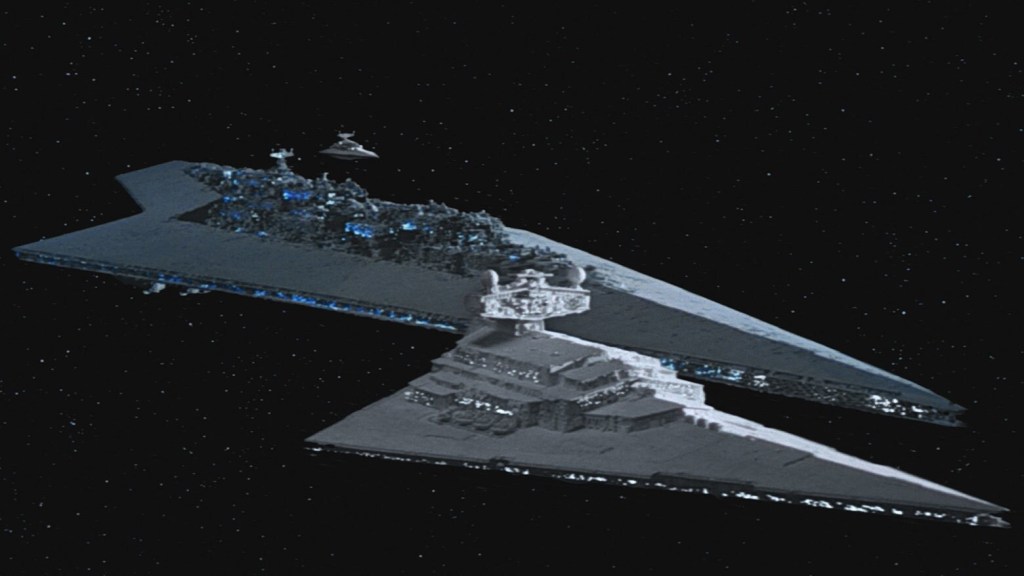
In the game it is stated that at the height of the Age of the Empire, there were approximately 25,000 Star Destroyers in the Imperial fleet.
To put that into perspective, consider this: each Imperial -class Star Destroyer was manned by 9,235 officers, 27,850 non-commissioned officers, and 275 gunners.
That is 37,360 crew members, just to operate the ship. That does not include the compliment of Imperial Army troops, Stormtroopers, or pilots onboard each vessel.
That would bring the total crew compliment for the Star Destroyer fleet to 934,000,000 personnel. This does not include any of the Empire’s other capital or support ships.
This information provides an overwhelming perspective of the disposition and force projection capabilities of the Imperial fleet across the known galaxy.
State of Affairsin the Galaxy
There are 3.2 billion habitable star systems in the Star Wars galaxy (referred to as Sky River), and of those only one billion have sentient life.
Of the one billion star systems, only 69 million meet the population requirements for Imperial representation.
(In the old senate, there were dozens of systems that were represented at the sector level by a single representative speaking on behalf of all of the systems within their sector).
This is integral to the Imperial fleet, because It means in unequivocal terms that both canon and Legends stories would be far from realistic, in regards to the state of affairs in the galaxy.
The war would not have ended at the battle of Endor, and it would not have been the end of the Empire.
Retribution
The Emperor then, would most certainly have created contingency plans for the Grand Moffs to activate in the event of his untimely death.
This idea is played upon in the campaign story of Battlefront II with Operation Cinder, but not to the extent of what it would have been in reality.
Each sector command within the Empire would have immediately marshaled their forces, and gone on high alert at the Emperor’s death.
They would have instituted sector wide lock downs, preventing all space travel into and out of their sectors.
The remaining Moffs would have immediately begun hunting down the Rebel fleet, while the Imperial Security Bureau or ISB, would have begun to assemble target packages for their special operations units.
The Empire would have gone into overdrive in order to quell any uprisings on Imperial controlled or occupied worlds, which were a result of the Alliance victory at Endor.
Civil Affairs and Psychological Operations
Mon Mothma would have capitalized on the moment, and used the Holonet to broadcast a galaxy wide message of the Emperor’s demise, and the establishment of a New Republic.
This form of psychological warfare would have reached far and wide across the galaxy, fueling the fire of rebellion among those oppressed by the Empire.
And now a message from the Chief of State…
It would have aided the Rebellion in gaining new allies, and in turn manpower and resources to fight the Empire.
The continued fight for freedom across the galaxy would have only furthered Alliance objectives in re-establishing democracy under the banner of a New Republic.
The long war
The reality is that Alliance and partisan forces could easily overwhelm and defeat Imperial forces on the ground, but not in space.
The Empire would not have conceded to the Rebellion, or collapsed. It would have used the full might of its fleet to engage the Rebel Alliance at every opportunity.
Rebel fleets would have been forced to continue conducting hit and run attacks against the larger more powerful Imperial capital ships, and the shipyards that supported them.
These sorts of skirmishes would have played out across the galaxy, until the Alliance could effectively eliminate the support structure for the Star Destroyers.
Without food, fuel, and weapons, the Empire’s Star Destroyers would be little more than an orbital barracks.
This would be a priority, since the main objective of the Alliance would be to retake Coruscant, the Galactic capital of the Old Republic.
Coruscant rather than Endor would be the defining battle in the war, and would be the symbolic victory needed to rally the galaxy behind the New Republic.
If Coruscant were to fall, then the remnants of the Empire would be forced to withdraw. They would either establish a new capital, or else concede to defeat and disarmament.
Those Moffs who refused would in all likelihood continue to operate as an independent military force, carrying out opportunistic operations in an effort to regroup and regain momentum.
So why is all of this important? Because both canon and Legends material neglect this very fact, so let’s see how they get it wrong:
Legends
This is the simplest of the two narratives to explore, which places the pivotal turning point at the battle of Endor.
Both the destruction of the second Death Star, as well as the death of Emperor Palpatine and Darth Vader leave the Empire without any clear chain of command.
In short order, the Empire falls and acquiesces to the New Republic. This of course is strategically impossible.
The Sequel era
Prior to the sequel films, there is a time period where the New Republic agrees to a military disarmament and draw down.
Their reasoning is to not follow in the footsteps of the Empire, and become a Galactic military force.
In reality, the New Republic would want to do the opposite. They would understand that their best defense against future tyranny, would be a strong offensive capability.
the New Republic would want a unified defense and security force, which it could easily task with deterrent patrols and sector security missions.
Also of note is the battle of Jakku, which in canon is considered the final victory of the Alliance against the Empire.
This too is in error, as Jakku is too remote to be of any strategic importance to the security of the Empire.
Coruscant would be the primary military target of the Rebel Alliance, and only if they succeeded in taking it would they have a chance to oust the Empire from its position of power in the galaxy.
The Realization of War
The Empire would still be a very real threat to the existence of the New Republic for years if not decades, and would serve as the backdrop for every story presented within the franchise.
It would also mean that what we have seen in the live action series and sequel films would not have happened the way that it was portrayed.
Conclusion
So you can see that there is a lot more to be explored in the Star Wars universe than what we have been presented with in either canon or Legends material.
Though some of the writers may have conveniently explained away the Empire in order to accommodate the stories they tell, the reality of war tells a different tale altogether…
In 2022 Jazwares announced a new line of small scale toy ships and vehicles from the Star Wars franchise called Micro Galaxy Squadron.
The line features screen accurate replicas of the ships and vehicles from across the entire saga, as well as from the live action series’.
Each ship or vehicle has different play features like moving parts and removable panels, as well as detailed interiors.
The toys are scaled relative to each other, in order to reflect their sizes in real life. Most of them range from 1/50 to 1/200 in scale.
They also include at least one mini figure with two points of articulation, and stand roughly one inch in height, or 1/72 scale.
A few of the larger play sets like the Millennium Falcon and AT-AT feature electronic lights and sound effects, which add to the fun of the line.
Micro Galaxy Squadron AT-AT
Since it’s launch, and at the time of this writing, the Micro Galaxy Squadron has released four waves that total over one hundred ships and vehicles to date.
Several of these are a re-release as a battle pack or a variant of some sort. There are also rare and chase variants in limited numbers, making them highly sought after by collectors.
The line has received mostly positive reviews, with it often being compared to the Galoob Action Fleet line from the mid nineties.
Small Beginnings
The most notable feature of the Micro Galaxy Squadron is its size; they are small scale toys intended for display on a shelf or a table top.
They are larger than gaming miniatures, but smaller than the 3.75 scale toys from Kenner and Hasbro.
This presents collectors with an opportunity to own ships and vehicles from Star Wars that may not be otherwise feasible or practical due to their size.
As a professional toy photographer I see the potential to utilize the Micro Galaxy Squadron as a background element, in composite mixed scale shots.
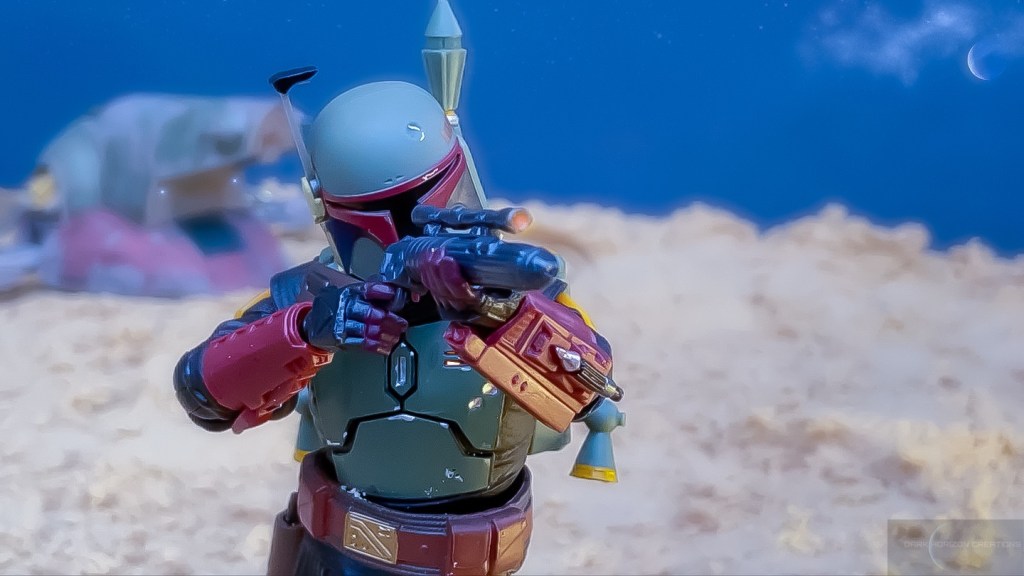
mixed scale composition using the Micro Galaxy Squadron Slave I in the background, with Black Series Boba Fett figure in the foreground.
Pros and cons
The Micro Galaxy Squadron are as nice as they look, and even more so in person. Seeing them in pics or videos does not do them justice.
That attraction to the line is tempered though, by the limitations of how they can be used, as well as by their cost.
If you are into building dioramas and toy photography as I am, then there really is no limit to what you can do with the toys in this line.
You can do mix scaled compositions, or space based battle scenes. What you can’t do is use 3.75 scale action figures in macro shots with them.
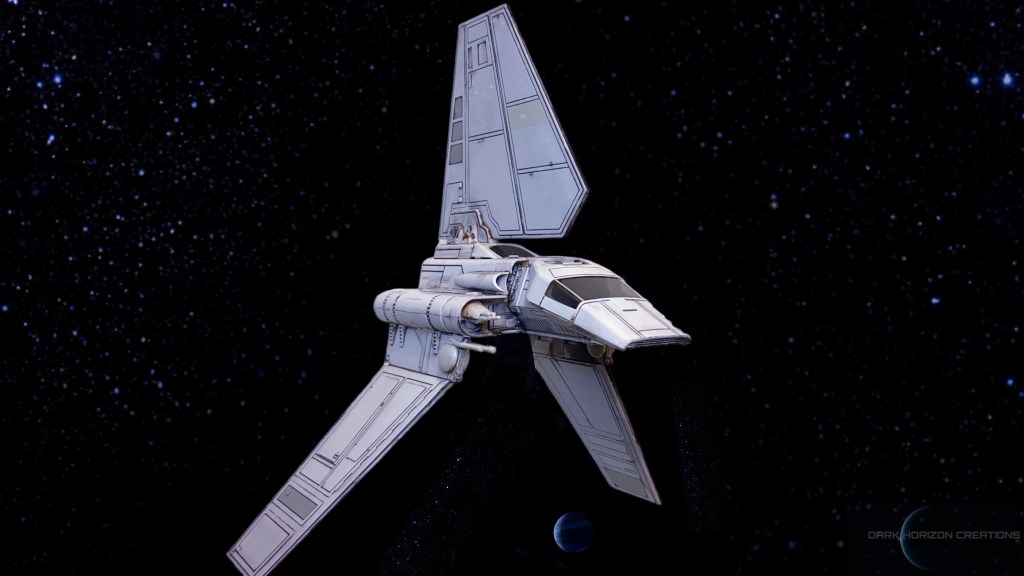
Micro Galaxy Squadron Imperial Shuttle
What I’m referring to is using the Micro Galaxy Squadron vehicles and ships as a backdrop for close ups with the action figures.
Due to their scale you’re limited in how you can integrate the 1:18 scale figures into a shot with them.
You certainly can’t use the 1:18 scale figures in a diorama with them, unless again you’re building a mixed scale composition, with the position of the toys meant to infer their distance from each other.
For close up shots of figures sitting in the cockpit of a fighter, or egressing from a speeder, you have to turn back to the 3.75 scale ships and vehicles by Hasbro.
The quality of the toys is excellent, with very little in the way of quality control issues to make mention of.
Cost is somewhat of a factor with this line, depending upon what you want, and the quantity. Smaller ships like the starfighters cost around fifteen dollars each, while the largest vehicles cost sixty dollars.
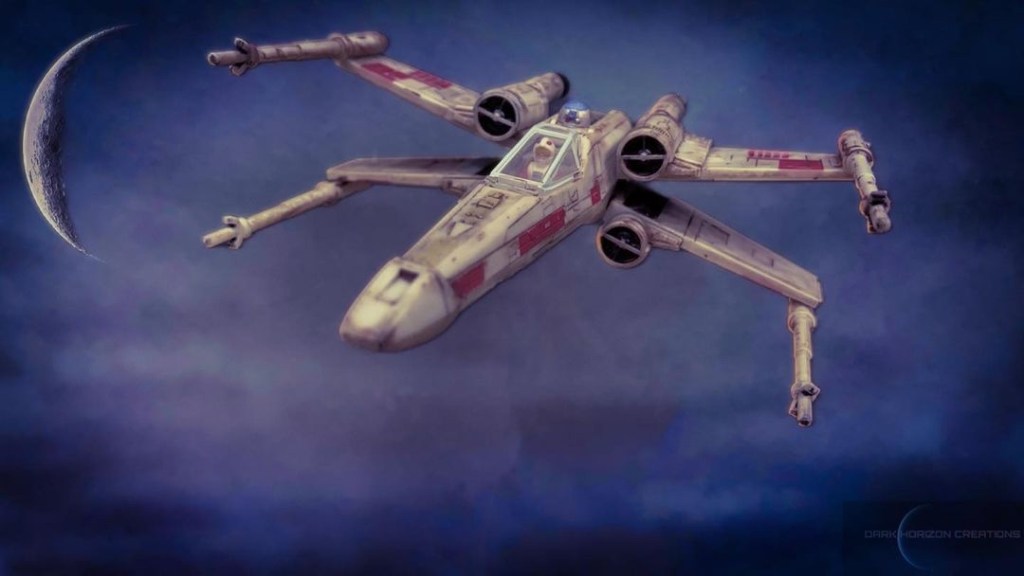
Micro Galaxy Squadron T-70 X-Wing
The exclusive battle packs and boxed sets are also more expensive than their standard release variants found at mass retail.
Conclusions
There’s no doubt that the Micro Galaxy Squadron is a great line with a lot of potential, but Is it right for you? That really depends upon what you want to do with them.
As a stand alone assortment they’ve quickly become my favorite line to collect, because I can buy the ships and vehicles that I’ve always wanted, at an affordable cost.
As a background element for my photographs, I find that they are a necessity, as they give an added sense of realism that would otherwise be lacking.
The line is a fan favorite, and their value is certain to exponentially increase over time, particularly as certain models are retired, while others like the chase variants cease to be found in the wild.
Overall the Micro Galaxy Squadron is in my opinion one of the best Star Wars collectible assortments to be released in a long time, and it’s a worthy part of the galaxy, far, far away.
A missed opportunity to become the galaxy’s first spaghetti western
It’s no secret that George Lucas took inspiration for Star Wars from the Saturday spaghetti westerns that he watched in cinemas growing up.
Gunsmoke and The Rifleman are two examples that I grew up with, and still watch to this day. So what makes these shows such a success? And what inspiration can be taken from them?
To begin when you look at these shows and others from their time, you see the traditional good guy versus bad guy trope.
You also had an ethical and family friendly show that everyone could watch and enjoy. Unlike in modern times, television networks back then had ethical and moral standards that they abode by.
You also had a different story each week, which helped maintain the appeal of the shows to a diverse audience, which in turn helped to maintain the ratings.
Each episode though different, usually saw the hero in dire situations, facing bad guy(s) out to do wrong. They would have to develop a plan to beat them, and restore the order and the peace of the town.
That is what Gunsmoke, The Rifleman, and many other shows of that era were about: portraying family values taught through morality and virtue.
So we can see that at the time, what was considered normal for a spaghetti western, is the exception and not the norm in today’s television and movie industry.
Today the studios and writers rely upon attempts to recycle past time favorites, in an effort to recreate them for modern audiences.
Their goal however, isn’t making family friendly and wholesome entertainment; It is entirely profit driven, at the sacrifice of creativity and originality.
So how do these lessons from the early days of television apply to The Mandalorian? To begin, let’s look at a scene from Chapter One of the very first season.
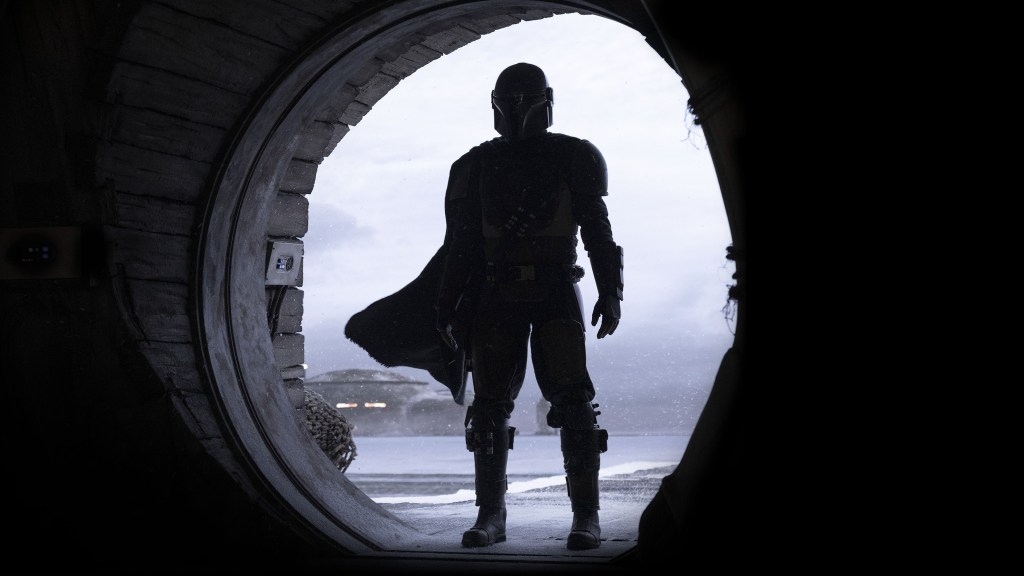
In the very beginning of the very first episode, we see this unknown Mandalorian walk up to an arctic village, and stand in the doorway of a far away galactic saloon.
He sizes up the occupants before making his way to the bar, where an epic showdown ensues. This one scene could have carried the entire series into greatness.
It was a direct call back to those old time spaghetti westerns, as well as to the scenes from A New Hope. In that one moment, we had the atmosphere and the setting that Star Wars was known for.
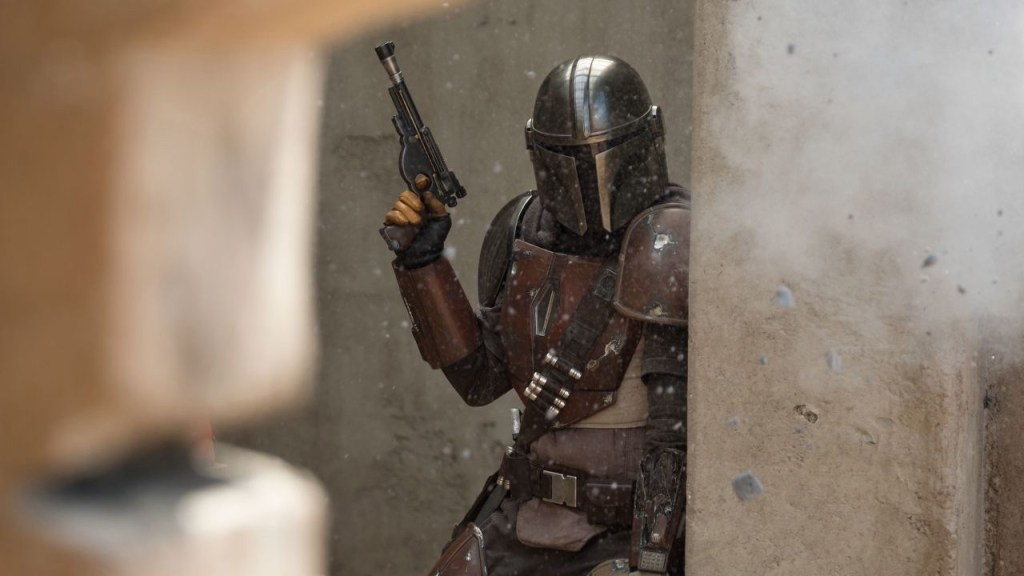
There were other scenes throughout the series that still captured the essence of the lone gunslinger, but Lucasfilm had other ideas, which forever ruined this series, without most people even realizing it.
The Mandalorian had the potential to become a truly unique series within the Star Wars franchise, with their very own galactic gunslinger spaghetti western set in space!
That opportunity however, was dismissed in favor of profit, and pleasing the fans. So where did the show go south?
From the very beginning, The Mandalorian was condemned to failure, when it introduced a little green, glob of snot named Grogu.
Rather than have a different story each week, with a different bad guy, Lucasfilm made the same mistake that it always does, by trying to weave a common plot into all of It’s shows.
Rather than allow The Mandalorian to stand on his own two feet, he became an intergalactic baby sitter. It was the most detracting aspect of the entire series.
There was no need for them to tie-in this series to anything, but they chose to do so anyway. In doing this they limited the potential of the show, by controlling what the fans and viewers were drawn to.
Rather than using the Mandalorian himself to drive the show through his strict warrior’s code, the studio chose to use a macguffin in the form of Grogu.
Grogu is nothing more than a fifty thousand dollar marketing tool to get you to buy his merchandise; plain and simple.
His actions every week in the series were quite frankly embarrassing, and a cause for me personally to unsubscribe from Disney Plus.
And there lies the problem with the Disney-era Star Wars franchise. It’s no longer about telling a story; it’s all marketed to become a profit driven platform for the company.
If The Mandalorian had followed the model of those old spaghetti westerns, we would have seen our anti- hero go up against a different bad guy every week.
The episodes would stand on their own, with no connection to the larger Star Wars universe. It would have been an episodic journey that sought to differentiate and invent, rather than to conform.
Unfortunately no such creative liberties were taken with this series, or any other produced by Lucasfilm under the Disney regime. Instead, we were left with a confusing and weird approach to story telling.
The Mandalorian had all of the potential to become great, by ignoring fan service, and seeking to follow the old dusty trail of storytelling from a bygone era.
So you can see how their attempts and efforts to build a continuous plot thread across thousands of years has resulted in many missed opportunities.
Not every thing within Star Wars has to be told; not every missing piece needs to be found; Sometimes it’s best to allow ambiguity It’s place in a story, and leave the rest to the imagination of the viewers.
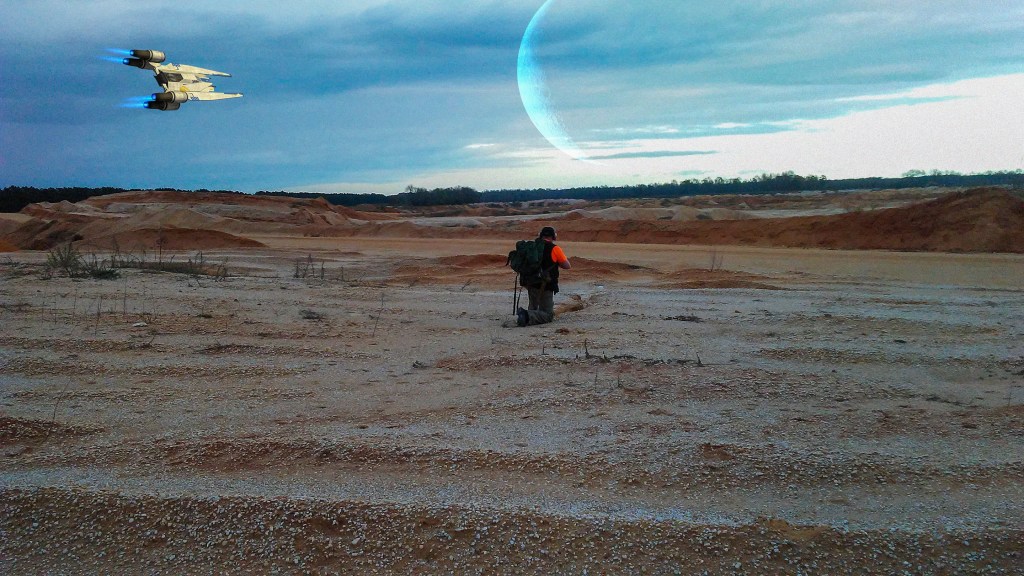
An Alliance SpecForces soldier dropped at an LZ by an Incom UT-60D U-Wing.
Somewhere in the Northern highlands of Bothawui, two operators from the Rebel Alliance traverse across mountainous terrain in the freezing cold of winter.
They are being hunted by Imperial forces across the continent, who have no idea who they are looking for.
All they know is that someone is responsible for the deaths of dozens of Imperial spies, and they have left no trace of evidence behind.
What the Imperial Garrison on Bothawui isn’t aware of, is the fact that they are pursuing members of the Alliance SpecForces.
These are highly skilled and trained operators who specialize in surgical shooting. They are experts in asymmetric warfare, close quarters combat, and unconventional tactics.
They have been operating alone on the planet for months, disrupting the activity of the Imperial Security Bureau, or ISB.
Their mission is to eliminate High Value Targets, or HVTs, operating for the Empire, and to intercept intelligence on Imperial operations.
Having succeeded, they have recently become compromised by the loss of a local contact, and are now moving to a pre-determined extraction point for pick up.
The success of missions like this are contingent upon the experience, knowledge, skills, and training of the individual operator.
Often these missions require SpecForces to operate alone, or in small teams behind enemy lines for extended periods of time.
They must be able to adapt to dynamic environments and situations, while making decisions on their own, under stress.
It requires a level of discipline and maturity that each candidate must already possess long before they reach selection.
The Assessment and Selection course for the SpecForces begins on a back water world, far in the Outer Rim, away from the prying eyes of the Empire.
Here, candidates have been assembled for the first time, arriving from their respective commands from across the galaxy.
Two hundred soldiers from across the ranks of the Alliance are bunked in portable barracks out in the middle of a barren wilderness.
Their introduction to selection begins with an informal brieifng by the cadre’, whom say no more to the candidates than what is required.
The shock of informality is more than many can handle, as they have grown accustomed to the disciplined lifestyle of the rank-and-file forces.
Their reliance upon rigid discipline, tight schedules, and fixed methods soon comes unraveled in the silence of selection.
Here there are no instructors barking commands, detonating pyrotechnics, or simulating attacks. There is only a holo board outside of the barracks with a location and time for the next event.
Many have no idea what to expect, and fewer still are able to accept that as the new norm.
Selection begins on day one with a standardized physical fitness test and surprisingly, this as far as some will get.
The others will move on to more intense pain and suffering, designed to interpret their commitment to such austere conditions.
Four man patrols are forced to carry two-hundred-kilogram logs as they run up and down nearby hillsides in the cold mountains.
They ford nearby streams with their burden on their shoulders, as they are forced to continue moving towards their next objective.
There is no screaming or yelling from the Cadre’; there is no encouragement or support offered. Only calm and concise instructions, followed by silence.
They move alongside the candidates, watching each one carefully, and deciphering who will make it, and who will not.
They pay closer attention to those who are moving in silence, enduring the pain and the stress, with no audible complaint or frustration.
These candidates are probed even further in the days and weeks ahead. As the ruck marches begin, the constant physical exertion takes it toll, as candidates are dropped or quit day by day.
By day twenty-eight only a handful of candidates will remain for the final exercise. They are beyond physical exhaustion and pain, which is ever present.
For these few, they have learned to become comfortable being uncomfortable. They have conditioned themselves to compartmentalize the confusion, exhaustion, and pain.
A cadre’ member pauses as he participates in a land nav movement with candidates during selection.
They have endured several hundred kilometers of forced ruck marches across the mountains day and night, for three consecutive weeks.
They have completed tasks with conditions and standards, while exposed to the unforgiving elements of cold, heat, and freezing water.
Now they must begin their final movement: a forty-kilometer land exercise, while carrying a fifty kilometer rucksack, and a three kilogram rifle, over mountainous terrain.
The candidates know that there is a time limit; they just don’t know what it is. This means that they will be forced to move as quickly as possible throughout the night.
Seventeen hours and a dozen RVs later, only eight candidates of the original two hundred remain, to complete assessment and selection.
Their bodies are on fire with pain, with several having micro fractures in their ankles. The warmth of a campfire and hot food do little to assuage the emotions that they experience.
Though they have survived the physical challenges of selection, the next day will bring them face to face with their peers.
Here they will be subjected to a three-hour psychological interview, conducted by the cadre’ to understand how each person thinks.
Some will be turned away and offered the opportunity to repeat selection in the future. A few are allowed to continue the process and are flown to another site.
There, they will spend the next six months learning how to become the best shooters in the Alliance. They will learn close quarters combat, or CQC.
They will be taught how to use encrypted communications equipment, and how to slice Imperial computer terminals.
They will learn how to infiltrate Imperial facilities, and how to blend in with a planet’s local populace. They will be taught how to call in orbital air strikes, and how to render medical aid.
Half of those who begin their training phase will fail, leaving just two to succeed. They have learned that selection is a never-ending process, and that success is an individual effort.
That process has kept them alive as they skirt across the mountains on Bothawui. They have moved nonstop for hours, remaining below the ridge line in order to conceal their presence from Imperial fighters flying above.
It takes them just twelve hours to make their RV, or rendezvous point. They locate the small freighter, tucked away in the tree line.
As night falls, they remove the camouflage netting draped over the battered ship, and begin their flight back to their Unit.
Their mission complete, they leave as silently as they arrived. There is no boasting, and there is no ego among their ranks; only the need to collapse in a seat and rest.
As the ship takes off, it races across the landscape, before climbing back to the stars. Below, the Imperials are left with more questions than they have answers.
How Lucasfilm destroyed the reputation of the galaxy’s most feared bounty hunter
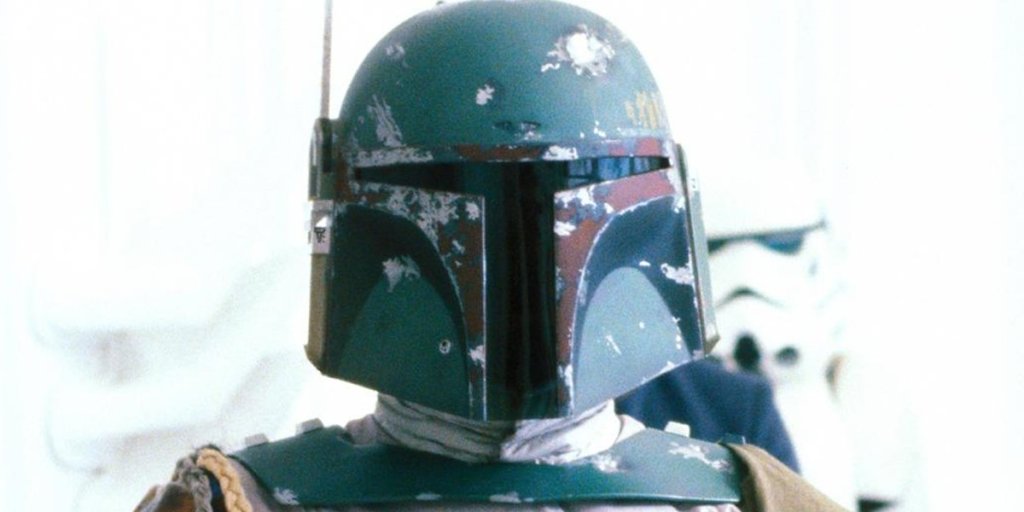
Boba Fett in The Empire Strikes Back
In 1980 fans got their first glimpse of a character who appeared equally as imposing as Darth Vader.
His silence coupled with his mysterious armor and helmet, made him one of the most intriguing characters in Star Wars lore.
Boba Fett, who was primarily portrayed by Jeremy Bulloch, became an instant fan favorite in both The Empire Strikes Back, and its sequel, Return of the Jedi.
Jeremy based his portrayal of Boba Fett on the Clint Eastwood character of a man with no name, from the Western film A fistful of dollars.
Bulloch used a very methodical and slowed pace of movement for the character, as well as cradling his blaster in his arm, and canting his head to one side. Boba Fett also featured a cape similar to Eastwood’s character.
In The Empire Strikes Back veteran actor Jason Wingreen supplied the voice-over for the few lines spoken by Boba Fett, which established him as a man of few words.
In my opinion, this was and still is the only iteration of the character that should be considered canon. It was original, simple, and it worked then and now.
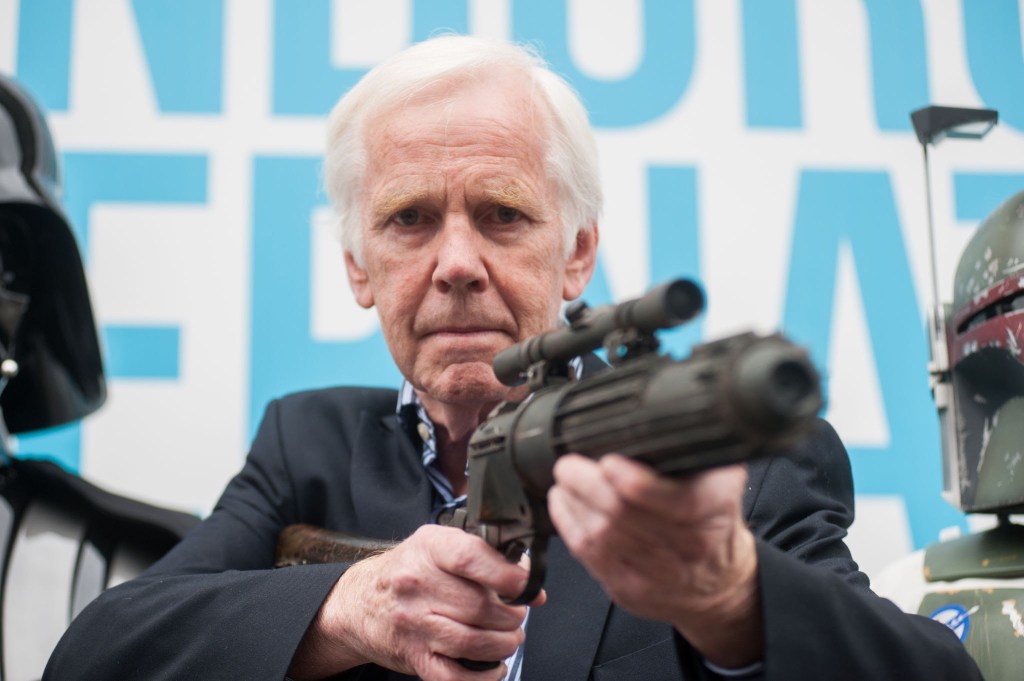
Jeremy Bulloch, the original Boba Fett
That isn’t however, how the character began. initially Boba Fett was envisioned by George Lucas as a form of super stormtrooper.
The test shots prior to filming reveal that the armor was originally white, with a light grey body suit. They used heavily modified UZI submachine guns for the blasters.
That was all changed however, and from it came the idea of an intergalactic bounty hunter. The armor was changed to an Olive Green color, the Jetpack was refined, as were the blasters.
Initially there was no back story created by George Lucas for Boba Fett. That would later be written in the 1996 Expanded Universe novel, Tales of the Bounty Hunters, by Kevin J. Anderson.
The book contains a short story entitled, The Last One Standing: A tale of Boba Fett, by Daniel Keys Moran. In it we learn of a man named Jaster Mereel, who is a journeyman protector.
Jaster is the original identity of the man who would later become the bounty Hunter known as Boba Fett. In all honestly it is a much more interesting back story for the character than what it has evolved into.
The story was considered canon until 1999 when Star Wars Attack of the Clones was released. This was in my opinion, the first error made with the character of Boba Fett.
The entire sequence with Jango and Boba in the prequel film was underwhelming. It certainly provided a plausible origin for the clone army, but at the cost of erasing an already established background.
Fast forward to 2012, and we see Lucasfilm transition to a Disney owned franchise, and with it a new era for characters within the Star Wars universe, Boba Fett included.
We get Our first glimpse of Boba Fett in the Disney-era live action continuity, during the season two episode of The Mandalorian, titled The Marshal.
In it, we get a very brief appearance of Boba Fett at the end of the episode, whose face looks scarred, as he watches events unfold from a distance.
We next see Boba Fett in the Season two episode of The Mandalorian entitled The Tragedy. Here, he has tracked Din Djarin to Tython, in order to recover his armor.
In my opinion, this episode featured some of the best acting by Temura Morrison, as well as some incredible action sequences.
Temura specifically incorporated and used traditional Māori fighting techniques in the sequences, and it was unreal.
It gave the character new life and purpose in my opinion, and set up a foundation to continue his story. Unfortunately, we would not see that happen in his own series, The Book of Boba Fett.
Boba Fett on Tython
Up until 2021 Boba Fett held a reputation as the most feared Bounty Hunter in the galaxy. In the Expanded Universe, his survival of the Sarlacc pit further solidified him as the best in the business.
The Book of Boba Fett however, unraveled all of the intrigue and mystery of the character. The writers sought to fill in the gaps as they do with all of the Disney-era live action Star Wars series.
Instead, they presented Boba Fett as being hopeless and weak. He’s captured by Sand People, whom he eventually goes soft on and tries to learn their ways, in an effort to join their tribe.
They eventually shove a lizard up his nose, which gives him a hallucinogenic vision of a tree in the desert, making him worthy of their tribe.
There’s at least one continuity error in the series, in which Jawas steal Boba Fett’s armor after he escapes the Sarlacc.
They later sell it to Cobb Vanth in Mos Pelgo. Later in the series, Boba Fett flies back to the Sarlacc pit, searching for his armor.
Boba Fett’s ship, a heavily modified Firespray–class patrol vessel named Slave I, also isn’t immune to Disney’s disease.
Rather than honor the ship that captivated fans for decades, Lucasfilm chose to rename it in order to appease the racist woke movement. In the series, as well as in all marketing it is now known as Firespray, or Boba Fett’s starship.
Let me be clear here: The name of Boba Fett’s ship is Slave I; if that offends you, then I’ve done my duty to uphold the legacy of one of my favorite toys of all time!
Slave I
The finale of The Book of Boba Fett sees Boba Fett riding atop a Rancor to defeat his enemies, while destroying buildings in one of the districts of Mos Espa. It was embarrassing and underwhelming.
The real issue here is that Lucasfilm, the directors, and the writers devolved the character from the galaxy’s most feared bounty hunter, to a fragile old man who needs his own bodyguard to stay alive.
It was a very disappointing attempt at story telling within the Star Wars universe, but that seems to be the norm now rather than the exception.
The other major issue that I have is that Temura has an entirely different style of portraying the character, which is noticeable to anyone who has watched the Original Trilogy.
His accent, his mannerisms, and his posture are all different from those used by Jeremy Bulloch. I think at the least they should have made an effort to maintain that level of continuity to the character.
Boba Fett letting Lucasfilm know who’s in charge
I think the lesson to be learned here is that there are some things better left alone. Not everything has to be altered or changed in order to appeal to new or younger audiences.
This is a lesson that George Lucas himself did not accept or understand, and that error has been adopted by both Disney and Lucasfilm.
The real issue is that Star Wars itself has been relegated to a marketing tool, where quantity is prioritized over quality.
Where George Lucas used his profits to enable him to continue to tell stories, Disney has used the appeal of the mythos itself to make a profit.
There were some really great moments in The Book of Boba Fett, but ultimately what was presented was less than what the character was established as decades ago.
Boba Fett deserves to keep his rightful place in the galaxy, and if he’s going to retire, it needs to be with dignity and respect, and not as a wounded old man.
Looking back on Rogue One: A Star Wars Story, I don’t know of too many fans that didn’t want Jyn Erso to survive. Time and time again I have heard how people loved her character, and thought that she was the new hero of the Rebellion.
In fact, you could argue that Rogue One is the most successful Star Wars project to date, since the mouse acquired Lucasfilm. Having said that, there is an entirely different version of the movie that we most likely will never see, and in those edits Jyn Erso does in fact, survive.
This question then, bears relevance for many reasons, and it is one that I began to consider several years ago. It started me on a journey, which resulted in two years of work on the manuscript for a new Star Wars Legends novel entitled Cold Apex.
That novel is now complete and waiting to be approved by Del Rey and Lucasfilm. Though I won’t offer any spoilers on the plot of the book, what I will do is share how Jyn made it off of Scarif. In the third act of Rogue One, we see the Rebel fleet jump in system directly over Scarif, where they begin moving into position to attack the planetary shield gate.
Admiral Raddus, leading the fleet from the Mon Calamari MC-75 frigate Profundity, Orders Blue Squadron to get to the planet. General Merrick then orders the squadron to follow him through the gate, and bringing up the rear are two Incom UT-60D U-Wing gunships.
We clearly see one of them fly through the shield gate before it closes, but what about the other one? Once they fly through and hit the Blue, they begin to provide air cover for the Pathfinders on the beach below. General Merrick then orders the “U-Wings” plural, to reinforce the troops on the beach. He continues by ordering the fighters to follow him and provide air cover for “them,”plural again, referring to the U-Wings.
U-Wing dropping Rebel soldiers on the beaches of Scarif in search of Jyn Erso.
We know that one U-Wing was shot down and destroyed, but where is the other one? In Cold Apex we find the second U-Wing has landed in an outcropping of trees. A small squad of soldiers deploys from the ship, with orders to find Cassian Andor and Jyn Erso. The rebel troops fight their way through the Citadel base, only to find the missing rebels out on the beach.
They are attacked by Imperial troops as the Death Star fires on the planet, with the U-Wing dropping in and saving the squad from certain defeat. With the shield gate down, they make a blind jump into hyperspace while in the skies over Scarif. So, if Jyn survives, what happens to her next?
Well, you’ll have to wait and read the book to find out! I’ve been told that if approved for publishing, the tentative release date will be in late 2026. I’ll share more when I know more from the publisher.
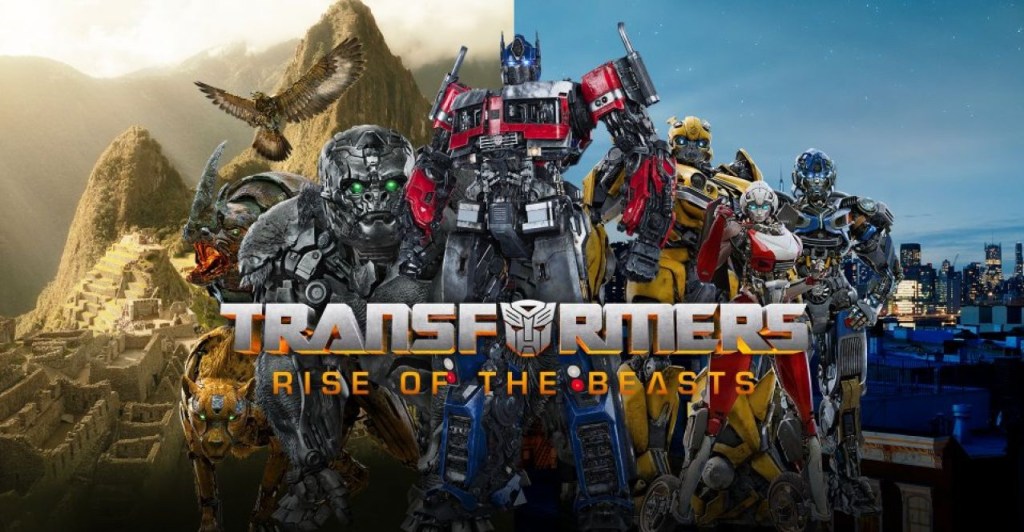
I have been a lifelong fan of the Transformers since their debut in 1984. When I first saw the trailers for the first live action movie in 2007, I was hooked.
Since that time I have eagerly sought every piece of spoilery Intel that I could find on each of the films, while hunting down every toy before the film’s release.
When I first learned of Transformers Rise of the Beasts, I was admittedly not enthusiastic about the film incorporating the Maximals.
I was not a fan of Transformers Beast Wars, and didn’t think much of the concept. As time went on however, I learned more about Rise of the Beasts, which piqued my curiosity.
I became intrigued enough to want to see the film for myself. I was to say the least, curious, and perhaps even optimistic that the movie would not be a disappointment.
So, this afternoon I had the opportunity to go and watch Transformers Rise of the Beasts in the theater; What follows is a very conservative and unbiased review of that film from a fan of the franchise.
Opening Sequence / First Act
I thought that it was very disappointing to have a different character do the voice over for the intro. The monologue by Peter Cullen has become synonymous with the Transformers franchise, and something that I really look forward to.
I was really impressed by the opening sequence, and how it introduced the Maximals, despite not being a fan of their alt mode.
Apelinq’s reference to other worlds was something of importance, in connecting it to an identical statement made by Optimus Prime in Bumblebee.
The fact that there are other worlds in the galaxy to which Autobots have fled for refuge, or otherwise have been created like Cybertron, is a key plot device for the franchise moving forward.
It gives lateral creative storytelling that hasn’t been seen before in the live action continuity. What I found shocking was the choice of music for this movie.
That is particularly disturbing in view of it being made by a toy company, that is supposed to be family oriented.
It would have been taken much differently if the music were confined to one scene, to introduce a single character, as in previous films, but that unfortunately was not the case.
The Director’s choice for music was singular to a specific part of American culture and society, and it felt as if this genre of music were being forced on us against our will.
It in my opinion detracted from the movie, and was impossible to ignore. All throughout this film was some really impressive cinematography, as well as scenes with tremendous gravity.
Unfortunately, it was all ruined by the rap music blasting away behind the action and the dialogue. It really detracts from and stands in contrast to the emotion being portrayed in some of the scenes in which it is featured.
If you go back and review the previous Bayverse movies, the score sets the tone for the scenes being depicted.
What we hear as an audience is as important as what we see. Unfortunately, the Director’s choice for the music inherently make the film appear to be a hip hop interpretation of alien robots waging a war on the Earth.
In my opinion, a franchise like this is best at telling the story through the use of instrumental scores, rather than modern day music of any genre.
Cursing is also much more prevalent in this movie than any of the previous live action movies before it, with even the robots themselves using curse words.
The unbridled use of vulgar speech implies that the Director believes it’s acceptable for children and youth to hear such vulgarity.
It presumes that their lives are inundated by it, and that their parents should accept it as normal when it is anything but that.
It really undermines the very moral foundation and principals that characters such as the Transformers have been used to portray over the decades.
It odd almost as if the director was deliberately attempting to pervert these characters and what they stand for, into a subliminal message from the woke culture.
Second Act
The battle sequence at the history museum has to be one of the best ever done in a live action film. The interaction between Optimus and Scourge was some of the best dialogue that we’ve seen yet between protagonists and antagonists in a Transformers film.
Woke Perspective
There is unfortunately an overwhelming attempt to push woke ideology in this film that depicts white people in a negative light.
This was really disheartening to see depicted in a Transformers live action movie, and it was clearly done to again promote woke ideology and racism against white people in America.
It begins with a derogatory statement made by Ms. Diaz about white people, and Is followed by Elena’s interaction with her boss, a white female.
The last attempt to push this down our throats is an interaction between Noah, and a potential employer who is also a white man.
Though the scenes may have depicted fictional events, It all had very racist undertones within its context, and should never have been included in a family friendly movie.
This alone was enough for me to decide that my son could not watch this film. It is really disappointing to me that Hasbro would allow such a move on the part of the Director.
This is in opposition to the fact eighty percent of their revenue is going to be from the sales of adult Caucasian consumers between the ages of eighteen and forty five years of age!
This isn’t to imply that only Caucasians buy and collect toys; nonsense! What it does imply, is that two thirds of their revenue comes from a group of people that are intentionally and unfairly portrayed in a negative context.
They are for all intents and purposes indoctrinating viewers of the movie with racism. This type of thing is really disappointing to see perpetrated on the impressionable minds of children and young people.
It does nothing to promote fun, peace and unity, as the Transformers themselves have done for the past forty years through storytelling. Instead, it maligns the innocent and causes a tear in the koral fabric of our society.
Third Act
Most of the scenes in the final act were good, and the introduction to the Maximals on Earth by Optimus Primal was really awesome.
The way that their backstory is explained makes them a much more plausible race of Transformers within the live action continuity.
One of the standout characters in this act is Airrazor, and throughout the movie she serves as a plot device of sorts.
Both Cheetor and Rhinox were under used in the film, but what we did see of them was very intriguing.
The final battle scene was tremendous, but once again ruined by two scenes: the first being with Bumblebee’s appearance overwhelmed by rap music, and his use of cursing.
This was completely inappropriate when considering that children would be watching this movie.
The final nail in the coffin for me on this film was the use of a mech suit for Noah from a dead Mirage.
It was the most ridiculous use of a human character in any of these movies to date, and it seriously detracted from the story.
The movie ends with a much-reduced speech for Optimus Prime, and goes on to include a speech by you guessed it, Noah! It was deplorable, and at that point I stood up and left the theater.
Final thoughts
Transformers Rise of the Beasts had tremendous potential to become a pivot point for the franchise.
Instead, it blundered its way through two hours of non stop inundation to the woke culture, while the film itself was unwatchable due to the cursing and blaring rap music.
Surprisingly the visual effects were sub par, and failed to resemble anything like the previous iterations of the Transformers.
The greatest tragedy of all with this film is that it should have done more to honor the life and legacy of Peter Cullen, whose voice over work in this film was his last as the voice of Optimus Prime.
He deserved to be honored in this film, and to have Optimus at the foreground. Instead, Optimus was relegated to a grumpy old Transformer who just wanted to go home.
It is truly disappointing to see this direction left in the hands of a racist director, who used this movie to weave bigotry and hate into its narrative.
I cannot in good conscience recommend Transformers Rise of the Beasts to fans of any age, or to parents. If anything, Transformers has stood as a foundation for ethics, morals, and values for children from all over the world, for the past forty years.
Rise of the Beasts was a missed opportunity to continue to promote family friendly fun, through a classic franchise.