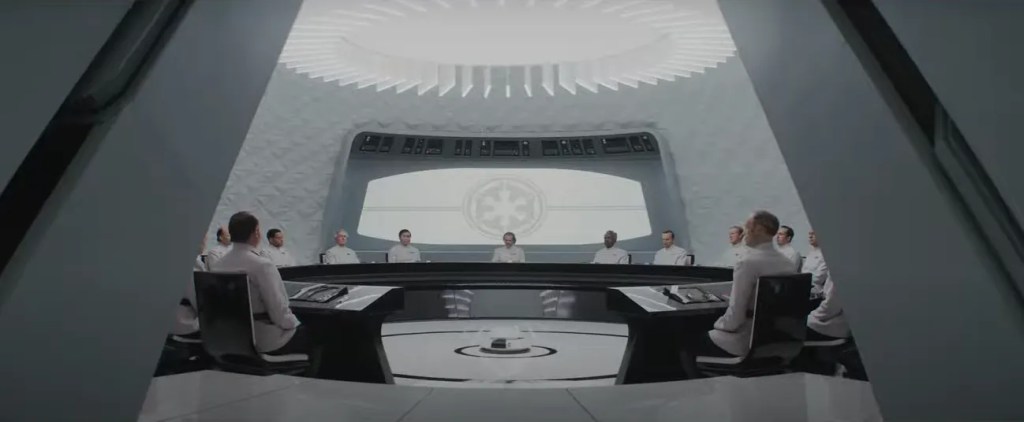
ISB: Imperial control through darkness and deception.

INTRO

The Galactic Empire is nearly as vast as the galaxy that it controls, but unlike the republic which it has replaced, it governs through the will of the Emperor, which is carried out through Imperial policy and subjugation. This is best observed through the overt presence of the Imperial military, who occupy and control every world which finds itself grafted into the Galactic Empire.

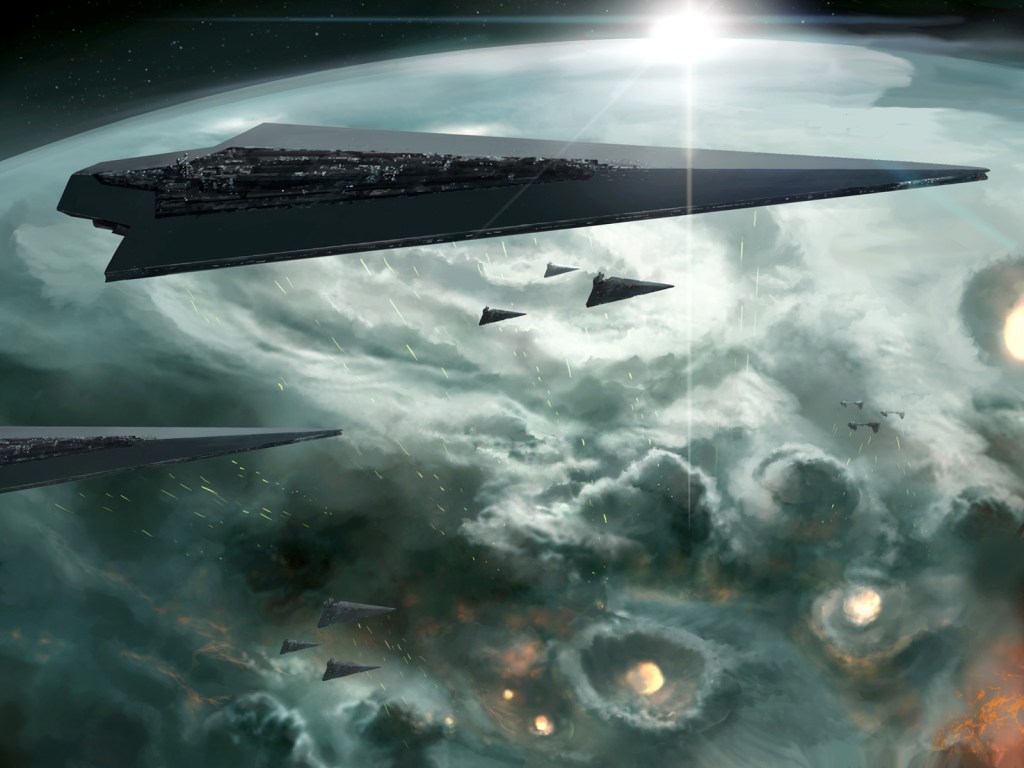
The Emperor makes use of Moffs and political attaches, who are responsible for bringing planets into alignment with Imperial doctrine and oversight. This is supported by military power projection, through the twenty-five thousand Star Destroyers that are the heart of the Imperial Navy. Their presence in any star system signals the end of democracy and freedom for any world on which they are assigned.

Dirtside, the politicians and their diplomatic efforts and ideals are reinforced by the Army, who in turn are supported by legions of armor-clad Stormtroopers. These highly skilled and trained shock troops are loyal to the emperor and his authority, and their presence is as much a psychological tool as a military one.

There is, however, another facet to Imperial control that goes unseen to the untrained eye, and one that has become a thorn in the flesh for the Rebel Alliance and its sympathizers. That pain is induced by the ISB, or Imperial Security Bureau. The ISB is just one of the many organizations that are a part of the Commission for the Preservation of the New Order (COMPNOR).

Unlike its counterpart division of Imperial Intelligence, the ISB is not concerned with strategic military intelligence, but rather with state security. It was created as a means to an end; a way to ensure loyalty to the Emperor on every level, and a means to exact punishment for those who were not.

The ISB is a larger organization than it’s military rival, and its headquarters is located in a large nondescript building in the federal district of Coruscant. The ISB is governed by a body of senior officers known as the High Command, who report directly to the Emporer himself. They ensure that Imperial doctrine, ideology, and policy are promoted throughout the Empire, and that Imperial rule is secure.

RECRUITMENT

The ISB selects its agents from the ranks of the Imperial Academy itself, and upon vetting their recruits undergo specialized training at the ISB Academy on Coruscant. Upon successful completion of training, newly accepted agents enter service into one of the many divisions of the organization, such as counter-surveillance, Interrogation, or reeducation.

OPERATIONS

Agents assigned to Intelligence begin their careers in the ISB Operations Center, aggregating daily intelligence reports from around the galaxy, and building briefing packets for senior officials and officers. Upon promotion, many of these agents select further training to become field agents for the ISB.

In the field, ranking ISB agents are granted authority and great leeway in their operations, to the degree that they can when needed assume command of ground forces or entire starships, by relieving senior officers who outranked them. This by design breeds animosity between Imperial military officers and the ISB hierarchy, and their complaints often fall upon deaf ears.

INTERNAL AFFAIRS

Agents with Internal Affairs are tasked with counter-intelligence investigations for the ISB are deployed at random throughout the army and fleet, ensuring adherence to Imperial doctrine and order. They investigate any claims of military personnel who are insubordinate, or who question Imperial doctrine or orders. The presence of the ISB by design simultaneously commands respect, as well as creates a culture of fear in the Imperial military, which reinforces loyalty to the Empire under threat of punishment.

LOYALTY OFFICERS

The mission of the ISB is not confined however to counterintelligence of the Imperial military, but into every facet of Imperial society as well. Imperial propaganda is created by the ISB to serve the purposes of the Emperor, and they are tasked with ensuring its adherence on Imperial worlds.

SECURITY DIVISION

ISB Agents who are selected for the Security Division receive advanced training in small arms and small team tactics. They are then assigned to one of the many ISB tactical teams that deploy with senior field officers on various assignments. Often the tactical teams are utilized to capture wanted fugitives of the Empire, and they often coordinate their operations with larger military units who provide support for their operations.
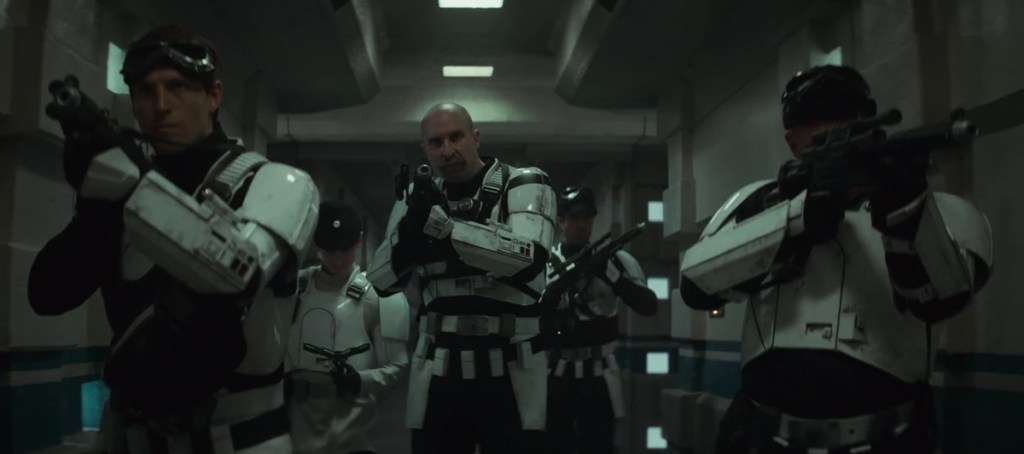
ISB Tactical Agents conduct a Rolling T formation down a corridor

ADVANCED WEAPONS RESEARCH

The ISB was also one of two agencies tasked with controlling the Imperial Advanced Weapons Research Division. While project development fell to the Imperial Intelligence, security of those projects was assigned to the ISB. As such, soldiers from the Advanced Weapons Research, or AWR, were often deployed with ISB agents on special assignments.
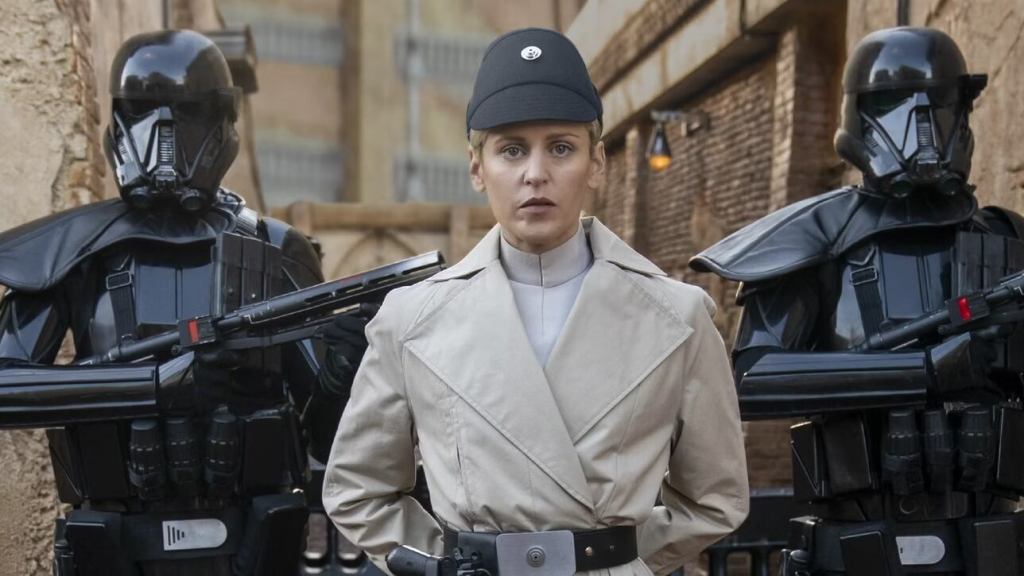
A senior ISB agent in the field, supported by soldiers from the Advanced Weapons Research program

COUNTER-INSURGENCY

Perhaps the greatest assignment of the ISB would become its counter-insurgency operations against the Alliance to Restore the Republic. In the beginning, the Rebel Alliance was not a well-organized militia, but rather an ideal born through localized resistance to Imperial rule. Imperial forces attempted to subjugate this resistance, with the opposite effect.

Throughout the galaxy, bands of resistance formed on far flung planets, which in turn influenced the local populace, and governments. Word of this rebellion began to reach official news agencies like the Galactic News Network, which could not be tolerated. Once the ISB learned of these uprisings, their agents, along with appropriate military support, would deploy to eradicate it’s presence, and restore Imperial rule.

Over time, the ISB would learn that their efforts had in fact the opposite effect on the growing resistance movement. Over the years localized cells of resistance spread word by freighter pilots, passengers, and even clandestine communications networks that they had developed. These once primitive insurgents became a force to be reckoned with, and one that the Emperor wanted vanquished.

This led the ISB to deploy counter-intelligence agents into the field, who were often assigned with agents from Imperial Intelligence. Their objective was to infiltrate locations utilized by the rebels, in the hopes of gaining actionable intelligence. When they were successful, they would utilize military forces to conduct highly sophisticated capture or kill missions on individual members of the Alliance.

For larger operations, they would utilize entire fleets of Star Destroyers in an effort to destroy rebel fighters and ships. Doing so would greatly diminish the capabilities of the rebel forces, while instilling a sense of defeat and fear within its ranks. For the ISB, their efforts were as much a psychological campaign, as they were about state security.

They would conduct false flag operations such as on Ghorman, and blame localized rebel operatives for the deaths of Imperial citizens. They planted evidence and false intelligence, leading to the arrest of rebel sympathizers and supporters across the galaxy. Entire companies such as Blastech Industries and the Incom corporation were seized by the ISB, and placed under Imperial Military oversight.

CONCLUSION

The ISB is perhaps the most feared entity within the Imperial hierarchy, and for good reason. They operate with near Impunity, having the support of the Emperor himself. The ISB and its members serve as the hand that does his bidding and are responsible for ensuring that the integrity and stability of the Empire continue unimpeded.

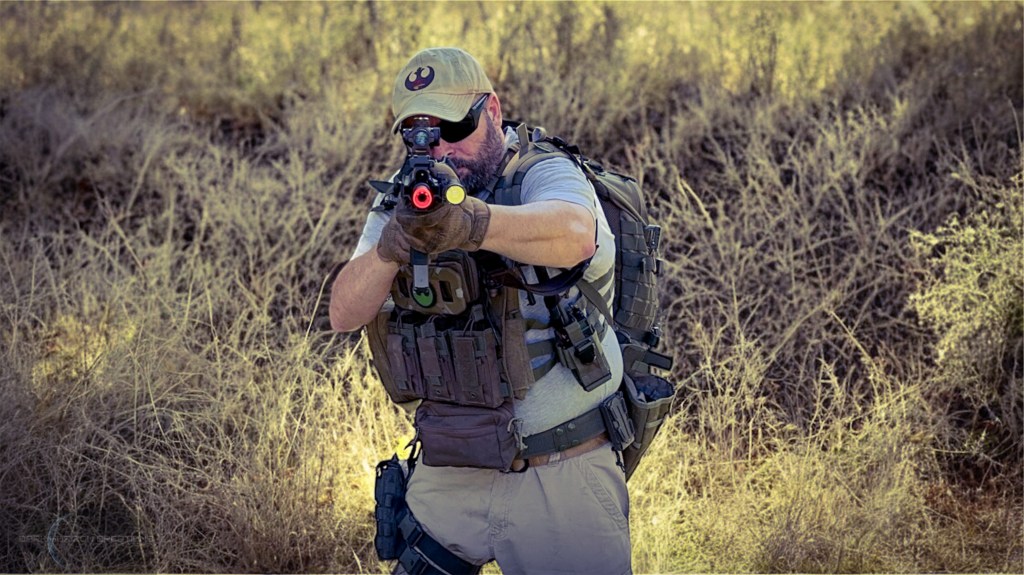
They are by far one of the more fascinating aspects of the Empire and serve as the basis for various aspects of Star Wars gaming and role playing, such as larping and airsoft.
Dead or Alive: Bounty Hunters and Mercenaries in the Age of the Empire

In the ensuing chaos of the fall of the Republic, the Galactic Empire finds itself facing a very disturbing reality, resistance. In nearly every sector throughout the galaxy, there are bands of resistance to the Empire’s rule.

In less than two decades, those independent resistance cells begin to coalesce into a far greater thorn in the Emperor’s flesh, an Alliance to restore the Republic. The thought of such a vain attempt may have seemed laughable at first, but the Empire would soon learn the cost of their miscalculation.

All across the galaxy the Rebel Alliance and it’s allies engage in hit and run tactics against Imperial forces. On the ground they strike armories, supply depots, listening posts, and relay stations. In the skies above they strike at the heart of the Imperial fleet; it’s shipyards, scoring critical victories that cripple their foes.

The Empower did not take any of this lightly and ordered the Imperial Security Bureau (ISB) to use whatever means where necessary to end the rebel insurgency. ISB tacticians studied the rebel attacks for weaknesses and decided to engage in their own asymmetric warfare campaign. They began planting agents on planets in the outer rim, gathering firsthand intelligence of rebel activity, but they didn’t stop there.

The ISB turned to the shadows and began hiring bounty hunters and mercenaries to do their bidding. They kept their contracts off of official Imperial records, by creating a separate, hidden file in their database. These contracts would be known only to the ISB and privately funded from their own sources. They would conceal these transactions as legitimate business payments in order to provide immutability to the Empire.

The ISB would provide support in the form of Intelligence, while the actual work would be carried out by the bounty hunters or mercenaries themselves. Often these contracts would focus on capturing high ranking members of the Rebel Alliance, in order for them to be interrogated by the ISB itself. For other High Value Targets like Rebel pilots, they wanted them eliminated to send a message back to their leaders.

Once this operation was underway, whispers began to circulate in the Outer Rim. Alliance informants, soldiers, and spies turned up missing or dead. It didn’t take long for Alliance Intelligence to ascertain what was going on. Their informants engaged in a deadly game of counterintelligence against Imperial spies, passing on what they had learned.

A Trandoshan bounty hunter tracks a Rebel operative on Cloud City

In the process, Rebel Intelligence would begin building target packets on the Empire’s hired hands. It became a real-life version of Dejarik, only the moves weren’t played out on a holoboard, and there was no respawn, and no second chances. Every step taken must be calculated and planned.

The Alliance knew that they needed a way out of any location before they ever went in, or else they risked being captured or killed. The bounty hunters and mercenaries themselves may have dared venture into shady business dealings with the Empire, but they would soon find the rebels to be unwilling participants in their quest for fortune and fame. Their easy ticket to retirement wouldn’t be punched as quickly as they thought.

Often their quarry would lead them on high-speed pursuits across towns and into the unexplored wilderness, while others demanded pursuit into the skies. These seedy characters began racking up the credits, as well as a reputation amongst their peers. It became a sick game that only the most ruthless enjoyed.

Their time of pleasure, however would soon find them under the watchful gaze of those more skilled in hunting and killing. The Alliance would not allow the Empire to go unrewarded. They would watch and wait, and set their own timetable for reciprocity. When Imperial spies and mercenaries began turning up dead on worlds like Bothawui and Tatoonie, the Bounty Hunters Guild took notice.

Rebel Alliance SpecForces were sending a clear message: back off or die; it’s just that simple. To make a point, they would leave holos of the Bounty Hunter’s families, their homes, their ships in a hanger. Now the tables would be turned, and they would soon realize that their dark deeds had attracted a cost that they were not willing to pay.

Their entire business and lives were datamined by the best slicers in the Alliance and exposed on the Holonet for the entire galaxy to see. The Rebel Alliance engaged in a multi-facetted attack on its enemies, that would draw blood no matter which direction they turned. The war may continue for years, but that pales in comparison to the price of forfeiting one’s personal security for inflicting temporary pain on a much deadlier adversary.

Not today Hutt suckers….

Blasters: A look at the lethality of small arms in the Star Wars universe

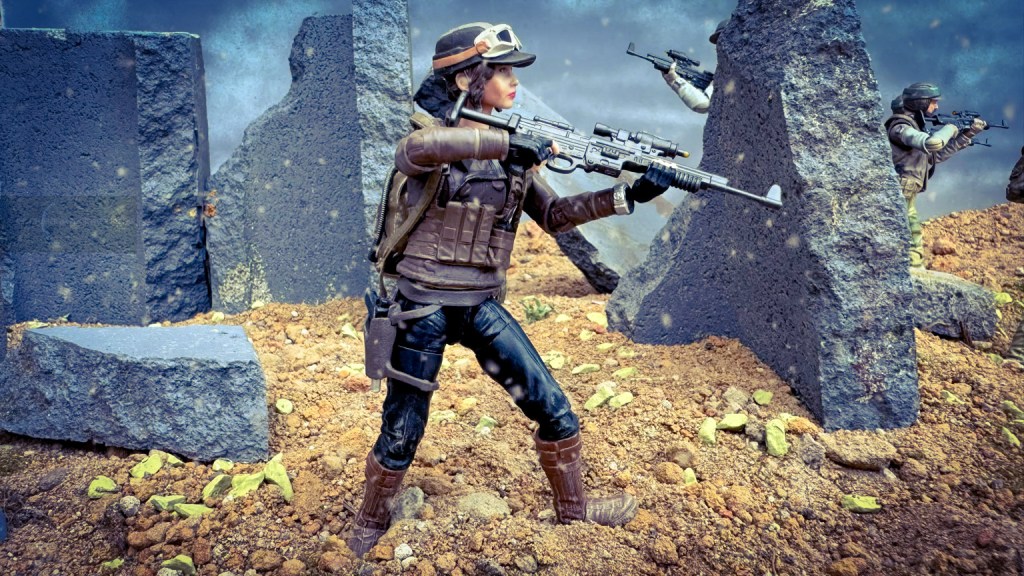
Chief Warrant Officer Jyn Erso with Alliance SpecForces wields a Blastech A280 carbine during a mission.

One of the most famous aspects of the Star Wars universe are blasters, the individual small arms carried by just about everyone. Be it a DL-44 blaster pistol in a drop thigh rig, or the iconic Blastech E-11 carbine issued to the Stormtrooper Corps, blasters are everywhere in the galaxy.

In the Original Trilogy, we see the effects of blaster fire as civilians, Imperials, and rebels alike go down instantly when hit with a single shot. The all too familiar sound of blaster fire from Battlefront is still ringing in my ears, and I can smell the ozone in the atmosphere.

So how exactly do these weapons function, and what makes them so lethal that they can drop a person instantaneously with one round? To answer that, we first have to take a look at the inner workings of the blaster itself.

Small Arms Physics

Blasters are not like modern firearms, which utilize propellant ignited from a firing pin or striker in the base of the cartridge to propel a projectile downrange. The only in-universe weapons that use modern fierarms technology are referred to as slug throwers, and the only on screen use of these can be found with the Sandpeople of Tatoonie.

Blasters on the other hand utilize compressed and highly pressurized Tibanna gas that is stored in a detachable magazine or bottle. This is inserted in different locations on different weapons, with some utilizing internal storage, while others combine the gas within a detachable box “magazine” that also houses the power packs.

When the trigger on a blaster is pulled, it does two things simultaneously; it uses a burst of electrical charge from the power pack to an internal laser, which excites the Tibannna gas that is released at the same time. This creates a charged plasma beam, which is focused through a series of rings, and propelled down the chamber where it is encased in a magnetically charged field. This in turn propels down the barrel as a bolt of plasma energy.

This bolt is what you see exiting the weapons, and it is travelling as fast as you see it. Studies done of the on-screen shots place blaster bolts at somewhere between thirteen hundred and fifteen hundred feet per second, so they do not travel as fast as a modern firearm projectile. Individual small arms are also not as loud as a firearm, though they are loud enough.

The power behind these weapons is directly corelated to the type of gas utilized, with Tibanna gas being the most powerful. Some blasters like the Imperial E-11 series were equipped with a lower power stun setting which would incapacitate and render unconscious a target. That is not the case for most military grade weapons such as DMRs, sniper support rifles, heavy blasters, and crew served weapons.

A member of the Rebel Alliance SpecForces armed with a Blastech A392R Designated Marksmen Rifle

I should also note that during the reign of the Empire, it was illegal for civilians to carry and own blasters which could defeat body armor, but many often did. This includes those who used internal modifications to make weapons more powerful, as well as buying and using military grade arms like the Rebellion did.

Terminal Ballistics

Now that you understand how the weapons work, its time to turn our attention to the fun stuff; terminal ballistics. You’ve seen the blaster bolts, heard the distinctive report, and watched the drug pushers of the Pyke Syndicate as they get dropped on the streets of Mos Espa; So what exactly makes blasters lethal?

First, we need to go back and look at a previous piece of information that I provided, and that is what constitutes a blaster bolt, which is plasma. Bolts of magnetically encased plasma striking any flesh, cause a series of instantaneous and significant damage to living tissue.

The extent of that damage is dependent upon where on the body a person is hit. If an individual is trimmed on the shoulder for instance, they would be badly burned, with the wound instantly cauterizing itself. They would, however not be subjected to the same internal “pop” of the blaster bolt as if it had entered the body cavity.

A direct hit to a person’s center of mass by a high-powered shot would cause surface level burns on the outer and inner tissue, as the bolt passed through the skin and into the body cavity. There, the high pressure from the bolt exploding would cause massive internal boiling and trauma.

Nearby organs would be catastrophically damaged or destroyed, depending upon their proximity to the bolt of plasma when it explodes. There would be massive hemorrhage, but little if any blood loss due to the entry and exit wounds cauterizing from the extreme temperature of the plasma.

Center of mass and upper center of mass shots are always lethal, while lower center of mass hits to the abdomen may be survivable, if the correct medical treatment can be obtained in a timely manner. For this reason It is possible to survive a blaster hit, but it is extremely rare, due to the amount of energy being released inside of the body cavity.

This is why Stormtroopers are issued armor, which is rated to defeat certain weapons. The armor works by dissipating the energy from the blaster bolt and spreading it out across the surface, where the plasma burns away the outer layers.

This is not sufficient for military grade weapons, which is why you have seen Stormtroopers go down when hit by rounds from Han Solo’s DL-44 blaster pistol. This is a highly modified military grade weapon, which accounts for the damage that it inflicts.

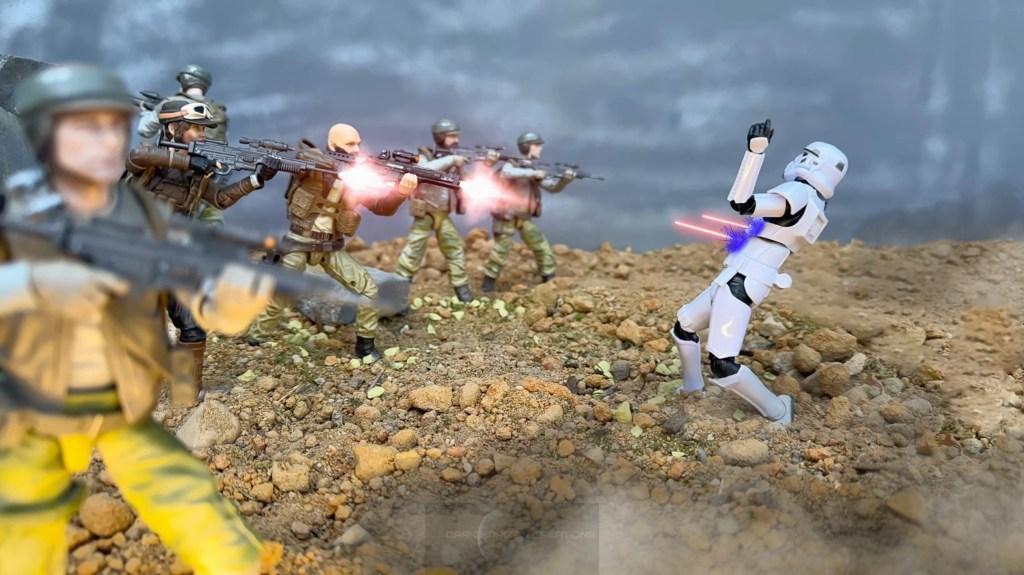
An Imperial Stormtrooper being hit with multiple rounds from high powered military grade blasters. He won’t make it for the Battalion Halloween party next month.

Conclusions

So, now that you understand how blasters function, and what makes them lethal, you can begin to appreciate not only the science and technology behind them, but also how cool they are! Everyone wants one, right? I know I do.

The Dark Banner

Living under the flag of the Empire as a civilian

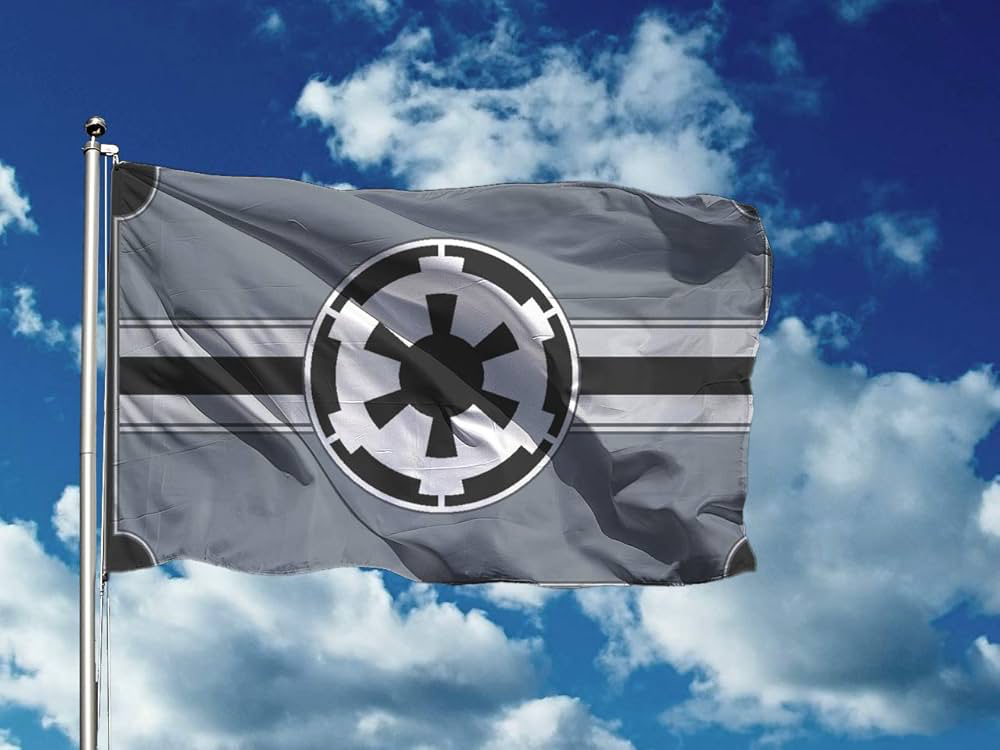
The flag of the Galactic Empire flying over a city on Chandrila

Decades after the Emperor ascended to power and vanquished the Old Republic, the Galactic Empire reigns in its stead. The once stable democracy of the Republic has been replaced by a totalitarian regime, that we are told will ensure our prosperity and security for ages to come.

The reality however, is much darker and far more sinister than many have been led to believe. What began as a promise to end a war and bring peace to a crumbling republic, quickly evolved into a tyrannical galactic power.

In the Core worlds, and much of the Mid Rim, the rule of the Empire was accepted and even welcomed by the elite upper class of citizens. It is here that much of the galaxy’s food supplies,manufacturing facilities, and thus wealth are derived.

These mega conglamarotes and thier investors see in the Empire an opportunity to exchange freedom for profit. In so doing they escaped the worst of the Empire’s over reach, and their worlds remain largely ignored by the Emporer.

On the fringes of the Mid Rim lies Hutt space, which the Emporer has left alone. They serve his purposes when paid, while their criminal activites go largely ignored, unless they hamper the plans of the Empire.

In the farthest reaches of the Mid Rim we find worlds which connect the major trade routes of hyperspace into the fringes of the Outer Rim.

It is on these worlds where many of the galaxy’s poorest reside, and to which much attention has been devoted by the Empire.

Nearly all of the galaxy’s alien species have been discriminated against by the Empire, and their worlds annexed and subjucated for it’s use. Many species like the Wookies have been enslaved across the galaxy, in order to fulfill manual labor for the Empire’s war machine.

Others like the Twi’leks find themselves in the ownership of Moffs and other Imperial leadership, serving as cooks, waiters, and personal attendants in their homes. They by and large are spared the worst of the humilation, so long as their behavior and performance are deemed acceptable.

It may seem then, from first glance that the Empire has favored humanity from its racial bigotry, but nothing could be further from reality.

From the moment that an Imperial star cruiser enters orbit around a planet, life on that world is forever changed. Whatever freedoms it’s citizens once held, will be immediately stripped away by the enforcement of Imperial laws.

Many have learned the hard way, that all that is required is to piss of an Imperial stormtrooper, before they are placed in binders, and charged with some fictitous crime that never existed.

Others have been stopped on the streets, bullied and beaten until they can no longer stand or walk. Others still have their businesses and homes raided, their children left screaming in terror while blasters are pointed in their face.

People have quickly learned that their way of life has ended, as Imperial engineers assemble pre fabricated garrisons on their planet.

Within a matter of weeks, lush thriving worlds find themsleves under the darkened banner of Imperial oppression. Their governments and it’s leaders are now nothing more than puppets on display for the public, with the Empire pulling their strings at will.

Stormtroopers patrol the streets and highways, while AT-STs and tanks are positioned at intersections. TIE fighters howl from overhead, as they carry out combat air patrols.

For some planets, the presence of the Empire is overwhelming, while on other worlds it is an ever present threat looming in the shadows.

Imperial Intelligence agents with the ISB find their way into every strata of galactic society, blending in with the local populace, living under the guise of familiarity.

They build rapport with the locals, establish their own cover, and then use that to gain intelligence. They wait and they watch, looking for those who would breed resistance to the Empire’s presence and rule.

As powerful as the Empire may appear, their fear and hubris leave them hamstrung to the efforts of those who have been pushed too far.

It always begins with one person; one individual who has had enough of being bullied, profiled, and watched by the Empire. They too lie in patience, watching and learning from their enemies.

They begin to take notes, and build their own network of contacts who are like minded. Perhaps not everyone sympathetic to their cause is able or willing to actively oppose such a daunting enemy, but there are always those who are.

They begin by meeting in secret, at random locations and times, passing on information to each other, until one day they find a opportunity of weakness, and exploit it.

It might begin by stealing Imperial communications equipment and weapons, before advancing to more complex hesist and raids.

Soon the Imperial forces find themselves at a disadvantage, as the tables are turned, and they find that they are no longer the predator, but the prey. The initial confusion and shock is replaced by anger, so they take it out on the local populace.

The Empire always makes the innocent suffer, in an effort to motivate those sympathetic to the acts of rebellion to capitulate and betray their cause. Some do, but the wiser do not.

They understand the cost of freedom, and that personal sacrifice is a necessary hinge upon which liberty must swing. It is with these types of people, that the Rebellion finds it’s cause.

As local resistance mounts, there comes a day when the Empire is dealt a mortal wound. Corellian Corvettes and Mon Calamari cruisers drop out of Hyperspace, pummeling the few Star Destroyers that may be in orbit.

They are struck with Ion cannons, overwhelming their systems, and leaving them dead in the cold waters of space.

Their hulls are raked with turbo lasers, until their reactor cores are hit, shattering them into a maniature sun. Meanwhile, down on the surface of the planet, Rebel Alliance fighters begin reclaiming the skies, while chasing TIE fighters to their deaths.

On the ground, the rebels do what they do best; killing the Empire one stromtrooper at a time. With controlled discipline they communicate, move, and shoot together as one.

Moving from house to house, building to building, using every angle and every piece of cover to their advantage. Their losses will be many, but when the day is done, the battle will be won.

In the city square Imperial officers are publicly hanged, and their rule comes to an end. Meanwhile, the Imperial bases are raided by the rebels. Every piece of usable equipment and weapons are taken, and they give the Rebel Alliance a fighting chance to reclaim the galaxy, one world at a time…

Parallels from the Empire

A glimpse at our modern world through the eyes of Rebellion

There are no Star Destroyers hanging in low orbit over our world, but there are worse threats to our existence that we see every day. You would think in modern times that humanity would have learned its lesson from devastation and war, but sadly it has not. We don’t even need to consider an outside threat, when we are destroying our planet ourselves.

But war is not our only enemy; corruption, greed, the lust for power, and wealth have all driven many to the precipice of dark deeds, with unthinkable consequences to the innocent. It parallels everything that we know and have seen the Empire to be.

When we look at the war in Ukraine with Russia, we see many similarities between Vladimir Putin and the Emperor, as well as between the Russian Government and the Empire. As frightening as that may seem, I would argue that Russia is not the only nation that parallels the doctrines of the dark side of the Force.

China, Iran, North Korea, and Turkey are all aligned with the former Soviet Union and have built a modern axis of evil in an attempt to control the balance of power on the planet. Their doctrine is simple: none of them alone can stand against the Democracies of the West, but together they can undermine the foundations of their enemies and strike them when they are not expecting it.

It is eerily reminiscent of the Clone Wars era, in which the star systems of the Separatist Alliance committed treason against the Republic and declared war on its government. Behind it all, the darkest of figures with his own personal agenda for galactic conquest and control.

Caught in the heart of these conflicts are the masses, many of whom are innocent. They are forced into subjection to wicked dictators and their rules, while clawing to survive. Others use the existence of circumstances for their own evil desires, manipulating the systems at play for their personal benefit. They are the scum and villainy of the earth.

We live in as Obi-Wan stated, dark times, and it is in these times in which heroes are born. People who come from ordinary lives, and out of obscurity. Some by birth into chance positions of privilege, and others thrust into the fray by no doing of their own. All the while fate has conspired to bring them to the edge of existence, where they can dare to act, and change the world, or falter in fear, and fail.

The Empire was self-assured of its control and station, with no thought to hubris being it’s Achilles heel. It was the door through which Rebellion succeeded, and only so. Like the Empire, the same holds true for our world. Powers beyond our scope where influence and money control the lives of billions, where our futures are exchanged for the privileged few.

The only option then must be survival. We must survive the next five minutes, so that we can begin the next five minutes thereafter. We must use that time to become smarter, stronger, and wiser than our enemies. We must study them, as they study us, and learn their weaknesses. We must learn to operate outside of the envelope of their control and domination.

At the foundation of our actions we must have hope, for without hope we have nothing, and we must have a plan. That plan must lay the foundation for our survival, and at its core it must have the hope that a future may exist free of tyranny. Someday, somehow, we must reclaim what is rightfully ours, freedom!

What if Jyn Erso survived?

Looking back on Rogue One: A Star Wars Story, I don’t know of too many fans that didn’t want Jyn Erso to survive. Time and time again I have heard how people loved her character, and thought that she was the new hero of the Rebellion.

In fact, you could argue that Rogue One is the most successful Star Wars project to date, since the mouse acquired Lucasfilm. Having said that, there is an entirely different version of the movie that we most likely will never see, and in those edits Jyn Erso does in fact, survive.

This question then, bears relevance for many reasons, and it is one that I began to consider several years ago. It started me on a journey, which resulted in two years of work on the manuscript for a new Star Wars Legends novel entitled Cold Apex.

That novel is now complete and waiting to be approved by Del Rey and Lucasfilm. Though I won’t offer any spoilers on the plot of the book, what I will do is share how Jyn made it off of Scarif. In the third act of Rogue One, we see the Rebel fleet jump in system directly over Scarif, where they begin moving into position to attack the planetary shield gate.

Admiral Raddus, leading the fleet from the Mon Calamari MC-75 frigate Profundity, Orders Blue Squadron to get to the planet. General Merrick then orders the squadron to follow him through the gate, and bringing up the rear are two Incom UT-60D U-Wing gunships.

We clearly see one of them fly through the shield gate before it closes, but what about the other one? Once they fly through and hit the Blue, they begin to provide air cover for the Pathfinders on the beach below. General Merrick then orders the “U-Wings” plural, to reinforce the troops on the beach. He continues by ordering the fighters to follow him and provide air cover for “them,”plural again, referring to the U-Wings.

U-Wing dropping Rebel soldiers on the beaches of Scarif in search of Jyn Erso.

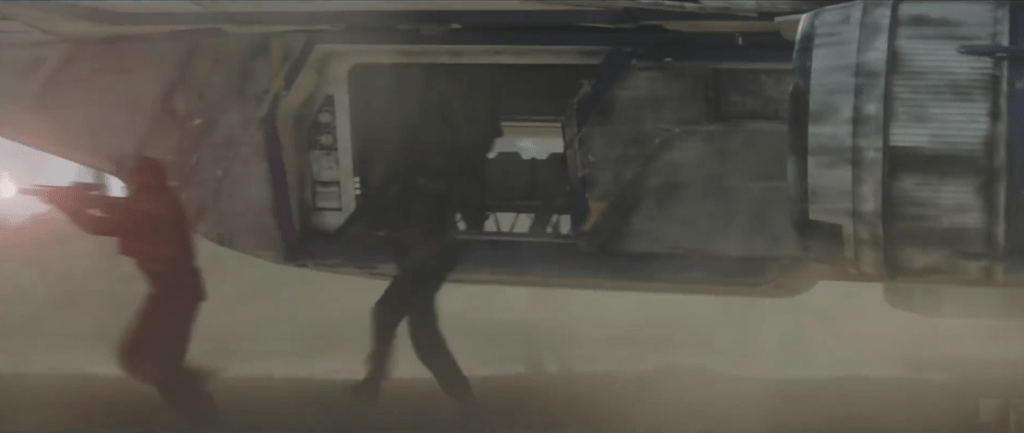
We know that one U-Wing was shot down and destroyed, but where is the other one? In Cold Apex we find the second U-Wing has landed in an outcropping of trees. A small squad of soldiers deploys from the ship, with orders to find Cassian Andor and Jyn Erso. The rebel troops fight their way through the Citadel base, only to find the missing rebels out on the beach.

They are attacked by Imperial troops as the Death Star fires on the planet, with the U-Wing dropping in and saving the squad from certain defeat. With the shield gate down, they make a blind jump into hyperspace while in the skies over Scarif. So, if Jyn survives, what happens to her next?

Well, you’ll have to wait and read the book to find out! I’ve been told that if approved for publishing, the tentative release date will be in late 2026. I’ll share more when I know more from the publisher.

Religion in Rogue One

Introduction

On December 16, 2016 Star Wars fans around the world were introduced to the newest hero within the Star Wars universe, Jyn Erso. Jyn is a battle scarred and complex woman, with a very a traumatic past. She is spartan tough, and stubborn to the core.

Orphaned at age seven, she was forced to watch her mother be executed by Imperial special forces, while her father was taken captive by them as well. Her only hope lay in the man who rescued her, Saw Gerrera. A friend of the family, Saw was Jyn’s only hope of survival, though a hope that would not last.

Throughout her young life Jyn finds herself forced to make decision upon decision which is determined by her alliance with Saw. Though he saves her, he does not give her a normal childhood or freedom. His care for her is minimal, and when it becomes too much of a risk, he too abandons Jyn alone, on a worn torn planet to fend for herself.

At age sixteen, Jyn is once again forced to make decisions in order to survive from one day to the next. When we find her in Rogue One, Jyn is a young woman imprisoned by the Empire in one of their POW camps on the planet Wobani.

She is seemingly rescued by the Rebel Alliance, who have their own agenda for her as well. There is no care for her future or well being; Jyn is simply a means to an end for them. Though she reluctantly agrees to help them, she finds herself in a dream remembering her parents before she is abruptly awaken on a flight into the ancient moon of Jedha.

Jedha is a world of many stories, with some claiming that it was on Jedha that the Jedi first discovered the Force. Jyn ventures into the holy city, and encounters a cultural soup of denizens from across the galaxy, who are adherents of many religions. Though their beliefs and practices may differ, they are all drawn to Jedha for the same reason, and that is the church of the Force.

Its existence is ancient, and its followers are many, but its message is the same: there is only the Force, and it is the Force that draws them there. Jyn being the skeptic that she is, becomes intrigued when Chirrut Imwe is able to sense the Khyber crystal necklace hanging from her neck.

She wants to know more, but time does not allow it. We later see Jyn rubbing the Khyber crystal again on her way to Scarif. This brief insight into the Force is a much more grounded aspect of it’s cultural and religious significance to peoples across the galaxy. We know from Obi-Wan Kenobi that the Force is what gives the Jedi their abilities and powers.

It is an energy field created by all living things; It surrounds us and binds the galaxy together. For those born sensitive to it, it is there, just beyond their grasp. For those like Chirrut Imwe, it is the focus of their religious experience, but not a tangible presence that they harness as the Jedi and Sith do.

For people like Jyn, it is a mystery that fascinates and intrigues. It leads her to a place of inner searching. She finds herself questioning her mother’s bedtime stories about the Force and the Jedi, and she begins to ponder if they were actually true? Her memories are in many ways her only real connection to her mother, and for whatever reason, they seem to be guiding her on her mission for the Rebel Alliance.

What if?

For the past two years I have been working on the manuscript for a Star Wars Legends novel which continues the story of Jyn Erso. In it we find that Jyn who was presumed lost, is clinging to life, and at the center of her journey is the question of religion. Is the Force real? Is it guiding her to her destiny, or is it just her experience, training, and a little luck?

The story explores how Jyn’s personal beliefs reflect the echos of an ancient past, where it was at the heart of whole races and societies. The Force is more than Jedi and Sith, it is the defining religion of a by-gone era. People like Jyn’s mother Lyra who cling to it’s ideals and teachings, are viewed as heretics and traitors to modern governments and societies.

Its origins are erased, its texts are destroyed, and its existence is taught as a myth. Where other religions are accepted or tolerated, the Force becomes a forbidden word across the galaxy, and those who speak of it are hunted down and taken into custody.

What was once at the heart of every civilization in the galaxy, has now become culturally irrelevant and outdated. As the old generations pass on, younger generations grow up in the shadow of its knowledge and presence, knowing nothing of its power and purity. Its mysteries lay hidden in plain sight, waiting for those who are brave enough to seek out answers to life’s questions and troubles in its teachings.

Conclusion

Jyn’s journey becomes one of self discovery, as she is forced to confront her mother’s beliefs, and their impact upon the here and now. We see the reality of religion in the midst of contemporary culture, and the relevance that it offers to those brave enough to search for the truth.

Ultimately the Force and religion aren’t the focus of the story, but they become an aspect of it that Jyn cannot deny, and that she cannot ignore. It is a doorway to be opened, as she seeks for answers in the midst of the chaos of war.

Andor and the use of Asymmetric Warfare in Star Wars

For more than four decades, fans of Star Wars have rallied behind the Rebel Alliance and their cause. No one can deny the emotions evoked of their victories against the evil galactic Empire, but few have stopped to consider what exactly is being depicted on screen.

More than a story of good versus evil, and heroes and villains, Star Wars is at its core the account of a group of insurgents, dedicated to overthrowing an established government. Nowhere has this been more prominently detailed than in the recent live action series, Andor.

In Andor, we learn how this character’s circumstances lead him to the doorstep of the Rebellion, in its infancy. We are given a glimpse at the founders, their plans, and how they finance their war against the Empire.

More importantly I think, is the curtain being pulled back on just how dirty warfare can be. No longer can we see the Rebellion as a righteous movement for freedom, with unsung heroes at every turn.

Now we must come face to face with the often brutal and disfigured cost of warfare, and it’s mortal toll. For us to begin to come to terms with this harsh reality, we must first learn what an insurgency is, how it is carried out, and what its objectives are.

Merriam-Webster defines an insurgency as “a condition of revolt against a government that is less than an organized revolution and that is not recognized as belligerency.” An insurgency often begins with just a handful of individuals, who come together in agreement to the fact that the established government has violated their freedoms and way of life.

This is often the case when a dictatorship initiates a planned coup, and usurps the current government with a new form of rule. That is exactly what occurred during Order 66 on Coruscant. The Emperor spent years strategically planning his rise to power, and carefully positioning himself, as well as other assets, who would do his bidding.

On a larger scale, he manipulated the Jedi Order, the Senate, and the governments of entire star systems. He orchestrated a galactic wide war, to use as both a distraction, and political tool to become chancellor. Once in power, he sealed his position with the downfall of the Jedi Knights.

In the case of the Rebel Alliance, their objective was to restore the Old Republic, and its democratic rule over the galaxy. Doing so was the only way to ensure that freedom and security for all species was returned. How that would be accomplished was a decades long endeavor.

To begin, the Alliance to restore the Republic did not start as a well-organized, equipped, and trained force. It started with just one person refusing to accept the Empire’s rule on their world. It could be witnessing innocent civilians being beaten, interrogated, or even killed, as in Andor.

It would begin with people from different backgrounds, ethnicities, and even socio-economic status. They would share a common belief and objective, and over time they would discuss and eventually plan to rebel against the Empire’s presence. Just as in Andor, common people would reach their breaking point and take action.

That would become the catalyst to build upon, and over time the insurgency which begins on one world like Ferrix, would use propaganda to spread word of their actions, and recruit others to their cause. Soon an entire world would have cells of operatives joining the movement.

What began as an isolated act of defiance, would over time evolve into a complex and organized insurgency on a galactic scale. This is what is known as Asymmetric Warfare, when a smaller, less capable force of insurgents engage a larger, established military force.

In this type of combat, the insurgents will carefully examine and exploit their enemy’s weaknesses strategically, in an effort to demoralize them, and destabilize their operations. Such conflicts are highlighted by unconventional tactics and techniques, such as hit and run missions on critical infrastructure, command, control, and communications nodes, or supply routes.

In so doing the insurgent forces are often able to infiltrate enemy installations, gain valuable intelligence, and even steal supplies and weapons. In essence, they often turn their enemy’s own resources against them, which they use to their advantage. In the case of the Rebel Alliance, they did just this, first on isolated planets, and then across the galaxy.

As more people joined their cause, the Alliance was able to exploit the access and assets which they acquired through established connections. Equipment, food, fuel, weapons, and ships are just some of the necessities that they acquired through clandestine donations, forgeries, and thefts. Their established financial network paid for what they could not steal, because in every galaxy, money talks.

The Rebellion would have established a network of informants, as well as trained assets to tie up loose ends. War is a dirty business, but the end justifies the means. This the Rebel Alliance that Cassian Andor, Jyn Erso, Luke Skywalker, and many others find themselves joining.

Over the course of decades what began as a small group of home-grown insurgents, evolved into a very capable and organized military capable of taking the fight to the Empire. As they become the foundation of a New Republic, their tactics may change, but their history remains the same.

Haslab RazorCrest

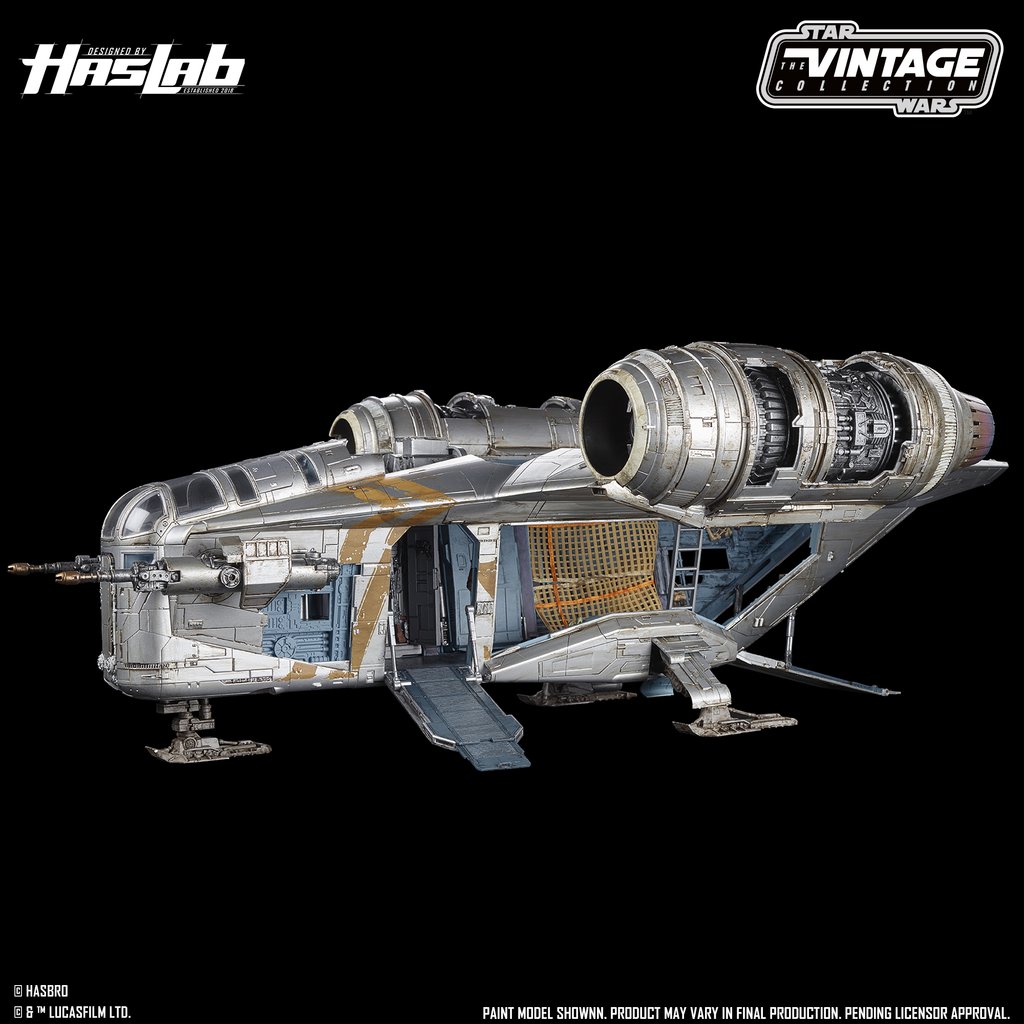
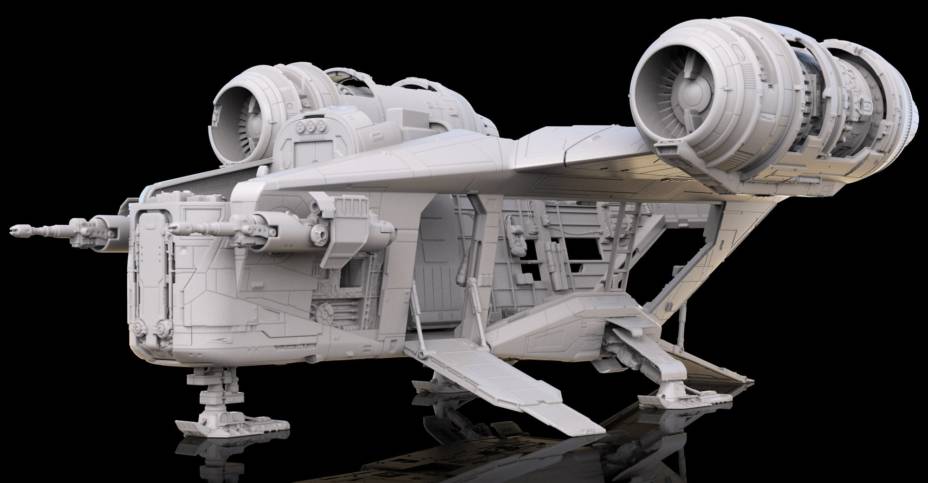
Finalized Production Prototype of the RazorCrest

Controversy has arisen like the Sith themselves over the most recent crowdfunding campaign by Hasbro; namely their Haslab Vintage Collection RazorCrest.

Originally intended to be a Disney Parks exclusive toy, the Vintage Collection RazorCrest was rushed into the Haslab domain when their intended project, a Dagobah swamp playset, received less than enthusiastic reviews at an early showing.

Initially fans were presented only with Gray Scale CAD renderings of the RazorCrest, and not actual images of the finalized prototype.

Before the Hasbro marketing team could blink, they had collected 9.8 million credits from twenty eight thousand backers to fund their latest idea.

The excitement throughout fandom would soon cease, however, as the shadow of the dark side was revealed.

Gray Scale 3D Rendering of the RazorCrest

During The Mandalorian Season Two Episode Six, Chapter Fourteen (The Tragedy), We find Din Djarin and Grogu on the Jedi homeworld of Tython, being attacked by remnant Imperial forces.

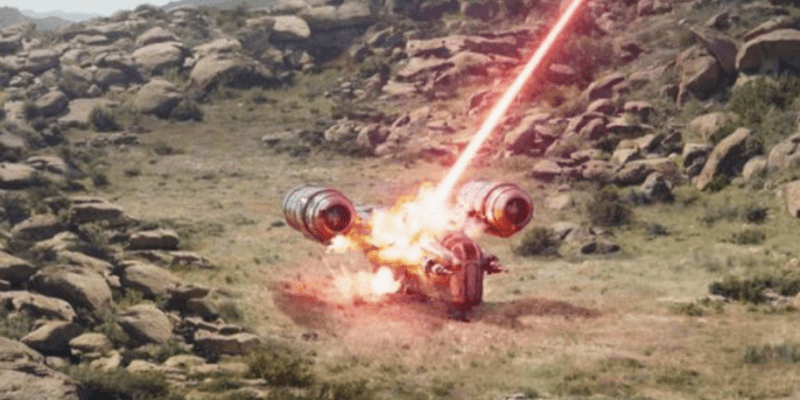
The defining moment of the episode sees the RazorCrest destroyed by a single blast from a turbolaser, with Din left speechless as his ship is vaporized in front of him.

Like Din Djarin, Backers of the Haslab RazorCrest were also left speechless, and quite frankly confused about the whole matter.

Many wanted to know why Hasbro would go to such lengths to release the RazorCrest, only to see it get destroyed within weeks of starting the campaign?

Many fans were angry, seeing it as nothing more than an expensive marketing strategy to keep fans buying toys from The Mandalorian.

For those of you who are not aware, toys for Star Wars are planned anywhere from eighteen months to three years in advance of their release, and the design team at Hasbro often works closely with the staff at Lucasfilm on their development and production.

The RazorCrest is no exception, so it stands to reason that Hasbro could have known that the iconic ship would soon meet it’s demise, a fact that did not sit well with many backers, which in turn caused them to withdraw their support.

Unlike the Millennium Falcon , the RazorCrest is a fairly new ship to the Star Wars universe, and seeing it destroyed so soon had a negative effect upon fans.

This was even more true with those who backed the Haslab project, having paid nearly four hundred dollars up front to secure their toy, and ensure it’s production goals were met.

Now it seems that Hasbro may have made an error in how they chose to release it. To be fair, any time a new concept for a toy is proposed, there are many considerations that must be reviewed.

Among these are production costs, and marketing. If it is approved to move forward, then an in house prototype is created, usually by 3D printing, and further analysis is made, along with revisions to the proof of concept model.

If it gets approved for production, then contacts have to be made for the tooling to be designed and produced, along with the actual production facilities,as well as the design and production of the packaging.

A production schedule is created, and a shipping date is given. All of which happen years before you actually see a toy on store shelves.

Like any other industry, there are financial risks involved with sales, and over the past eight years alone Hasbro has incurred an estimated five hundred million dollars in losses due to poor sales of their Star Wars brand toys.

One of the things that their marketing team would point out is that the bulk of their sales are from adult collectors and fans, rather than from parents buying toys for their kids.

This is one reason why Haslab was created, in order to give fans the toys that they really want, which would otherwise not get produced.

They began two years ago with Jabba’s Sail Barge, which saw nine thousand backers paying five hundred dollars each for the massive collectible.

Hasbro cashed in with five million dollars on that project, and I would guess that half of that was counted towards profit.

This time around Hasbro had three times as many backers for the RazorCrest, with almost double the money for a ship that has only been in existence for one tenth as long as the Sail Barge.

Clearly, the project revealed where the hearts and minds of Star Wars fans is at. That is, until they saw their new toy vaporized on screen! So what happens next?

I might need a ride back to Navarro…”

Undoubtedly the project will move forward, and backers should still receive their product by fall 2021, barring any unforeseen circumstances that would interfere with production.

That being said, there are tens of thousands of fans out there like myself who will miss out on their chance to own the RazorCrest, simply due to cost. That is the downside to crowdfunding.

Not everyone can afford the total cost up front, and not everyone can afford to pay within the limited timeframe provided.

Whether Hasbro did or did not know about the ship’s demise is irrelevant in my opinion, as true fans of the show are still going to collect what they want, when they can.

The real issue here is the availability of the toy, and what could Haslab do differently? Given the lead time, I think that what is needed is a separate website that is financed in part, by an annual membership fee from collectors.

This would provide an opportunity for the design and marketing team to present fans with opportunities to provide feedback and input on future projects.

It could also provide them with a secure portal to set up a payment system for future Haslab projects. Doing so would ensure the projects still get funded, while allowing more fans to take part, and be able to share in the fun of having their own special toy for their collection.

It would also help to deter scalpers who are making money off of the current project, by offering it for twice the retail cost on the secondary market.

Even if we don’t see Din Djarin in another model of the RazorCrest , the ship will go down in history as one of the most iconic within the Star Wars universe.

And if you didn’t get in on the Haslab project, don’t fret, as there are always plans for 3D printed models like the one that I own online.

Here’s a link you can check out by Fine_Engineer with his free plans for the RazorCrest : https://www.thingiverse.com/thing:4607202

My 3D printed RazorCrest from the files provided on thingverse by fine_engineer. The ship was upscaled 150% to accommodate the Black Series figures.

The Mandalorian: Season Two Finale

This morning I watched The Mandalorian Season Two finale The Rescue, and I wanted to share my thoughts on it, as well as my thoughts on where the show may go next season.

To begin, I have to say that it was an incredible story, that had an appropriate balance between the action and the drama taking place.

The Mandalorian Season Two has been much better than the first season in my opinion, and has been much more fascinating overall.

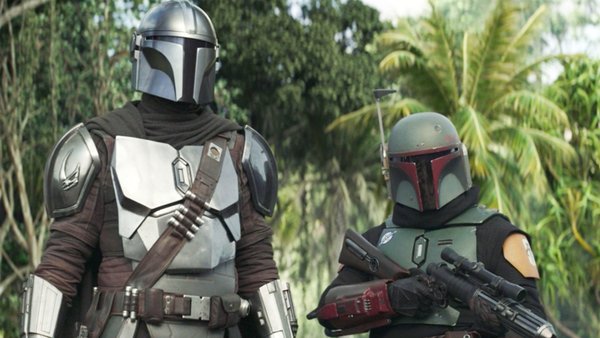
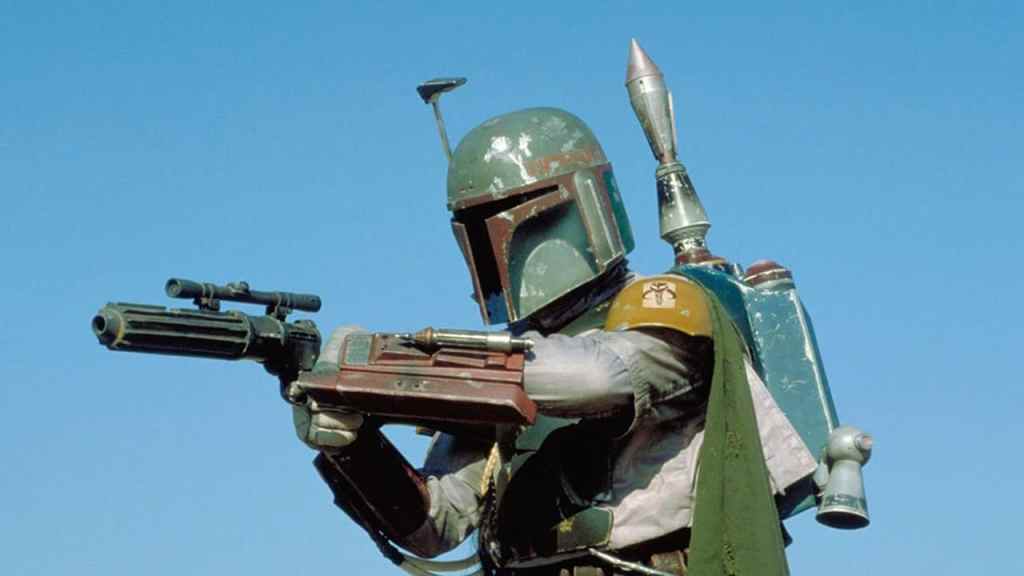
The most important aspect of Season Two in my opinion has been Boba Fett; the writers decision to bring him into the narrative was probably the smartest move that they made.

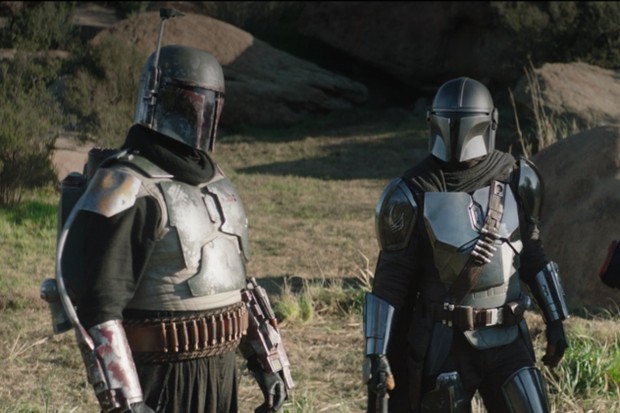
What I didn’t care for was Bo Katan’s criticism of him, saying that he isn’t a Mandalorian, because he is a clone of Jango Fett.

If you notice in his response, Bobba always responds with Jango being his father, because that is who he really was.

For whatever reason Jango wanted a descendant, an heir, a son, and the only way that he could have that was by asking for a clone of himself to raise as his own.

Other than being a clone, Bobba was unaltered genetically, making him for all intents and purposes human.

It also means that according to The Way, Jango had chosen to raise him as his own, and this in itself made Boba his heir.

It also means that because Jango was a descendant of Jaster Mereel, that Boba is the direct descendant and heir to the throne of Mandalore, and not Bo Katan as she claims.

This presents an interesting angle to the narrative for Season three, since Din is in possession of the Darksaber, which by birthright should belong to Boba Fett.

The other aspect of the Season Two finale that I want to discuss Is Din, and his relationship with Grogu.

In all honesty I was not expecting Grogu to be rescued this season; my thoughts were that the show would follow a similar arc as The Empire Strikes Back, and end in a cliffhanger.

Surprisingly, the ending was presented in such a manner as it could continue, or it could be end the show if they so chose to do so.

That being said, we know that there is a third season planned, so where will the narrative go from here?

My guess is that there are niue answers forthcoming from Dr. Pershing and Moff Gideon as to what exactly they were doing with Grogu, and why they neede his blood.

I also expect that at some point we will see Grogu and The Mandalorian cross paths again, possibly at the end of Season Three as a final farewell.

With that being said, I think that the remaining stories still revolve around the answers surrounding Moff Gideon, and possibly Din having to go on a series of missions that in some way either assist the Jedi, the New Republic, or both.

I also expect to see a continuation of the narrative between Boba Fett and Din, or at least having their paths cross again.

Boba Fett has become more than a supporting role in the show, he is now just as important and prominent as Din Djarin.

The Mandalorian has all of the elements present that make it what George Lucas always envisioned for Star Wars to be.

It has the action that we see in the Flash Gordon serials of yesterday, but it lacks the feel of a science fiction western.

Whatever your feelings and thoughts are, The Mandalorian has captivated millions of fans worldwide, and forever established a new hero in the Star Wars mythology.