
How Lucasfilm destroyed the reputation of the galaxy’s most feared bounty hunter
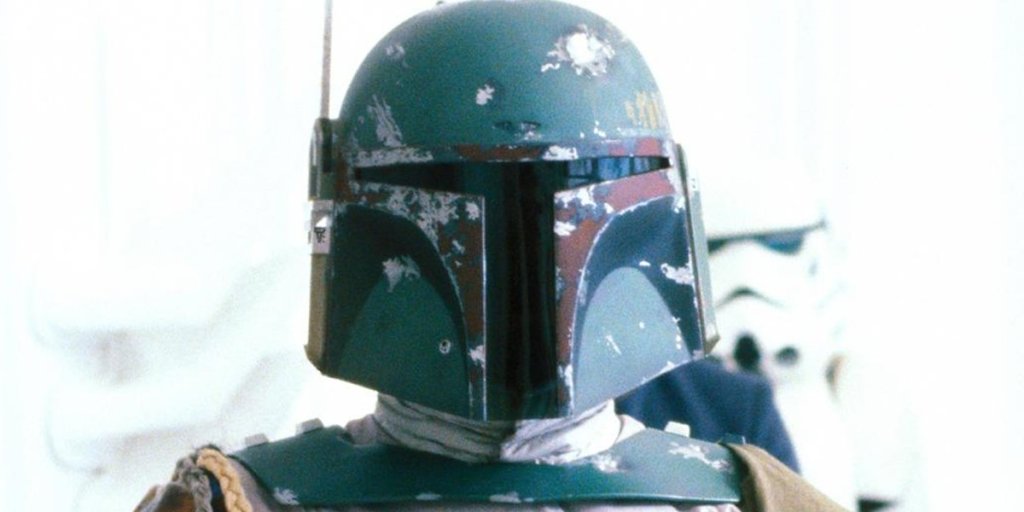
In 1980 fans got their first glimpse of a character who appeared equally as imposing as Darth Vader.
His silence coupled with his mysterious armor and helmet, made him one of the most intriguing characters in Star Wars lore.
Boba Fett, who was primarily portrayed by Jeremy Bulloch, became an instant fan favorite in both The Empire Strikes Back, and its sequel, Return of the Jedi.
Jeremy based his portrayal of Boba Fett on the Clint Eastwood character of a man with no name, from the Western film A fistful of dollars.
Bulloch used a very methodical and slowed pace of movement for the character, as well as cradling his blaster in his arm, and canting his head to one side. Boba Fett also featured a cape similar to Eastwood’s character.
In The Empire Strikes Back veteran actor Jason Wingreen supplied the voice-over for the few lines spoken by Boba Fett, which established him as a man of few words.
In my opinion, this was and still is the only iteration of the character that should be considered canon. It was original, simple, and it worked then and now.
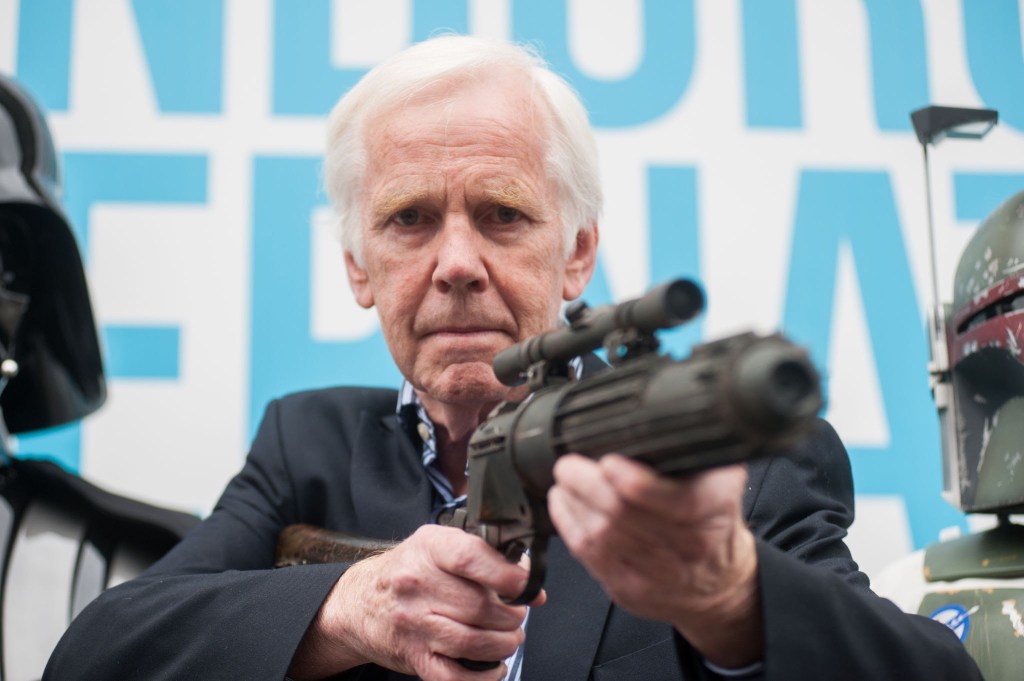
That isn’t however, how the character began. initially Boba Fett was envisioned by George Lucas as a form of super stormtrooper.
The test shots prior to filming reveal that the armor was originally white, with a light grey body suit. They used heavily modified UZI submachine guns for the blasters.
That was all changed however, and from it came the idea of an intergalactic bounty hunter. The armor was changed to an Olive Green color, the Jetpack was refined, as were the blasters.
Initially there was no back story created by George Lucas for Boba Fett. That would later be written in the 1996 Expanded Universe novel, Tales of the Bounty Hunters, by Kevin J. Anderson.
The book contains a short story entitled, The Last One Standing: A tale of Boba Fett, by Daniel Keys Moran. In it we learn of a man named Jaster Mereel, who is a journeyman protector.
Jaster is the original identity of the man who would later become the bounty Hunter known as Boba Fett. In all honestly it is a much more interesting back story for the character than what it has evolved into.
The story was considered canon until 1999 when Star Wars Attack of the Clones was released. This was in my opinion, the first error made with the character of Boba Fett.
The entire sequence with Jango and Boba in the prequel film was underwhelming. It certainly provided a plausible origin for the clone army, but at the cost of erasing an already established background.
Fast forward to 2012, and we see Lucasfilm transition to a Disney owned franchise, and with it a new era for characters within the Star Wars universe, Boba Fett included.
We get Our first glimpse of Boba Fett in the Disney-era live action continuity, during the season two episode of The Mandalorian, titled The Marshal.
In it, we get a very brief appearance of Boba Fett at the end of the episode, whose face looks scarred, as he watches events unfold from a distance.
We next see Boba Fett in the Season two episode of The Mandalorian entitled The Tragedy. Here, he has tracked Din Djarin to Tython, in order to recover his armor.
In my opinion, this episode featured some of the best acting by Temura Morrison, as well as some incredible action sequences.
Temura specifically incorporated and used traditional Māori fighting techniques in the sequences, and it was unreal.
It gave the character new life and purpose in my opinion, and set up a foundation to continue his story. Unfortunately, we would not see that happen in his own series, The Book of Boba Fett.

Up until 2021 Boba Fett held a reputation as the most feared Bounty Hunter in the galaxy. In the Expanded Universe, his survival of the Sarlacc pit further solidified him as the best in the business.
The Book of Boba Fett however, unraveled all of the intrigue and mystery of the character. The writers sought to fill in the gaps as they do with all of the Disney-era live action Star Wars series.
Instead, they presented Boba Fett as being hopeless and weak. He’s captured by Sand People, whom he eventually goes soft on and tries to learn their ways, in an effort to join their tribe.
They eventually shove a lizard up his nose, which gives him a hallucinogenic vision of a tree in the desert, making him worthy of their tribe.
There’s at least one continuity error in the series, in which Jawas steal Boba Fett’s armor after he escapes the Sarlacc.
They later sell it to Cobb Vanth in Mos Pelgo. Later in the series, Boba Fett flies back to the Sarlacc pit, searching for his armor.
Boba Fett’s ship, a heavily modified Firespray–class patrol vessel named Slave I, also isn’t immune to Disney’s disease.
Rather than honor the ship that captivated fans for decades, Lucasfilm chose to rename it in order to appease the racist woke movement. In the series, as well as in all marketing it is now known as Firespray, or Boba Fett’s starship.
Let me be clear here: The name of Boba Fett’s ship is Slave I; if that offends you, then I’ve done my duty to uphold the legacy of one of my favorite toys of all time!

The finale of The Book of Boba Fett sees Boba Fett riding atop a Rancor to defeat his enemies, while destroying buildings in one of the districts of Mos Espa. It was embarrassing and underwhelming.
The real issue here is that Lucasfilm, the directors, and the writers devolved the character from the galaxy’s most feared bounty hunter, to a fragile old man who needs his own bodyguard to stay alive.
It was a very disappointing attempt at story telling within the Star Wars universe, but that seems to be the norm now rather than the exception.
The other major issue that I have is that Temura has an entirely different style of portraying the character, which is noticeable to anyone who has watched the Original Trilogy.
His accent, his mannerisms, and his posture are all different from those used by Jeremy Bulloch. I think at the least they should have made an effort to maintain that level of continuity to the character.

I think the lesson to be learned here is that there are some things better left alone. Not everything has to be altered or changed in order to appeal to new or younger audiences.
This is a lesson that George Lucas himself did not accept or understand, and that error has been adopted by both Disney and Lucasfilm.
The real issue is that Star Wars itself has been relegated to a marketing tool, where quantity is prioritized over quality.
Where George Lucas used his profits to enable him to continue to tell stories, Disney has used the appeal of the mythos itself to make a profit.
There were some really great moments in The Book of Boba Fett, but ultimately what was presented was less than what the character was established as decades ago.
Boba Fett deserves to keep his rightful place in the galaxy, and if he’s going to retire, it needs to be with dignity and respect, and not as a wounded old man.
 Dark Horizon Creations